My First Ukulele

“One thing you might want to learn before
you attend the world’s largest
ukulele lesson is how to say ukulele.”
Mary Schmich

My First Ukulele

Today I decided to shop for a ukulele. The class I’ll be starting next month suggest that we use a soprano or tenor concert size ukulele. Of course I’ve already Googled everything about the ukulele, since I signed up for the classes.

I was surprised to learn that the ukulele is a fairly new fretted instrument. It originated in the 19th century as a Hawaiian adaptation of the Portuguese machete, a small guitar-like instrument, which was introduced to Hawaii by Portuguese immigrants, from the Macaronesian Islands. It gained great popularity in the United States during the early 20th century, and from there spread internationally.

Ukuleles are usually made of wood. Cheaper ukuleles are made from plywood or laminate woods, in some cases with a soundboard of a tonewood such as spruce. The more expensive ukuleles are made of solid hardwoods such as mahogany. The traditionally preferred wood for ukuleles is koa.

Typically, ukuleles have a figure-eight body shape similar to that of a small acoustic guitar. They are also seen in non-standard shapes, such as cutaway shape and an oval, usually called a “pineapple” ukulele, invented by the Kamaka Ukulele company, or a boat-paddle shape, and occasionally a square shape, often made out of an old wooden cigar box.

Most ukuleles have four strings; some strings may be paired in courses, giving the instrument a total of six or eight strings. The strings themselves were originally made of catgut, but modern ukuleles use nylon polymer strings, with many variations in the material. Some of the lower strings, particularly on the larger sizes, are wound with aluminum.

Thankfully, the ukulele that my instructor has recommended is the most common and standard type of ukulele. It’s the smallest ukulele and is known for its thin, jangly sound commonly associated with ukuleles. Because it’s so small, its perfect for my small hands and fingers as well as convenient for traveling.

Now that I have a little bit of knowledge about the ukulele, I’m ready to head off to shop for my first ukulele.

Shine On

The Next Dawn Ho

“If everyone played the ukulele,
the world would be a better place.”
Jake Shimabukuro

Dawn Ho

A few months back I put together some music for my husband that I knew he’d enjoy.

There’s one song in particular that he enjoys and it’s one of my favorites as well. The song is Izzy’s rendition of, Somewhere Over the Rainbow.

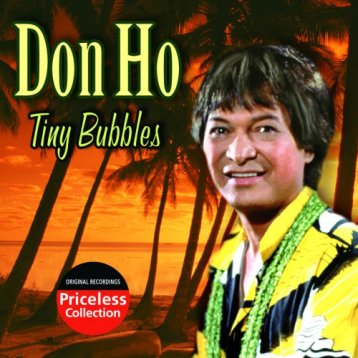
Growing up, we both enjoyed listening to the ukulele. Don Ho was very popular four decades ago and was famous for his big hit, Tiny Bubbles. The only other ukulele players I remember were Elvis and Tiny Tim.

When my husband came home from the hospital last week, he asked me if I would do him a big favor. He asked me if I would learn to play the ukulele. “The ukulele?” I asked. “Why do you want me to learn the ukulele?”

He told me he had been looking through our local “Adult Classes” brochure and saw that a ukulele aficionado was teaching a class for beginner ukulele players. I didn’t realize how much he enjoyed the ukulele.

What can say, I love my husband, and if learning to play the ukulele will make him happy, I guess I can learn to play. I’m actually looking forward to learning to play this cool little fretted instrument. Who knows, maybe I’ll be the next, Dawn Ho.

Shine On

The Point of No Return

“No matter what people tell you,
words and ideas can change the world.”
Robin Williams

The Point of No Return

Robin Williams staring in The Birdcage.

For the past three decades I have kept a writing journal. These beautifully decorated covered journals consisted of my daily activities as well as my thoughts and ideas. I also carry in my purse a small hardcover note journal for special moments.

It was an unusually beautiful Friday evening in early March 1996. That evening, my husband and son wanted to see a movie. We all agreed to see Robin Williams new movie, The Birdcage. We are big Robin Williams fans of his humor and movies, so we jumped in the car and headed for the Third Street Promenade in Santa Monica.

After enjoying the movie, we exited the theatre, still laughing from numerous scenes in the movie. My young son wanted to visit his favorite Promenade toy store, The Puzzle Zoo. I dislike going into that store, because it is way too crowded for my claustrophobic nature. So, my husband handed my son some money, and we patiently waited outside the store for my son.

About twenty minutes later, my son exited the store with a bag and ran up to me to show me what he had bought. As I was inspecting the bag, my son grabbed my shirt and was tugging at my sleeve saying, “Mom, Mom, look, it’s Robin Williams.” I looked up and saw Robin Williams briskly walking by with an entourage of body guards. I grabbed my son’s hand and started running towards Mr. Williams.

As I got up next to him, I said, “Excuse me, Mr. Williams. My son just saw and loved your movie, Birdcage and he would love to get your autograph.”

Robin Williams stopped, looked at me, then he looked down at my son and with a smile asked my son, “What’s your name?”

My son just froze in his tracks. Unable to answer or say his own name. Starstruck and excited that he was looking at Robin Williams, I realized that my son couldn’t even speak. So I whipped out my small note journal book from my purse along with a pen, handed it to Robin Williams and told him my son’s name. He wrote in my book and handed it back to me. I thanked him as he quickly disappeared with his entourage in tow.

My son was so excited when I handed him the autographed book. That’s all he could talk about on the drive home and for days later. As the years passed, my son as well as our family would talk about that day I got Robin Williams autograph. We continued to enjoy Robin Williams’ humor in movies, television and on talk shows.

On August 11th last year, my son called me to ask if I had heard what happened to Robin Williams? “No,” I said “What happened to him?” He sounded upset and said, “turn on the television.” I was home, so I turned on the news. My son then asked me if I still had the book? I told him I did. My son and I talked about Robin Williams and he couldn’t understand why he would kill himself.

I don’t think any of us will understand why someone who is talented, loved, admired and universally successful would kill themselves. No one can truly understand the pain and torture each of us goes through or can endure. Unfortunately, we learn how bad someone is feeling much too late. Robin Williams death is just one of hundreds of thousands of suicides that take place every year. His was so poignant because he was a public figure and because we all felt that we knew him or who he truly was.

We all never really know someone or what someone is capable of doing. Often, even those nearest and dearest can become a stranger or someone we never knew. That’s why it’s important for everyone to be kind and gentle to everyone. We must have compassion for everyone.

You just never know when something that you say or do to someone could really push them over the edge. An edge so dark and deep that to that one person, can become the point of no return.

Shine On

Kill Our Negative Cravings

“Every form of addiction is bad, no matter whether
the narcotic be alcohol or morphine or idealism.”
Carl Jung

Kill Our Negative Craving

Addiction can come in many forms. It not only encompasses drugs and alcohol but also addiction can include food as well as sex.

All forms of addiction floods the brain with the feel-good neurotransmitter dopamine. This dopamine effects the regions of the brain that control pleasure and self-control. Over time, the function and structure of the brain change and dopamine receptors are reduced, making drugs, food and other substances less enjoyable but still desperately desired.

Recently, the American Society of Addiction Medicine has made an important breakthrough on the effect all of these substances and behaviors have on the brain. By accident, researchers in Australia and the United Kingdom found that playing the game Tetris for at least three minutes can take up all the mental capability of the brain to the point that is has no more room for imagining other things. This results in having less cravings for food, drugs, sleep and sex

Apparently, Tetris can reduce cravings by simply forgetting about the cravings while engaged in the game. Tetris could potentially be used as a support tool to help people manage cravings throughout their daily lives.

This finding is the first demonstration that cognitive interference can be used outside the lab to reduce cravings for substances and activities. There’s more research to be done, but it’s an interesting beginning to help people with addiction.

Who would ever thought that such a simple thing as playing a game to kill time, could actually be used to kill our negative cravings.

Shine On