Irving Brecher

“I’ll bet your father spent the first year of your life
throwing rocks at the stork.”
Irving Brecher
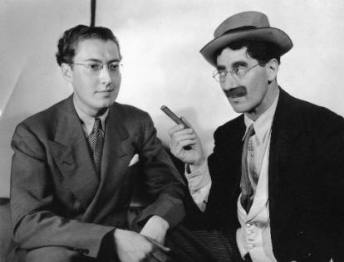
Irving Brecher

Irving Brecher with Groucho Marx

I happen to be watching one of my favorite musicals, Bye Bye Birdie the other day. I’ve seen this movie a dozen times, but I was unaware who wrote the screenplay, so I Googled the movie.

The screenplay was written by Irving Brecher. Known by his friends and colleagues as one of the funniest, wittiest men on the planet.

What’s that you say, you’ve never heard of Irving Brecher?

Yes you have. Have you heard of the Marx Brothers? Milton Berle? The Wizard of Oz? Meet Me in St. Louis? Then you’ve heard of Irv Brecher.

He was born in the Bronx on January 17, 1914, and grew up in Yonkers. After a brief stint covering high school sports for a local newspaper, he took a job as an usher and ticket taker at a Manhattan movie theater, where he learned from a critic for Variety that he could earn money writing jokes for comedians.

So at just 19 years old, being the resourceful young man he was, Irving Brecher placed an ad in Variety that read in part: “Positively Berle-proof gags. So bad not even Milton will steal them.” Milton Berle saw the ad and hired him immediately.

This launched Brecher’s career and in 1937, he moved to Hollywood and began working on scripts for Mervyn LeRoy, a prominent producer at MGM. He was an uncredited script doctor on The Wizard of Oz and was hired to punch up the comedy scenes in the movie. Mostly the vaudeville-like bickering between the Scarecrow, the Tin Man, and the Cowardly Lion. He didn’t get credit for this gig but his lines helped make the film a timeless classic and prompted Groucho Marx to begin calling Brecher, “The Wicked Wit of the West.”

Mr. Brecher received sole screenplay credit for two Marx Brothers films, a feat in itself. He was nominated for an Academy Award for his musical screenplay for Meet Me in St. Louis. The musical was one of Judy Garland’s biggest hits. The story goes that Garland initially didn’t want to make the movie, but Brecher talked her into making the movie by reading her the script.

In a 2001 interview Brecher was asked who he liked writing for the most? He said he found it easiest to write for Groucho. “I’m a complainer, a dissenter and a put-downer,” he said. “He was my alter ego. I liked the anarchism.”

He died in 2008 at the age of 94. He was one of the last great golden-age screenwriters of his era.

Shine On
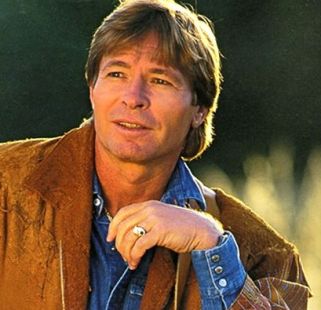
In Our Hearts Forever

“I believe that we are here for each other, not against each other.
Everything comes from an understanding that you are a gift in my life
– whoever you are, whatever our differences.”
John Denver

John Denver, 12/31/43 – 10/12/97

He was an American singer-songwriter, actor, activist and humanitarian, whose greatest commercial success was as a solo singer, starting in the 1970s.

Henry John Deutschendor, Jr., or as he is famously known, John Denver, was born on December 31, 1943 in Roswell, New Mexico.

Denver began his music career in folk music groups in the late 1960s. By 1969, he abandoned the music group life to pursue a solo career and released his first album for RCA Records: Rhymes & Reasons. Two years prior, Denver had made a self-produced demo recording of some of the songs he played at his concerts. He included in the demo a song he had written called “Babe I Hate to Go”, later renamed “Leaving on a Jet Plane”.

John Denver’s rise to stardom coincided during a bleak time in American life. The Vietnam war was ragging, and young people throughout the states were protesting the war. His music about life, love and the beauty of nature was a welcome respite from the violent war images on the evening news.

By the mid 1970s he was firmly established as America’s best-selling performer. He recorded and released over 300 songs, which about 200 he composed.

John Denver was not only a talented artist, he also had ecologic interest. He was one of the first entertainers to bring awareness to environmental issues. In his epic 1975 song “Calypso,” which is an ode to the exploration ship and team of environmental activist Jacques Cousteau, he donated all the revenue from the song to Jacques Cousteau’s Nonprofit Organization. He also campaigned against the whaling industry and worked with President Jimmy Carter to combat hunger in Africa.

He was also an avid pilot with over 2,700 hours of flying experience. Due to his love of flying, he was attracted to NASA and became dedicated to America’s work in outer space. He conscientiously worked to help bring into being the “Citizens in Space” program. In 1985, Denver passed NASA’s rigorous physical exam and was in line for a space flight, a finalist for the first citizen’s trip on the Space Shuttle in 1986, but he was not chosen. After the Challenger disaster with teacher Christa McAuliffe aboard, Denver dedicated his song “Flying for Me” to all astronauts, and he continued to support NASA.

One of John Denver’s passions was flying and a friend once asked him if he ever feared of dying in a plane crash? Denver said that he never worries about crashing, but if it’s his time to go, he would want to go in his plane.

He was killed on October 12, 1997 when his experimental Rutan Long-EZ plane crashed into Monterey Bay near Pacific Grove, California. At the time of the crash his pilot license had been revoked due to previous DUIs. However, the autopsy showed there was no drugs or alcohol in his system.

John Denver represented America at its best. He was a wonderful artist and thanks to his beautiful music he will live in our hearts forever.

Shine On

Star Quality

“Horses are amazing. They have their own personality
and their own way of doing things. They make up their
mind whether they like you or don’t like you, and I got
along terrific with almost all the horses I’ve ever had.”
Burt Reynolds 

Jimmy aka, James Dean RIP 1986 – 2013

Horses, just like humans, have personalities as unique as their owners. In the fifty plus years of riding, training and giving lessons, the one thing I’ve learned is that no two horses are similar in their personalities. A horse’s personality is molded as he grows and matures. His experiences with trainers, handlers and owners form his mind into what he is today.

The horse memory can exceed ours for past bad experiences and, unfortunately for the horse and human, the horse can’t delete those bad experiences from his brain.  You can attempt to breed in traits, or even clone a horse, and you will find that each horse stands alone.

A few years back I was trail riding with a friend. She has one of the most beautiful reining horses at our barn. As we rode side by side out on the trail, we were discussing different topics. I commented to her how beautiful her horse was. She was a little taken aback by my comment and immediately began to point out some of her horse’s flaws. Disagreeing with her opinion of her horse, I continued to tell her that if her horse were a celebrity he would be Hugh Jackman.

She thought that was the funniest comment she had ever heard about her horse. Explaining to her that the reason I saw the similarities in such a famous and talented actor was because her horse not only possessed such handsome good looks, but also had talent, perfect confirmation, brains, athletic ability and was charismatic to boot. Yep, her horse undeniably could win a Hugh Jackman look-a-like contest.

We both laughed and discussed this in great detail, comparing other horses in the barn with celebrities. She asked me what celebrity I thought my horse resembled. After thinking about this for a few moments, I replied that he sure wouldn’t be Charlie Sheen. My horse has too much common sense and class.

My horse Jimmy is a twenty-six year-old paint gelding. Smartest horse I’ve ever known with a great deal of bravery for a horse of his stature. Easy on the eye, he stands just 14.2 hands and he weighs in around 800 pounds. He’s a Tobiano Dun with a long flowing white mane and tail. On sunny days, his white coat shimmers and twinkles like the tips of his coat are lit up by tiny light crystals.

He’s an ex-cutting horse who’s not quite as athletic as he used to be, but what he lacks in athleticism, he makes up in honesty and trustworthiness. People young and old are drawn to his good looks and then fall in love with his tricks and antics, which he is famous for at every stable we’ve ever boarded or visited. He is a celebrity in his own right and often friends and acquaintances will ask me, “How’s Jimmy”, long before they ask about myself.

No, Jimmy wouldn’t be a George Clooney or a Russell Crowe. He’s more of a classic celebrity like John Wayne or Jimmy Stewart. A much more rugged and sturdy character of a horse. He also is quite charismatic for a horse. Sticking his tongue out at people as they walk by, which is his attempt at getting their attention.

Jimmy’s extremely intelligent, he knows 18 word commands and several hand commands without touching him to perform his array of tricks.  He’s more of a superstar, a horse that everyone enjoys and wants to be around.  If I could compare him to a Hollywood Horse, he would definitely be compared to Roy Rogers’ horse, Trigger.

As my friend began to name one celebrity after the other, I told her that the only celebrity that came to mind was Burt Reynolds. With his confident demeanor, nonchalant attitude, and charismatic personality, Jimmy could only be compared to Burt Reynolds.

What celebrity does your horse resemble? It’s kind of a fun question when you think about. Is your filly more of a Julia Roberts or Angelina Jolie?  Is your stallion a Sylvester Stallone or Bradley Cooper?  Whichever superstar your horse resembles, you know he will always be your favorite star and you will always be his biggest fan. Why? Because he’s got star quality.

Shine On

Long Neck

“Giraffe as a species are generally poorly understood,
with simple questions like their population numbers, genetics, ecology,
movement and natural history only just beginning to be investigated.”
Dr. Keith Leggett

One of the tallest mammals on the planet is the giraffe. For years, the origin of its long, slender neck baffled the scientific community. Scientists worked around the theory that the evolution enabled the mammals to find food in higher places, and to help them better fight predators.

The giraffe’s beautiful long neck didn’t happen over night. A new study is proving that the evolution of the giraffe’s long neck happened in several stages over millions of years. The study found that the giraffe’s third vertebra from the top of a mammal’s spine began to elongate in one cluster of the mammal’s species. Millions of years later, the back part of the vertebra started to extend.

Fast forward to today, the modern giraffe is the only giraffe species whose vertebra elongated in both front and back. This evolutionary alteration explains the occurrence of its slender and unusually long neck.

Shine On