“Education is an admirable thing,
but it is well to remember
from time to time that nothing
that is worth knowing can be taught.”
Oscar Wilde
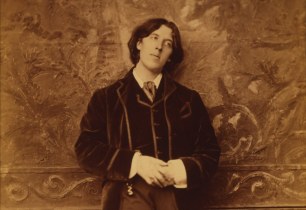
“Education is an admirable thing,
but it is well to remember
from time to time that nothing
that is worth knowing can be taught.”
Oscar Wilde
“Either you decide to stay in the shallow end of the pool
or you go out into the ocean.”
Christopher Reeve

Shine On
“I’ll bet your father spent the first year of your life
throwing rocks at the stork.”
Irving Brecher
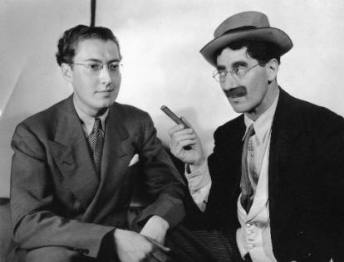
Irving Brecher with Groucho Marx
I happen to be watching one of my favorite musicals, Bye Bye Birdie the other day. I’ve seen this movie a dozen times, but I was unaware who wrote the screenplay, so I Googled the movie.
The screenplay was written by Irving Brecher. Known by his friends and colleagues as one of the funniest, wittiest men on the planet.
What’s that you say, you’ve never heard of Irving Brecher?
Yes you have. Have you heard of the Marx Brothers? Milton Berle? The Wizard of Oz? Meet Me in St. Louis? Then you’ve heard of Irv Brecher.
He was born in the Bronx on January 17, 1914, and grew up in Yonkers. After a brief stint covering high school sports for a local newspaper, he took a job as an usher and ticket taker at a Manhattan movie theater, where he learned from a critic for Variety that he could earn money writing jokes for comedians.
So at just 19 years old, being the resourceful young man he was, Irving Brecher placed an ad in Variety that read in part: “Positively Berle-proof gags. So bad not even Milton will steal them.” Milton Berle saw the ad and hired him immediately.
This launched Brecher’s career and in 1937, he moved to Hollywood and began working on scripts for Mervyn LeRoy, a prominent producer at MGM. He was an uncredited script doctor on The Wizard of Oz and was hired to punch up the comedy scenes in the movie. Mostly the vaudeville-like bickering between the Scarecrow, the Tin Man, and the Cowardly Lion. He didn’t get credit for this gig but his lines helped make the film a timeless classic and prompted Groucho Marx to begin calling Brecher, “The Wicked Wit of the West.”
Mr. Brecher received sole screenplay credit for two Marx Brothers films, a feat in itself. He was nominated for an Academy Award for his musical screenplay for Meet Me in St. Louis. The musical was one of Judy Garland’s biggest hits. The story goes that Garland initially didn’t want to make the movie, but Brecher talked her into making the movie by reading her the script.
In a 2001 interview Brecher was asked who he liked writing for the most? He said he found it easiest to write for Groucho. “I’m a complainer, a dissenter and a put-downer,” he said. “He was my alter ego. I liked the anarchism.”
He died in 2008 at the age of 94. He was one of the last great golden-age screenwriters of his era.
Shine On
“I believe that we are here for each other, not against each other.
Everything comes from an understanding that you are a gift in my life
– whoever you are, whatever our differences.”
John Denver
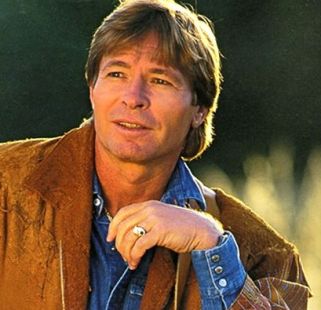
John Denver, 12/31/43 – 10/12/97
He was an American singer-songwriter, actor, activist and humanitarian, whose greatest commercial success was as a solo singer, starting in the 1970s.
Henry John Deutschendor, Jr., or as he is famously known, John Denver, was born on December 31, 1943 in Roswell, New Mexico.
Denver began his music career in folk music groups in the late 1960s. By 1969, he abandoned the music group life to pursue a solo career and released his first album for RCA Records: Rhymes & Reasons. Two years prior, Denver had made a self-produced demo recording of some of the songs he played at his concerts. He included in the demo a song he had written called “Babe I Hate to Go”, later renamed “Leaving on a Jet Plane”.
John Denver’s rise to stardom coincided during a bleak time in American life. The Vietnam war was ragging, and young people throughout the states were protesting the war. His music about life, love and the beauty of nature was a welcome respite from the violent war images on the evening news.
By the mid 1970s he was firmly established as America’s best-selling performer. He recorded and released over 300 songs, which about 200 he composed.
John Denver was not only a talented artist, he also had ecologic interest. He was one of the first entertainers to bring awareness to environmental issues. In his epic 1975 song “Calypso,” which is an ode to the exploration ship and team of environmental activist Jacques Cousteau, he donated all the revenue from the song to Jacques Cousteau’s Nonprofit Organization. He also campaigned against the whaling industry and worked with President Jimmy Carter to combat hunger in Africa.
He was also an avid pilot with over 2,700 hours of flying experience. Due to his love of flying, he was attracted to NASA and became dedicated to America’s work in outer space. He conscientiously worked to help bring into being the “Citizens in Space” program. In 1985, Denver passed NASA’s rigorous physical exam and was in line for a space flight, a finalist for the first citizen’s trip on the Space Shuttle in 1986, but he was not chosen. After the Challenger disaster with teacher Christa McAuliffe aboard, Denver dedicated his song “Flying for Me” to all astronauts, and he continued to support NASA.
One of John Denver’s passions was flying and a friend once asked him if he ever feared of dying in a plane crash? Denver said that he never worries about crashing, but if it’s his time to go, he would want to go in his plane.
He was killed on October 12, 1997 when his experimental Rutan Long-EZ plane crashed into Monterey Bay near Pacific Grove, California. At the time of the crash his pilot license had been revoked due to previous DUIs. However, the autopsy showed there was no drugs or alcohol in his system.
John Denver represented America at its best. He was a wonderful artist and thanks to his beautiful music he will live in our hearts forever.
Shine On
“Walking with a friend in the dark,
is better than walking alone in the light.”
Helen Keller

Shine On

