“What you see is that the most outstanding feature of life’s history
is a constant domination by bacteria.”
Stephen Jay Gould
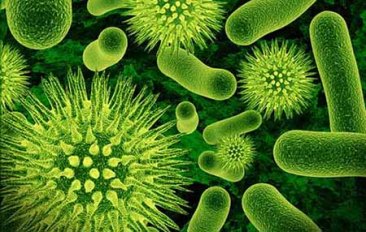
It’s a small dangerous world we live in. A world where all around us are tiny living organisms. No fellow followers, I’m not talking about The Donald. I’m talking about organisms, or microorganisms as they are commonly referred, so small that hundreds of thousands of bacteria could fit onto a pinhead.
Most microorganisms are beneficial but some are also dangerous. For example, there are microorganisms in our large intestine that synthesize vitamins and allow them to be absorbed into the bloodstream. However, a tiny minority are pathogens (disease-causing agents). These pathogens, often called germs or bugs, are a threat to all life forms.
Even those of us who pride ourselves with extraordinary hygiene cannot hide from the one trillion number of bacteria on our bodies. That is just the amount on our bodies, with another trillion or so within our organs. The thought of this makes me squeamish. Yes, our body is the ultimate food court for these microorganisms.
Bacteria has got along fine for billions of years without us. We on the other hand, couldn’t survive a day without some of them. They purify our water and keep our soils productive. Bacteria process vitamins in our gut and convert the food we eat into useful sugars and polysaccharides all along going to war on alien microbes that slip down our throat. Sounds like something from a science fiction novel, but that is how we have survived for centuries.
Microorganisms have been around since this planet began. They will live and thrive on anything you spill, dribble, or shake loose. All they need is a little moisture – just run a damp cloth over a counter – and poof, just like magic, they will bloom as if created from nothing. They also will feed on anything they can find, even such caustic substances as plutonium and waste from nuclear reactors.
The most extraordinary survival in history was when a sealed camera lens that sat on the Moon for two years was recovered and scientist found Streptococcus bacterium on the lens. It just shows us that there are few environments in which bacteria cannot live.
Scientist now know that there are even strains of bacteria living deep within the Earth. This bacteria they found eat what is in rocks such as iron, sulfur, and even manganese. Some scientist believe that their tireless nibblings within the center of the Earth could have created the Earth’s crust.
What’s amazing to me is all this research and findings about microorganisms didn’t appear in school textbooks until the 1960s. Prior to that, the world divided the living into two categories, either plant or animal. But thanks to a German naturalist, Ernst Haeckel in the late nineteenth century we now place microorganisms into their own separate kingdom.
It’s only natural for us humans to think of evolution as a long chain of improvements. A never-ending advancement toward mankind. But, we flatter ourselves because most of the real diversity in evolution has been small-scale. The large things are just a stroke of luck. It’s the little things that belong to the world. A world that has been around for a very long time. But, a world as we all are coming to realize, is a small world after all.
Shine On

 Chronicles of a Blogaholic