Out On A Limb

“You’ve got to go out on a limb sometimes,
because that’s where the fruit is.”
Will Rogers

Out on a Limb

Do you have a family member or close friend that you’ve gone out on a limb to help? Everyone at some point in life, has put themself in a compromising position.

The majority of time that I’ve gone out on a limb for someone, it all worked out. But, there’s always that one time, or should I say, that one person you help that never seems to work out.

For example, this ex-friend of mine, and I stress the word ex: No matter what we did together, or when I attempted to help them, nothing ever, ever turned out positive. Sometimes friends and relatives just have what I call bad energy or bad karma.

Then there’s the people who have good karma. My mother-in-law for instance has what I call excellent parking karma. Whenever I drive her somewhere, we always get great parking spots. She laughs whenever I mention her good parking karma. But, I believe everyone has some kind of energy that brings them good or bad luck.

Maybe I’m superstitious, but I try to stay away from the bad energy people and it seems to help my good energy. However, I have noticed whenever I’m with a bad energy person, my good energy is zeroed out and nothing ever goes as planned.

At this point in my life, I prefer to limit my liabilities. Because, now a days it’s not as easy to bounce back as it was when I was younger, when I go out on a limb.

Shine On

Chasing My Tail

“The ‘self-image’ is the key to human personality and human behavior.
Change the self-image and you change the personality and the behavior.”
Maxwell Maltz

Self Image

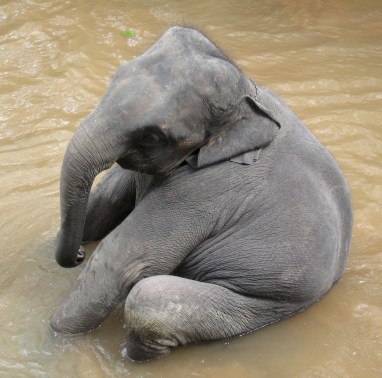
Two Thousand pound baby elephant enjoying his bath.

Does My Butt Look Big in This Picture?

You have to admit, most questions you ask someone, you already know the answer. When it comes to a women’s body image, she should never ask her significant other if her butt looks big.

Why?

Because nine times out of ten he will lie and the other one time he’s truthful, it’s because he likes big butts on women.

After reading a recent fitness magazine article on women’s self-image, it stated that 64% of women do not like how their body looks. Another 59% would like to lose at least 10 pounds. A whopping 43% of women say their husband or boyfriend is the person most likely to make them feel good about their weight.

Most of women’s insecurity about their bodies is due to the fact for decades the fashion and movie industry showed us thin, skinny women as role models of beauty. Just in the past few years, with the popularity of stars such as, Jennifer Lopez, Kim Kardashian and Coco, some “junk in your trunk” has become fashionable. But, most insecurities begin long before you look at a fashion magazine.

I believe our insecurities about our physical and intellectual capabilities begin at an early age. Some people I have known, carry these insecurities with them to their grave. For me, it wasn’t until I was in my thirties that I really didn’t give a dam what other’s thought and began to believe in myself. It took a while for me to not let the negativity of others influence my self worth.

We just don’t realize how lucky we are with what we have, until we lose it. Whether it be our flaws that only we can see, or people in our life that we take for granted. We must be happy and grateful for each day. If we lived our lives with more gratitude and less envy, I believe we would enjoy more each and every day.

I’m learning to look forward instead of looking back and constantly chasing my tail.

Shine On

Our Men of Honor

“A nation reveals itself not only by the men it produces,
but also by the men it honors, the men it remembers.”
John F. Kennedy

Lincoln Memorial

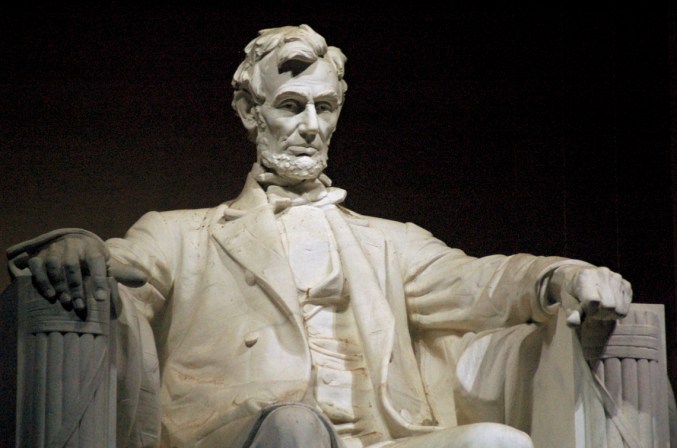
The Lincoln Memorial, Washington D.C. This nineteen-foot tall statue of Abraham Lincoln emerged from the design of Massachusetts sculptor Daniel Chester French whose attention to detail, accuracy, and composition created a masterpiece.

Today, March 3, 1865 marks the 150th anniversary of the day President Abraham Lincoln signed a law to establish a national soldiers and sailors asylum. It was signed a month before the Civil War ended and the day before his second inauguration. Its roots can be traced back to 1636, when the Pilgrims of Plymouth Colony were at war with the Pequot Indians.

The Pilgrims passed a law that stated that disabled soldiers would be supported by the colony. Later, the Continental Congress of 1776 encouraged enlistments during the Revolutionary War, providing pensions to disabled soldiers. In the early days of the Republic, individual states and communities provided direct medical and hospital care to Veterans. Then, in 1811, the federal government authorized the first domiciliary and medical facility for Veterans. Also in the 19th century, the nation’s Veterans assistance program was expanded to include benefits and pensions not only for Veterans, but for their widows and dependents.

Home for Disabled Veterans

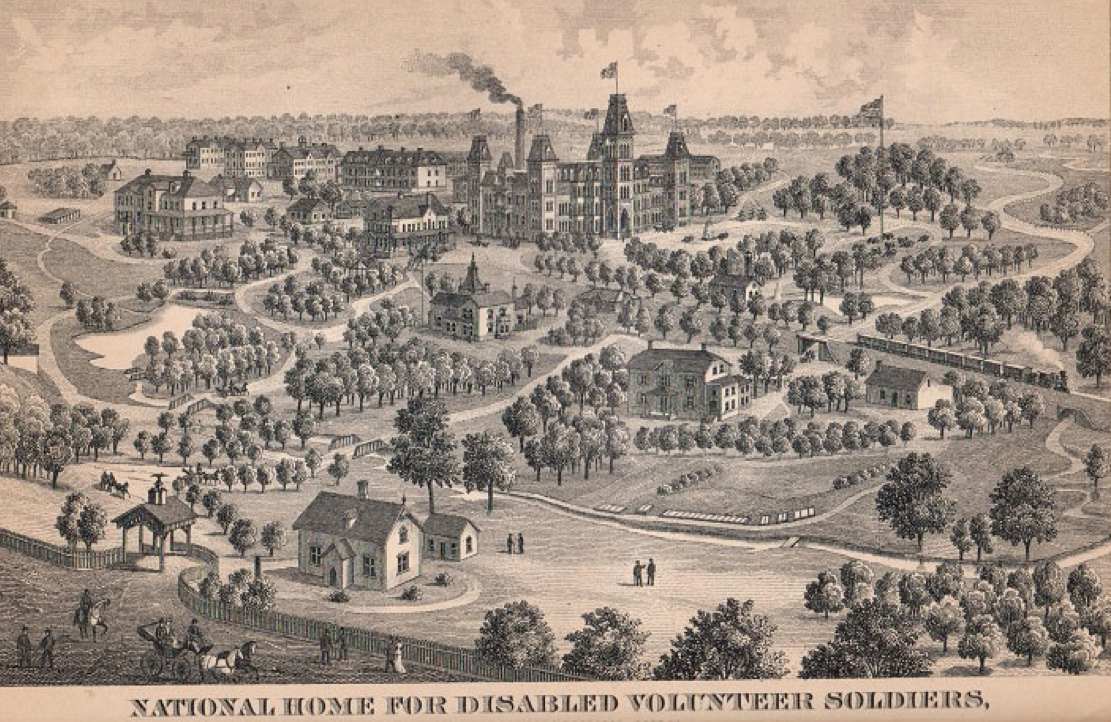
An illustration of the Milwaukee location of the National Home for Disabled Volunteer Soldiers, from the 1885 edition of the Wisconsin Blue Book.

It wasn’t until 1873 that the National Home for Disabled Volunteer Soldiers was established. It was the first-ever government institution created specifically for honorably discharged volunteer soldiers. The first national home opened November 1, 1866, near Augusta, Maine. These national homes were often called “soldiers’ homes” or “military homes,” and only soldiers who fought for the Union Army—including U.S. Colored Troops—were eligible for admittance.

The sprawling campuses became the template for future generations of federal Veterans’ hospitals. Because of President Lincoln, today the United States has the most comprehensive system of assistance for Veterans of any nation in the world.

Thank you President Lincoln for being the first in our government to have the compassion and the forethought to look after all of our past, present and future war veterans. Our men of honor.

Shine On

Just Around the Bend

“Never bend your head. Always hold it high.
Look the world straight in the eye.”
Helen Keller

Just Around the Bend

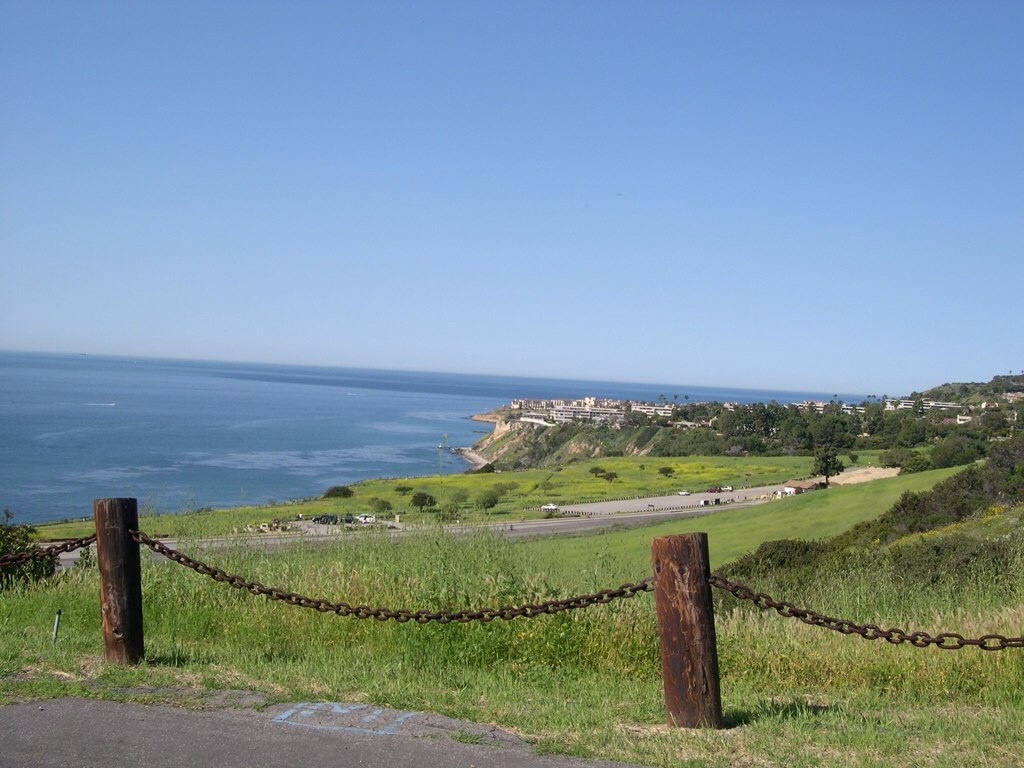
Just Around the Bend on Narcissa Drive in Palos Verdes, California.

Life is but a journey with twists and turns just like a winding road. The future is hard to predict, comparable in many ways to the experience of rounding a corner in a new location and seeing unexpected sights. If an event is just around the bend in the sense of time, it generally means that the wait won’t be long.

Sometimes these bends and turns in life take us in a new direction. Sometimes for the better. Sometimes for the worst. But always in the direction of the unknown. If you’re lucky, these turns in life can make all the difference in one’s life.

Often we are very close to a destination in life, yet we are unable to see it. It’s always good to have a second set of eyes, to help you see the way. A friend will be able to see things much clearer than you. A true friend, will give you words of encouragement such as: “Don’t worry, it’s ‘just around the bend.'”

Shine On

The Great Desmond Morris

“We may prefer to think of ourselves as fallen angels,
but in reality we are rising apes.”
Desmond Morris
The Naked ApeToday I just started reading The Naked Ape by Desmond Morris. As usual, I wanted to know more about Desmond Morris, so I Googled Mr. Morris and found out he is still alive at age 87. Amazingly, he wrote his first book, The Naked Ape in four short weeks in November 1966.

He was born Desmond John Morris on January 24, 1928 in Purton, Wilshire, England. His father, Harry Morris was a children’s fiction author. When Desmond was 14, his father was killed while serving in the armed forces. Ever since then, as noted from a 2008 interview, “It was the beginning of a life-long hatred of the establishment. The church, the government and the military were all on my hate list and have remained there ever since.”  He said in another interview, that “my reasoning behind drifting towards the surrealist subculture is rather profound. In a time living as a child in the Second World War and then losing my father to the repercussions of that violence, an inner urge for rebellion against authority struck me.”

Desmond grew up around all species of animals. In his twenties he developed a passion in both natural history and writing and his interest continued throughout his adult life. He was not only a zoologist, ethologist and a writer but he was also an established artist. He had major art exhibits throughout the world up until 1999.

As a result of his research study into the drawing abilities of apes, in 1957 he organized a chimpanzee paintings and drawings exhibition at the Institute of Contemporary Arts, London. In the spring of 1967 he resigned from his post of Curator held at London Zoo, and became executive director of the London Institute of Contemporary Arts for only a year, until 1968 with the release of The Naked Ape, sending Morris on an absence from the arts world of over twenty years, while his sociobiology career took the front seat.

In the 1950s up until the 1990s Desmond Morris wrote and directed television shows and movies. He’s still writing and publishing books and has published 84 books. Recently, in 2014 he published two books. One called Leopard and the second called Headworks, which is a volume of his collected poems from 1945 to 2014.

Desmond Morris’ art and writing continues to push the limits of mans curiosity about himself and other species on this planet. In his 2013 book The Artistic Ape; Three Million Years of Art, he sets out to answer why it is that the human species has been so intensely creative for thousands of years. This is another Desmond Morris book I plan to add to my 2015 reading list.

Here’s a recent comment from an interview with Desmond Morris about his book The Artistic Ape; Three Million Years of Art:

“Art is something that all humans feel compelled to pursue in one form or another. A culture without art is a dying culture. But art is everywhere and we have had too narrow a definition of it in the past. When I was writing a book about football, many years ago, I noticed that even the scruffiest of football hooligans would talk excitedly about “a beautiful goal”. They didn’t say ‘an efficient goal’, they were judging the goal aesthetically – although they would have laughed at me if I had told them they were making an aesthetic judgement – but that is precisely what they were doing. Every time a man buys a necktie he makes an aesthetic judgement. Every time he chooses a new car, he does the same. Our whole world is governed by aesthetic judgements, only we don’t see it that way – we say art is in a gallery or a museum, but the truth is that it influences us in many ways every day of our lives.”

To learn more about Desmond Morris and find information about his recent books, go to his website at:

The Great Desmond Morris.

Shine On