“Inaction breeds doubt and fear.
Action breeds confidence and courage.
If you want to conquer fear, do not sit home
and think about it. Go out and get busy.”
Dale Carnegie

Shine On
“Inaction breeds doubt and fear.
Action breeds confidence and courage.
If you want to conquer fear, do not sit home
and think about it. Go out and get busy.”
Dale Carnegie
Shine On
“Everyone is a genius. But if you judge a fish
on its ability to climb a tree,
it will live its whole life
believing that it is stupid.”
Albert Einstein
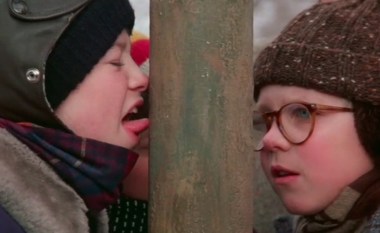
The movie A Christmas Story, classic stupid moment.
We all experience at some time in our lives that moment when that voice in our head says, “W-T-F was I thinking!” Hopefully, these moments are few and far between.
I like to think of them as mental farts, similar to a brain fart, but more humiliating. But let’s face it, they are what they are. Stupid moments.
Shine On
“If you are depressed you are living in the past.
If you are anxious you are living in the future.
If you are at peace you are living in the present.”
Lao Tzu

I love this NYC apartment with its clean uncluttered design.
Some people’s lives are cluttered with possessions to the point where their possessions are taking over their life.
I’m a minimalist, so I don’t have lots of knickknacks, magazines, books and papers in my home. I’ve been a minimalist since sixteen years of age.
At sixteen years old, a friend of my grandmother’s died. He didn’t have any family or friends, except for my grandmother and my family. There was no one to contact about his death, so my older brother and I were elected to dispose of his belongings. This was my first experience with losing someone I knew.
As I sat there looking through his photo albums, clothing, books and knickknacks he had collected over the years, I felt very sad. All of these precious items he had for over eighty years. All of his belongings and items he treasured, were left behind with no one to continue his memories. Sadly, we emptied item after item into the trash. Furniture, clothing, books, kitchen items, and electronics went to the Salvation Army.
Since that day, I stopped hanging on to items that I felt were nonessential possessions in my life. This allows me to simplify my life and also allows me to live in the present. When it comes right down to it, the only important moment is the present moment.
If you can only live one moment at a time, you might as well make it the present. Because choosing to live in the past or the future not only robs you of enjoyment of today, it robs you of truly living.
Shine On
“Nature is infinitely creative.
It is always producing
the possibility of
new beginnings.”
Marianne Williamson

Sailing away on the beginning of daylight savings time.
Everyone loves something new. Something untouched, innocent and beautiful. Who doesn’t love baby animals or a human baby or even new car smell. No one.
Beginnings of new relationships are magical. That sensation of giddiness when you talk or walk with a new lover. The beginning of a book you’ve been wanting to read for months. The beginning of that vacation or long holiday weekend you’ve been looking forward to for years. Beginnings always add excitement, a sense of adventure and magic to ones otherwise humdrum life.
Beginnings are about allowing yourself to start over. It’s about looking, listening, and learning from what you hear and see.
That’s why, beginnings are the best.
Shine On
“We may prefer to think of ourselves as fallen angels,
but in reality we are rising apes.”
Desmond Morris
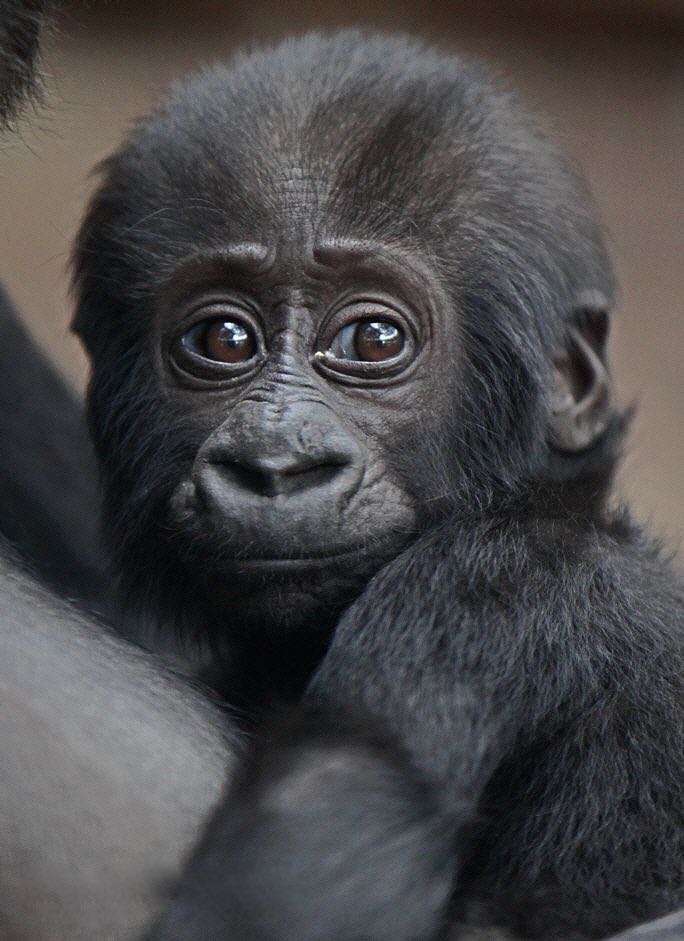 Today I just started reading The Naked Ape by Desmond Morris. As usual, I wanted to know more about Desmond Morris, so I Googled Mr. Morris and found out he is still alive at age 87. Amazingly, he wrote his first book, The Naked Ape in four short weeks in November 1966.
He was born Desmond John Morris on January 24, 1928 in Purton, Wilshire, England. His father, Harry Morris was a children’s fiction author. When Desmond was 14, his father was killed while serving in the armed forces. Ever since then, as noted from a 2008 interview, “It was the beginning of a life-long hatred of the establishment. The church, the government and the military were all on my hate list and have remained there ever since.” He said in another interview, that “my reasoning behind drifting towards the surrealist subculture is rather profound. In a time living as a child in the Second World War and then losing my father to the repercussions of that violence, an inner urge for rebellion against authority struck me.”
Desmond grew up around all species of animals. In his twenties he developed a passion in both natural history and writing and his interest continued throughout his adult life. He was not only a zoologist, ethologist and a writer but he was also an established artist. He had major art exhibits throughout the world up until 1999.
As a result of his research study into the drawing abilities of apes, in 1957 he organized a chimpanzee paintings and drawings exhibition at the Institute of Contemporary Arts, London. In the spring of 1967 he resigned from his post of Curator held at London Zoo, and became executive director of the London Institute of Contemporary Arts for only a year, until 1968 with the release of The Naked Ape, sending Morris on an absence from the arts world of over twenty years, while his sociobiology career took the front seat.
In the 1950s up until the 1990s Desmond Morris wrote and directed television shows and movies. He’s still writing and publishing books and has published 84 books. Recently, in 2014 he published two books. One called Leopard and the second called Headworks, which is a volume of his collected poems from 1945 to 2014.
Desmond Morris’ art and writing continues to push the limits of mans curiosity about himself and other species on this planet. In his 2013 book The Artistic Ape; Three Million Years of Art, he sets out to answer why it is that the human species has been so intensely creative for thousands of years. This is another Desmond Morris book I plan to add to my 2015 reading list.
Here’s a recent comment from an interview with Desmond Morris about his book The Artistic Ape; Three Million Years of Art:
“Art is something that all humans feel compelled to pursue in one form or another. A culture without art is a dying culture. But art is everywhere and we have had too narrow a definition of it in the past. When I was writing a book about football, many years ago, I noticed that even the scruffiest of football hooligans would talk excitedly about “a beautiful goal”. They didn’t say ‘an efficient goal’, they were judging the goal aesthetically – although they would have laughed at me if I had told them they were making an aesthetic judgement – but that is precisely what they were doing. Every time a man buys a necktie he makes an aesthetic judgement. Every time he chooses a new car, he does the same. Our whole world is governed by aesthetic judgements, only we don’t see it that way – we say art is in a gallery or a museum, but the truth is that it influences us in many ways every day of our lives.”
To learn more about Desmond Morris and find information about his recent books, go to his website at:
Shine On

