“In 2013, the city of Davis was ranked 10th
among the Top Brainiest Cities”
Atlantic Cities Place Matters
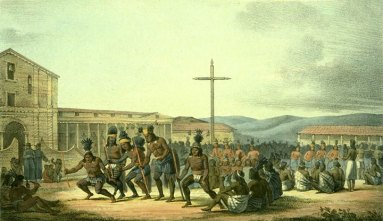
Patwin Indians at Mission Dolores drawn by Louis Choris, circa 1816
Davis is just 385 miles north of Los Angeles. It’s fairly small in size, just 10.5 square miles. The topography is flat, which has helped Davis to become famous as a haven for bicyclists.
Davis was previously settled and inhabited by Patwin Native Americans. After disease decimated most of the native population, many of the remaining Patwins left the area in the 1830s.
By the 1840s European immigrants began to settle in the area. One man in particular, William Wolfskill received a large grant from the Mexican government in 1842 that allowed him to settle from where current day Vacaville is all the way to what is now South Davis.
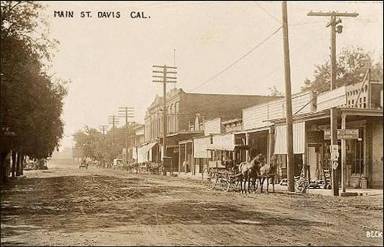 In the decades that followed, new arrivals to the area cultivated the area’s rich soil and raised livestock, such as cattle. Jerome and Mary Davis owned a ranch which at one time covered 12,000 acres, much of which would later be developed into the City of Davis, whose name derives from the Davis ranch.
Around 1860 the California Pacific Railroad purchased a large portion of the ranch owned by Jerome and Mary Davis. The Davis Junction began operating in 1868, serving as an important stop on the railroad line connecting the eastern Bay Area to the rich farmlands of the Central Valley and Sacramento, allowing much improved transport for agriculture and livestock products. 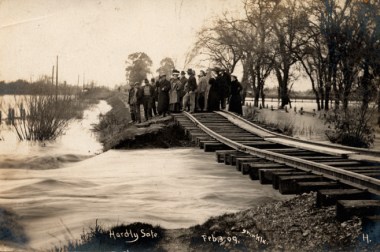 A north-south railroad line also increased the importance of Davisville, as the town was known until 1907, as a transport hub for the regional economy. With the increased railroad activity, the town grew like never before.
The University State Farm near Davis opened in 1908, which would eventually become UC Davis. This education institution was run by UC Berkeley’s College of Agriculture. As the university’s program offerings and enrollment grew, so too did Davis.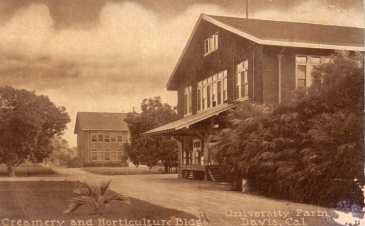
Then in November of 1916, a large fire erupted in Davis. Since at that time there was no fire department, this fire was especially devastating. This event showed the Davis residents that they needed to begin creating a more formal town to support needed services. In the following year the City of Davis was officially incorporated as a city commission form of government.
By 1962 the university became a general campus of the University of California system. The following decades witnessed a large population and construction boom, reflective of trends observable in many other parts of California. Ultimately however, a more growth-conscious attitude took hold, contributing to the Davis’ reputation as a community highly concerned with finding a balance between environmental considerations and growth.
Today the City of Davis is a university-oriented city with over 66,000 residents. Specific planning decisions made in years past have led to the development of a city widely considered to be one of the most bike-friendly in the country.
I had a great time on my trip to Davis. It’s a beautiful and quaint little town and I look forward to future visits to learn more about the history of Davis.
Shine On