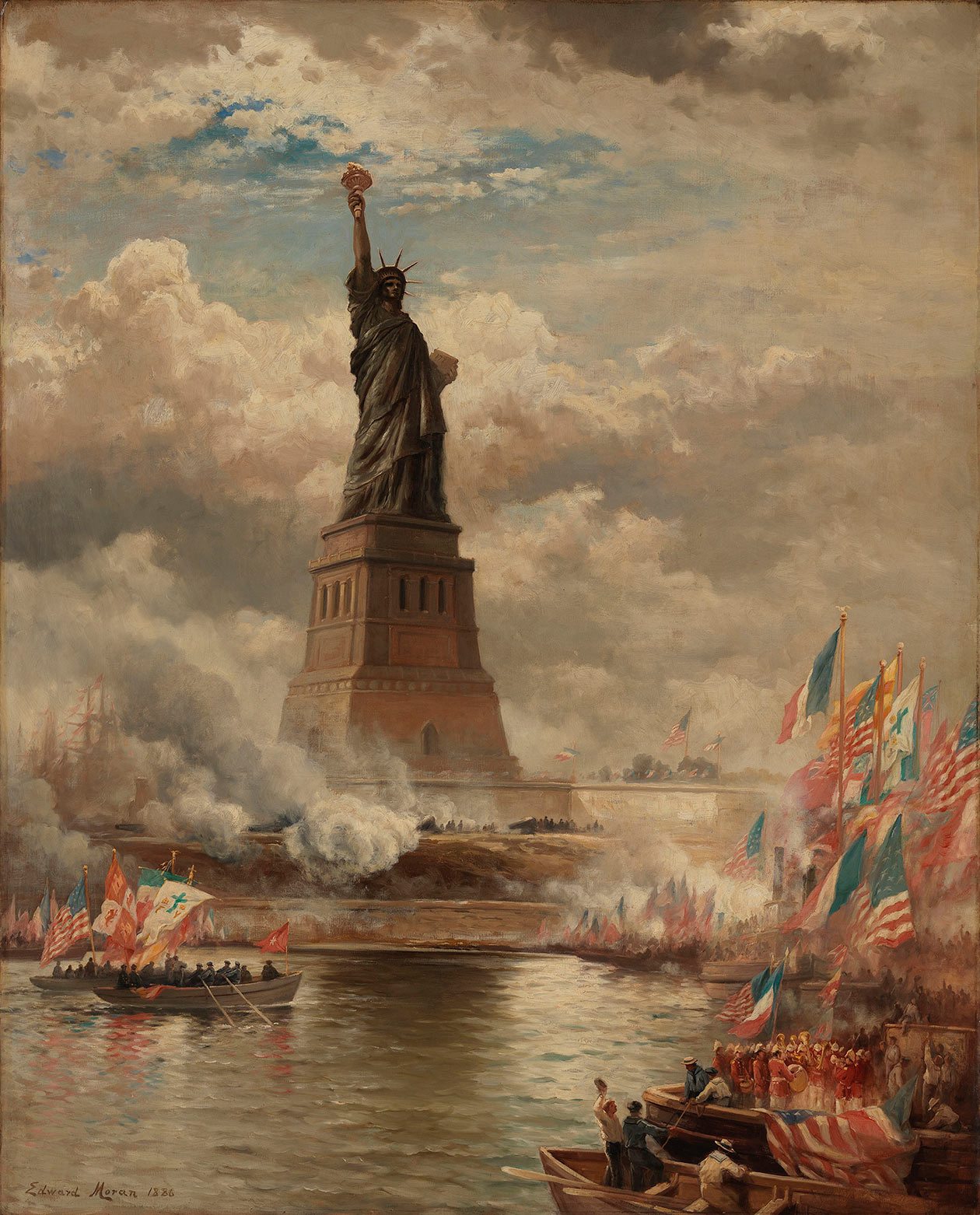
“Give me your tired
Your huddled masses yearning to breathe free
The wretched refuse of your teeming shore
Send these, the homeless, tempest-tost to me
Lift my lamp beside the golden door”
Emma Lazarus
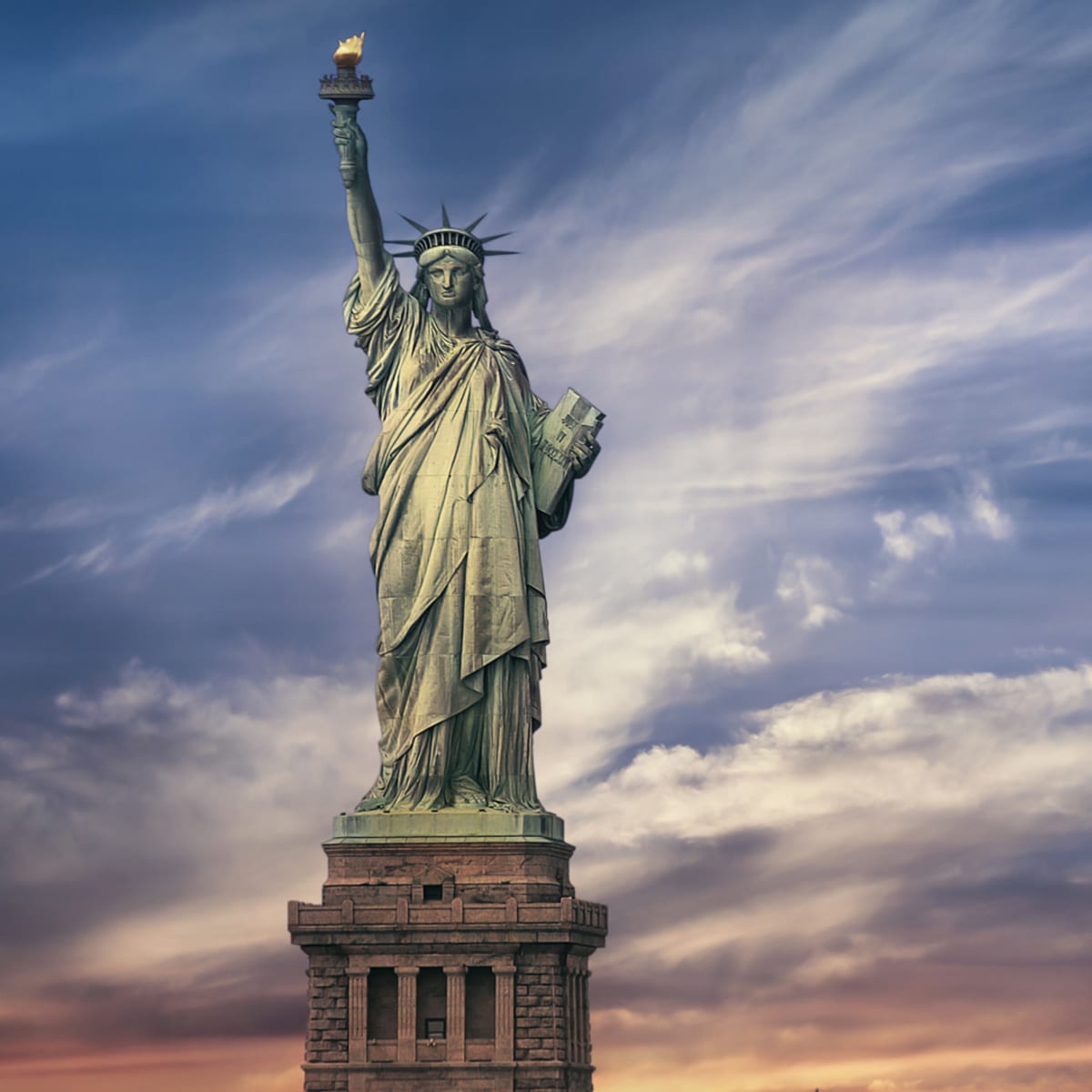
Most American’s don’t know who Emma Lazarus was or why she’s very relevant today. They don’t know she was an American author of poetry, prose and an activist for Jewish causes. Emma’s fame came not from her writing and activism but from a few words on one of our countries most iconic symbols for freedom.
Emma Lazarus was born on July 22, 1849 in New York City, the fourth of seven children. Born to a wealthy Sephardic Jewish family of Portuguese descent, her father, Moses, was a successful sugar merchant who made certain his children got the best education.
Her siblings and she studied with private tutors and learned multiple languages including German, French, and Italian. Excelling in academics, by the time she was seventeen, she had already written a book of poems called Poems and Translations: Written Between the Ages of Fourteen and Sixteen.
As she continued to write, she used her poems and essays to speak out against the persecution of Jews in Europe and growing anti-Semitism in the United States. She publicly proclaimed her identity as a Jewish poet and advocated for Jewish issues internationally. Lazarus wrote in various publications promoting Zionism and a Jewish homeland in Palestine. In addition to her writing, she also met with immigrants and refugees, volunteered at the Hebrew Immigrant Aid Society, and helped establish the Hebrew Technical Institute in New York to provide Jewish immigrants with vocational training.
In 1883, Lazarus formed the Society for the Improvement and Colonization of East European Jews. That same year, she wrote The New Colossus, to be presented at auction to raise money for the pedestal of the Statue of Liberty. The organizers decided to print the poem in the Catalogue of the Pedestal Fund Art Loan Exhibition at the National Academy of Design to inspire continued work on the statue. Then late in 1883, one of the lines from Colossus was inscribed on a bronze plaque, and in 1903 wss installed on the pedestal of the Statue of Liberty.
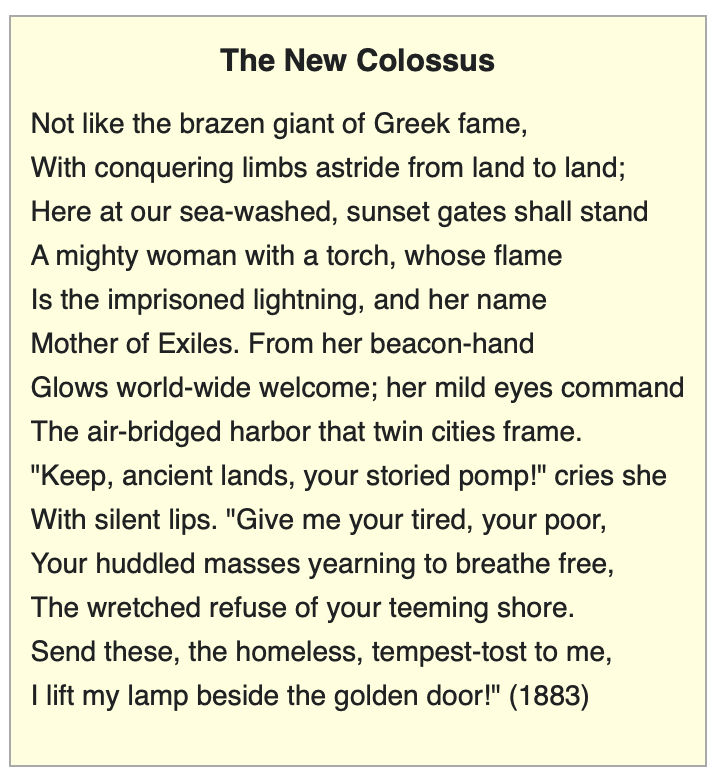
The last stanza of the sonnet was used by many creative people. It was set to music by Irving Berlin in his song “Give Me Your Tired, Your Poor” for the 1949 musical Miss Liberty, which was based on the sculpting of the Statue of Liberty Liberty Enlightening the World. The stanza was also set by Lee Hoiby in his song “The Lady of the Harbor” written in 1985 as part of his song cycle Three Women.
From what I’ve read about Emma, those words on the Statue of Liberty are among her proudest accomplishments. She was a champion in helping immigrants. She knew first hand immigrants experiences coming to a new country and assimilating. She knew how badly they were treated. Her work always produced sensitivity and enduring lessons regarding immigrants and their need for dignity. She contributed toward shaping the self-image of the United States as well as how the country understands the needs of those who immigrated to the United States.
As we celebrate the 250 Anniversary of this country, Emma’s words must be embraced. Because in the current climate of this country, our democracy, our freedom of speech, our immigrants and future immigrants are all in danger.
Now and perhaps more than ever in this country’s history, the inscription on Miss Liberty, rings true for all of us. Especially our immigrants, most of which were our own parents, grandparents and great grandparents. None of us are native to this country except all the Indigenous people.
She never married or had children. Sadly, she died at the young age of 38 years old on November 19, 1887, from Hodgkin’s Lymphoma. Her short lived life was dedicated to her family heritage. Her tour de force in life was helping those like herself, yearning to breathe free.
Shine On