Redondo Beach Foxes

It only takes one clever fox
to best a thousand men.”
Nina Varela
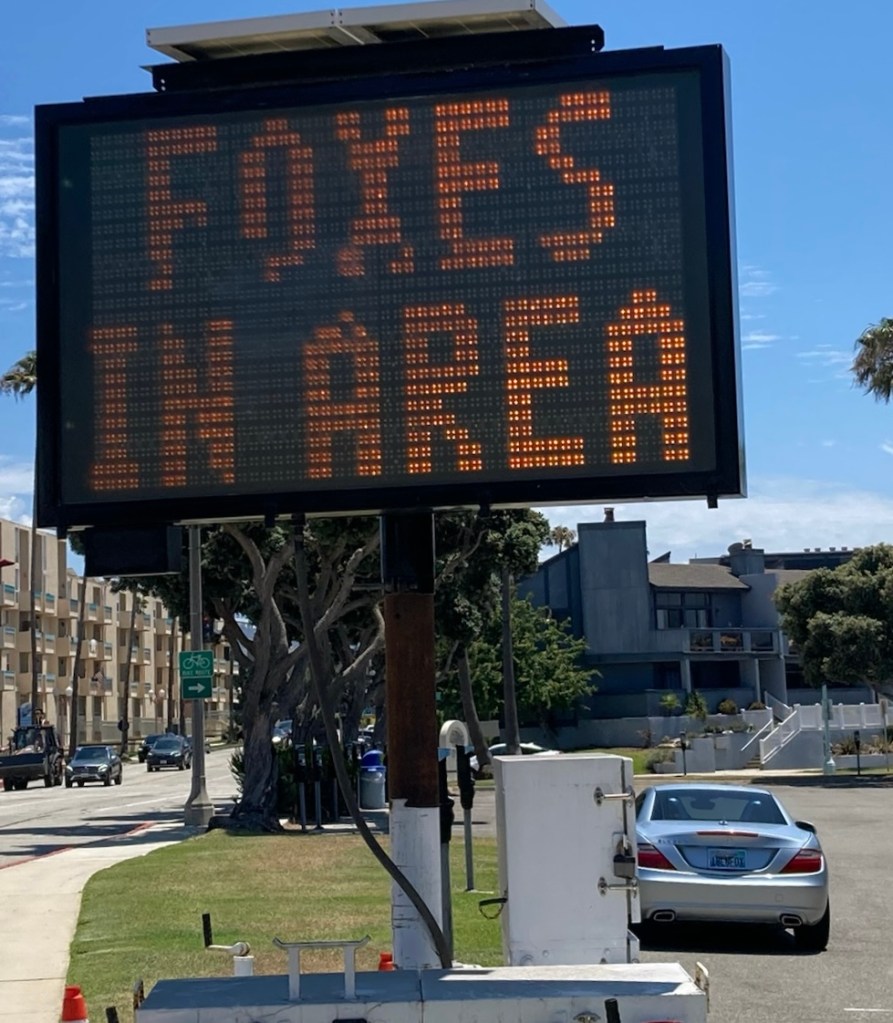


While driving home the other day, I saw this Dynamic Message Sign (DMS), “FOXES IN AREA”. I pulled over to take a photo. That’s my blue car in the bottom right. It’s hard to read my license plate but it reads: IBLUFOX. Yes, I’m a big fan of the fox, so much so I nicknamed my car, “Blue Fox”.

Over ten years ago, I saw a red fox on my daily evening walks. When I got home and told my husband, his response was: “We live at the beach. The only foxes I’ve ever seen are the bikini-clad ones.”

I wish my husband was alive today to witness the City of Redondo Beach announcing foxes in the area.
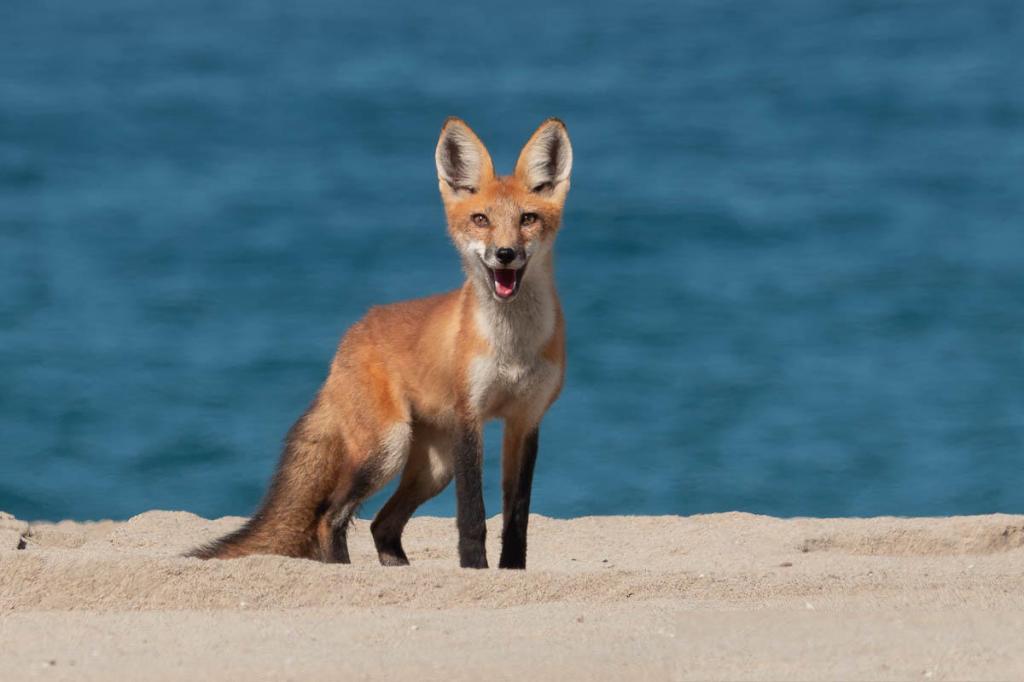
In California there are two populations of Red Fox – the native Sierra Nevada Red Fox, a threatened species found only in the Sierra Nevada and Cascade mountain ranges, and the more common, non-native Red Fox. Non-native Red Foxes were introduced decades ago for fox hunting and fur farming.

In my neighboring area of Palos Verdes, back in the 1920s they had fox hunting. Obviously, the foxes they released “outfoxed” the riders and headed to Redondo Beach to be closer to the ocean. Their populations have grown and gradually spread.

The fox, the smallest member of the dog family, is a highly adaptable species that inhabits mostly forest, chaparral, and desert regions, but can be found in nearly all habitats. There are three types of fox common to Southern California, including the Gray Fox, Red Fox, and Island Fox. The Southern California Kit Fox, a subspecies of Kit Fox, died out in Southern California in 1903.
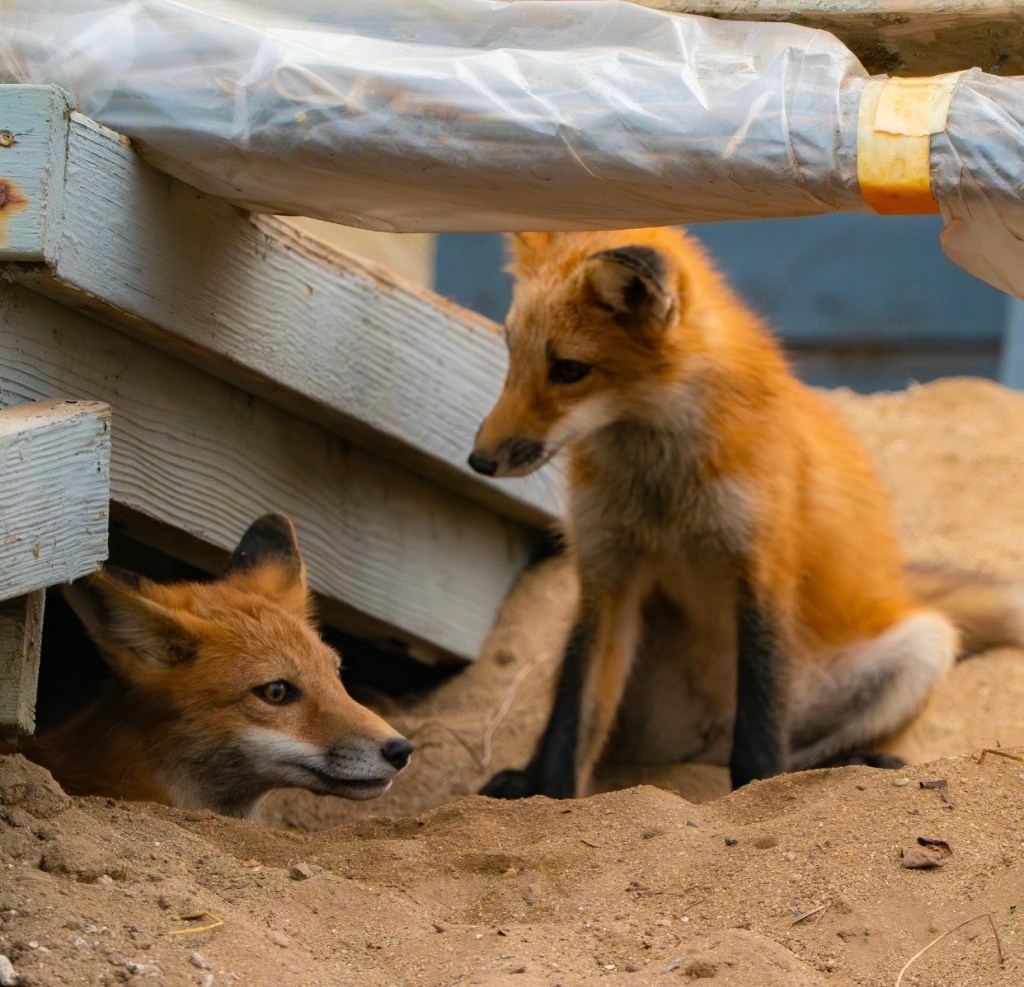
Two Red Foxes living at the beach under a lifeguard stand

Foxes are more solitary in their habits than are others in the dog family. They are territorial and can be aggressive, especially during the breeding season. Their once-a-year breeding season corresponds with the availability of food.

Despite the fact that urban foxes use human buildings for shelter and human refuse for food, their contact with humans is quite limited. Most people who live in an urban area have never seen a fox in the city. Foxes keep a nocturnal schedule, and in the nighttime are often mistaken for dogs when they are seen.

Red Foxes, the most commonly recognized fox, are known for their cleverness and have the largest range in North America. Although they are close relatives of the Gray Fox, they are considerably larger, normally ranging in size from ten to fifteen pounds. Their coats may be reddish or gray or even black, but their legs and feet are always black. The tail is tipped with white.

Socially, the fox communicates with body language and a variety of vocalizations. Its vocal range is quite large and its noises vary from a distinctive three-yip “lost call” to a shriek reminiscent of a human scream. It also communicates with scent, marking food and territorial boundary lines with urine and feces.

With all our fires and oil spills the last few years, our wild life has had to relocate and adapt. The bright side is some of our wild life thought to be outsourced by fires, and over building in rural areas have actually been thriving.

It’s exciting to witness one of my favorite animals in my own backyard, the Redondo Beach foxes.

Shine On

Animated Photography

“There is only you and your camera.
The limitations in your photography are in yourself,
for what we see is what we are.”
Ernst Haas

Animated Photography

I recently came across a very cool animated short film titled, The Old New World. A Moscow-based photographer and animator, Alexey Zakharov created this film by combining photographs from the past with technology from today.

To create the four-minute film, Zakharov took photos of New York, Boston, Washington, Detroit, Washington D.C. and Baltimore captured between 1900 and 1940 and animated them into a wonderful film.

There’s no information on how exactly the process was done, but judging from his past projects, it looks as though he used the images as references for 3D models, then overlaid the images as textures to effectively create an entire 3D world from still images. However it was done, the result is absolutely incredible, as you can see from this animated photography.

Shine On

Cyanotype Photography

“The difficulty of making accurate drawings of objects
so minute as many of the Algae and Confervae
has induced me to avail myself of
Sir John Herschel’s beautiful process of Cyanotype,
to obtain impressions of the plants themselves,
which I have much pleasure in
offering to my botanical friends.”
Anna Atkins

Cyanotype Photography

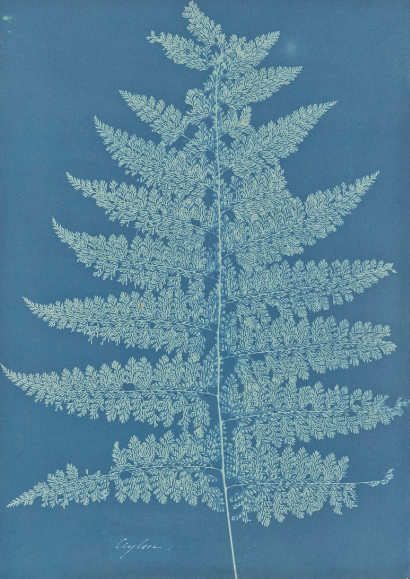
There has been a few different styles of photography through the years, but one I’ve always thought was beautiful is cyanotype. It’s actually obtained not through photography but through a photographic printing process that produces a cyan-blue print.

The process was discovered in 1842 by an English scientist and astronomer, Sir John Herschel. He developed cyanotype mainly as a means of reproducing notes and diagrams, such as blueprints. But, it was Anna Atkins a botanist and photographer who brought this popular processing style to photography in the 1840s.

Atkins created a limited series of cyanotype books that documented ferns and other plant life from her extensive seaweed collection. She would place specimens directly onto coated paper, allowing the action of light to create a silhouette effect. Anna Atkins is regarded as the first female photographer and also the mother of cyanotype photography.

Shine On

Taken a Road Trip

“A journey is a person in itself; no two are alike.
And all plans, safeguards, policing, and
coercions are fruitless.
We find that after years of struggle
that we do not take a trip;
a trip takes us.”
John Steinbeck

Road Trip

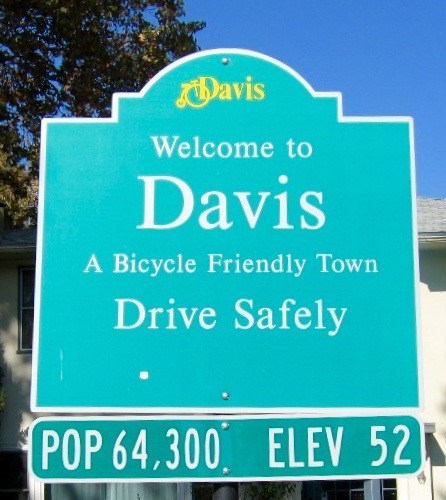
Today I’m heading to Davis, California. Why Davis you may ask? Well, my son’s girlfriend is studying for her veterinary degree at UC Davis and my son invited me to drive up with him for a visit.

I’ve always wanted to visit Davis, so this is a perfect opportunity for me to explore. I found a lovely hotel in the heart of town that I will be staying at while my son stays with his girlfriend.

I don’t usually travel on Labor Day, but I’m looking forward to four days of exploring by bike (the hotel provides bicycles free of charge) all the sites Davis has to offer. Also plan to relax, read and work on my novel.

It’s been quite a few years since I’ve taken a road trip.

Shine On

Pictures Are A Snap

“Of all of our inventions for mass communication,
pictures still speak the most universally
understood language.”
Walt Disney

Pictures Are a Snap

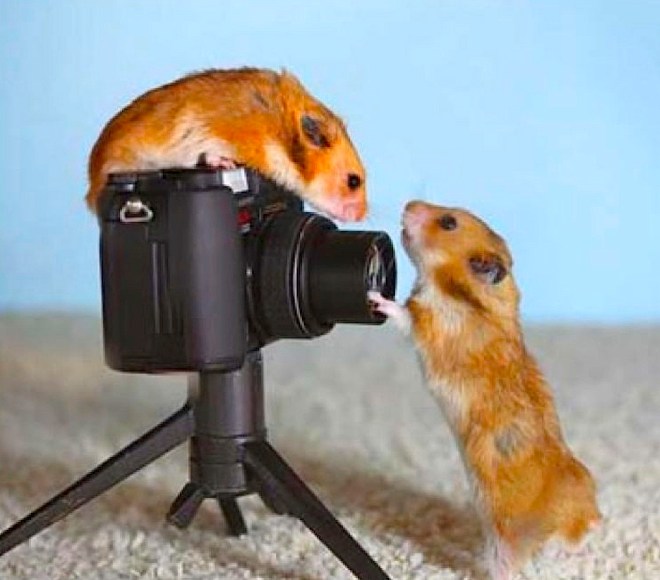
Taking a terrible photo is almost a thing of the past. Everyone either has a camera on their phone, or owns a digital camera.

Thirty years ago the best thing to a digital camera was a Polaroid. Polaroids gave you immediate gratification, and no processing expense. If you ask anyone under the age of twenty what a Polaroid camera is, they probably wouldn’t know what you were talking about.

The cameras of today have come a long way from the large cumbersome cameras of the early 1900’s. Even when you watch old movies from the 1930’s, the camera’s were quite large with their flash bulbs lighting up their subjects.

In the 1970s my camera of choice was a used 35mm Nikon EL camera. It was extremely difficult for me to learn about exposures and f-stops. All I wanted was to take nice pictures and not be bothered with all the details.

Then in 2003 my husband bought me my first digital camera. It was the first generation of the Nikon Coolpix. The lens on this camera is incredibly sharp. So sharp, when I blew up a seven-foot poster from a photo I took of my son, there was zero pixilation in the print.

Currently, I shoot with a Sony HD video camera that also has still image capability. The photos are even sharper than my Coolpix, so I rarely use my Nikon.

My favorite feature I like about digital video and camera images is the zero cost in processing fees. But what I really love is when I take a bad photo, I can just delete it. Yes, thanks to modern technology, taking great pictures are a snap.

Shine On