More Science and Less Fiction

“You may not see massive UFO exhibits
at your local science museum, but there’s
no dearth of saucer stories infesting my email.
Every day, I receive several reports of alien sightings,
extraterrestrial plans for Earth, and agitated screeds
about the reluctance of scientists to
take the whole subject seriously.”
Seth Shostak

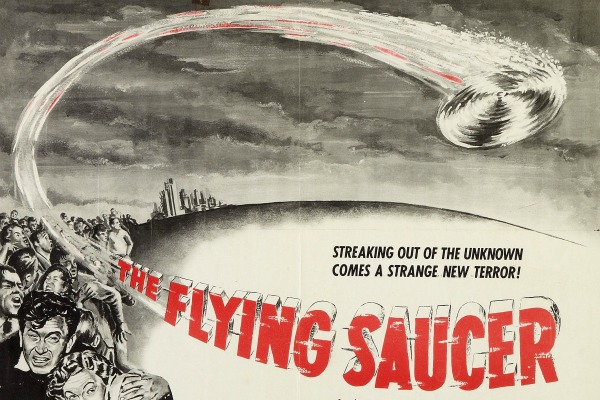
flying_saucer_poster-02

The news report described the sighting of a shiny saucer like object over a small sleepy town in Idaho. The early dusk sighting witnessed by a barber and his customer.

Why is it my fellow Blogaholics, the majority of flying saucer sightings are by Joe Blow from Idaho? Why are sightings rarely seen in large metropolitan areas of the World? Most importantly, when and where did the terror of flying saucer sightings begin?

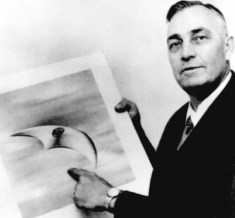
Apparently, disc-shaped flying objects have been recorded throughout history since the Middle Ages. The first highly publicized sighting was by Kenneth Arnold on June 24, 1947. On that day, Mr. Arnold was flying his small plane near Mount Rainier in Washington State when he saw something unexplainable at the same altitude he was flying. A chain of nine objects shot across the sky, glinting in the sun as they traveled. By his observation, these objects traveled at a speed of 1,700 miles per hour, or three times faster than any manned aircraft of its time.

kenneth-arnold

Kenneth Arnold with a sketch of a disc-shaped flying object.

Mr. Arnold never specifically used the term flying saucer. At the time, he was quoted saying the shape of the objects he saw was like a saucer, disc, or pie-plate, and several years later added he had also said the objects moved like saucers skipping across the water. Both the terms flying saucer and flying disc were used commonly and interchangeably in the media until the early 1950s. Then in 1952 the United States Air Force used a much broader term, unidentified flying objects or UFOs.

As time soon proved, this was just the tip of the iceberg and the era of UFO sighting had begun. It wasn’t long until everyone was looking for these new aircraft, which according to the papers were saucer-like in shape. In just a few short weeks, hundreds of reports of these flying saucers were made across the nation. While people thought they were seeing the same things that Kenneth Arnold saw, there was a major irony that nobody at the time realized. Kenneth Arnold hadn’t reported seeing flying saucers.

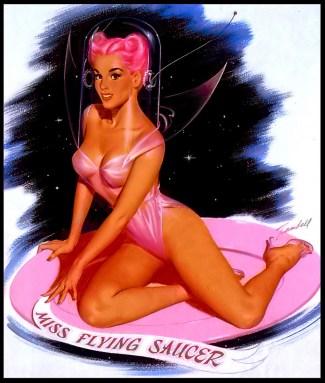
Miss Flying Saucer

Today many of the alleged flying saucer sightings of the era are now believed to be hoaxes. Photographs and movies altered by someone wanting to obtain their fifteen minutes of fame. The flying saucer is now considered largely an icon of the 1950s B-movies and is still a popular subject in science fiction.

This obsession with UFOs may have started several decades ago but it still is an area of science that is unable to be explained. Who knows, maybe in the not too distant future the Miss Universe pageant will be replaced by the Miss Flying Saucer pageant and there will be proof that UFOs are more science and less fiction.

Shine On


Icon of American Art

“People should take time to be happy.”
  Grandma Moses

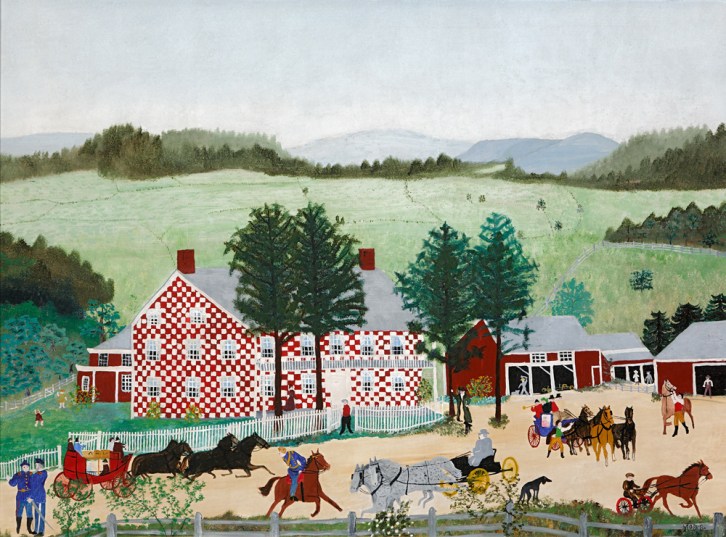
grandma-moses-painting1

The Old Checkered House, 1943 oil on pressed wood


I have quite a few hobbies, but there’s one I really enjoy, drawing and watercolor painting. It’s one hobby that can put me into that zone of a perfect “flow”.

There are many artists I admire and try to emulate. When I started drawing and painting again in my 60’s, my late husband would kid me about becoming the next Grandma Moses. I always admired her recognizable Naïve art style, but knew little about the woman, so I read her 1952 autobiography.

Anna Mary Robertson Moses, known throughout the world as “Grandma Moses” was born September 7, 1860 in Greenwich, New York. In her 101-year life span, she witnessed the Civil War, a pandemic, two World Wars, the advent of the telegraph, the telephone, automobiles, airplanes and countless other innovations. She had always dabbled in the field of art all her life but it was only after all 10 of her children were grown and the burden of farm life lifted, did she begin painting full time.

Her life is really the story of twentieth-century folk art. Although she was not the first folk artist, she was the most well known throughout history and the world. How did she come to be so revered? The answer would appear to lie in a combination of factors. The nature of the field, the personality of the artist, and timing, which we all know is everything.

She had just turned 80 when in the 1940s Americans were reeling from the effects of a prolonged financial depression and filled with dread of rising fascism in Europe. In this time of tribulation, she emerged as an artist whose work embodied everything that seemed good about America.

She painted scenes of the farms and small towns that were then either the present or the near past for many citizens. She proclaimed the virtues of family, church, community and the nation at a moment when these were under attack from without and within, and she lived these virtues. Her basic honesty, generosity and good-heartedness shined forth both in her life and in her art.

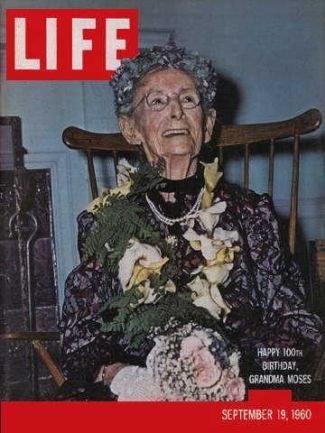
grandma-moses-life-cover

When her paintings began to sell for sizable sums, she became the first artist whose work was routinely licensed for such products as greetings cards, textiles, and the like. In 1953 she appeared on the cover of Time magazine. In 1955 she was interviewed on live television by Edward R. Murrow. Then, for her 100th birthday on September 19, 1960, Life magazine did a cover story to celebrate this remarkable woman.

Grandma Moses passed away on December 13, 1961, at the age of 101, having witnessed a broad swath of American history. She was born the year Lincoln was elected, and died while Kennedy was president.

Both her work and her legend endures here and abroad. This reflects not only the quality of her work but also the fact that she remains an icon of American art.

Shine On

A Magical Place to Live

“Life is like a landscape.
You live in the midst of it
but can describe it only
from the vantage point of distance.”
Charles Lindbergh

magical-place-to-live

Over three hundred years ago the Chowigna Indians lived along the fertile land in Redondo Beach. They lived off the rich soil and fishing the ocean. There was an abundance of fish such as halibut, lobster, and sea bass.

Then in 1854 the Chowigna were sent off to missions and the wealthy Manuel Dominguez sold Redondo Beach to Henry Allanson and William Johnson. These two men saw the possibilities that Redondo would hold. In 1892, Redondo Beach was incorporated and became a major tourist attraction for all walks of life.

Redondo was once described as “The Gem of The Continent” in the Los Angeles Daily Herald newspaper. Through the years famous attractions such as the Redondo Hotel have long disappeared. They say the Redondo Hotel induced more visitors than ever before to venture to the coast.

During prohibition the Hotel Redondo closed its doors and in 1925 was sold for scrap lumber. Big time gambling, complete with mobsters and shooting incidents, found its way to Redondo during the Depression. Chip games, bingo parlors, and a casino were run in full view of the law between 1936 and 1940. For a fare of 25 cents, a water-taxi would transport a visitor to the gambling ship Rex which operated three miles off shore.

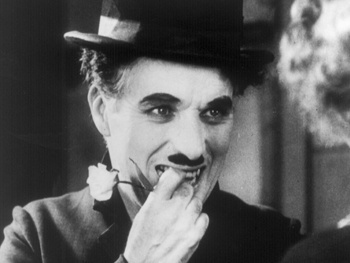
chaplinThroughout its history famous people have flocked to Redondo Beach. During the silent film era, actor Charlie Chaplin was often seen visiting Redondo and even bought a beach cottage for his beloved mother. Charles Lindbergh attended a year of high school at Redondo Union as well as Demi Moore and the Smothers Brothers.  Residents included world famous athletes, authors, an atomic scientist, astronaut, and even a Nobel Prize winner. Redondo Beach is home to beach volleyball Gold Medalist Kerri Walsh.
Hollywood also fell in love with Redondo. Numerous films and television shows have been filmed in Redondo Beach and it continues to be a favorite Hollywood location. Who doesn’t remember the desired destination of the road-tripping family in the 2006 movie “Little Miss Sunshine”.

There have been a few songs written about Redondo Beach, such as Patti Smith’s song “Redondo Beach” and the song, “Surfin’ U.S.A.” by The Beach Boys even gives Redondo a call out.

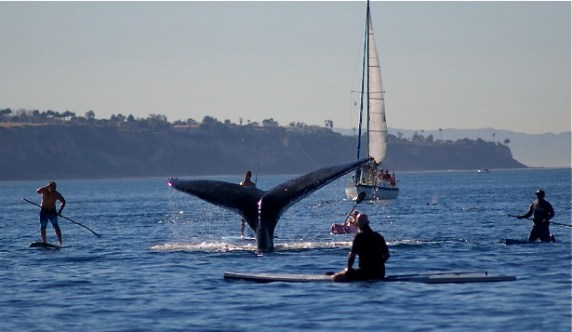
redondo-gray-whales
Yes, Redondo Beach has quite a history. Before moving to Redondo Beach over a decade ago, I didn’t know its history or anything about Redondo. All I knew was that it is utterly beautiful, it has ideal weather and the clean air helped me decide this is where I wanted to live. For me, Redondo Beach will always be such a magical place to live.

Shine On

Learn Something New Daily

“Even the wisest mind has something yet to learn.”
George Santayana

learn something new

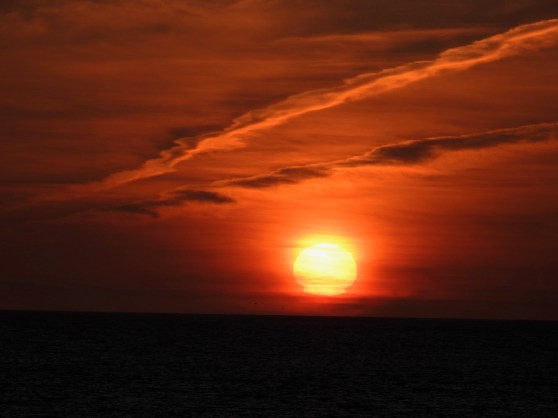
Unable to capture a Strawberry Moon, but did capture a Redondo Red Sunset

This past weekend was a Strawberry Moon and a penumbral lunar eclipse, which when this occurs the Sun, Earth, and the Moon are imperfectly aligned. The June full moon also happens to be the last full moon of Spring.

I’m embarrassed to say, I never heard of a Strawberry Moon. So being the curious kitty I am, I educated myself. As I dove deeper into the rabbit whole, I learned that every monthly Full Moon has been given a name to reflect the changing seasons and nature, like Harvest Moon, Strawberry Moon, or Snow Moon.

Native American tribes, named the months after features they associated with the seasons in the Northern Hemisphere, and many of these names are very similar or identical.

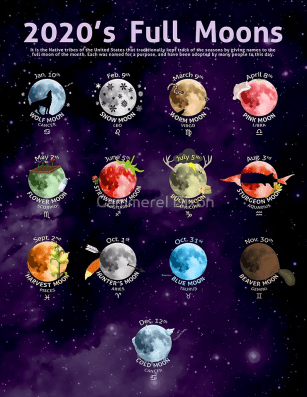
Full Moon Names

2020Full Moons January  Wolf Moon – Named after howling wolves, which may stem from the Anglo-Saxon lunar calendar. Other names: Moon After Yule, Old Moon, Ice Moon, and Snow Moon.

February  Snow Moon – Named after the snowy conditions. Some North American tribes named it the Hunger Moon due to the scarce food sources during mid-winter, while other names are Storm Moon and Chaste Moon.

March Worm Moon – Named because of the earthworms that come out at the end of winter. It’s also known as the Crow Moon, Crust Moon, Sap Moon, Sugar Moon, and Chaste Moon.

April Pink Moon – Named for the pink phlox flowers which bloom in the early Spring. Other names for this Full Moon include Sprouting Grass Moon, Fish Moon, Hare Moon, and the Egg Moon.

May Flower Moon – This moon signifies the flowers that bloom during this month. Other names for the Full Moon in May are Corn Planting Moon, and Milk Moon.

June Strawberry Moon – Named so for the wild strawberries that start to ripen during this month. Other names are Hot Moon, Mead Moon, and Rose Moon.

July Buck Moon – Is so named because the new antlers emerge on deer buck’s foreheads around this time. This Full Moon is also known as Thunder Moon, Wort Moon, and Hay Moon.

August Sturgeon Moon – Named because of the large number of fish in the lakes where the Algonquin tribes fished. Other names for this Full Moon include Green Corn Moon, Barley Moon, Fruit Moon, and Grain Moon.

September Full Harvest Moon – Technically, the Harvest Moon is the Full Moon closest to the September equinox around September 22. Most years it is in September, but around every three years, it is in October. The Harvest Moon is the only Full Moon name which is determined by the equinox rather than a month.

October Hunter’s Moon – Every three years, the Hunter’s Moon is also the Harvest Moon. Traditionally, people in the Northern Hemisphere spent the month of October preparing for the coming winter by hunting, slaughtering and preserving meats for use as food.

November Beaver Moon – According to folklore, the Full Moon in November is named after beavers who become active while preparing for the winter. It is also known as Frosty Moon, and along with the December Full Moon some called it Oak Moon. Traditionally, if the Beaver Moon is the last Full Moon before the winter solstice, it is also called the Mourning Moon.

December Cold Moon – Is the Full Moon when winter begins for most of the Northern Hemisphere.

Some years have 13 Full Moons, which makes at least one of them a Blue Moon, as it doesn’t quite fit in with the traditional Full Moon naming system. However, this is not the only definition of a Blue Moon.

About every 19 years, there is no Full Moon in February. This is one of several definitions of the term Black Moon. The other definitions refer to a New Moon which does not fit in with the equinoxes or solstices, similar to a Blue Moon.

Colonial Americans adopted many of the Native American names and have since incorporated them into the modern calendar.

Sorry for the long post today fellow Blogaholics, but I like to try and learn something new daily.

Shine On

New Fashion Normal

“A mask tells us more than a face.”
Oscar Wilde


New Fashion Normal

Marine Serre’s Paris Fashion Week Show

Wearing a mask during a pandemic has a long history behind it. A masks first known medical use dates back to the Middle Ages when the Bubonic plague killed almost half of Europe’s population.

The original mask looked similar to a bird with a long black beak. This mask did little to protect its wearer from the plague. The long beak of the mask contained fresh lavender to act as a barrier from the noxious vapors that was believed to spread the plague.

It wasn’t until 1910 when the Manchurian plague in China killed 60,000 people, did doctors learn the true benefits of the mask. Chinese doctor Wu Lien-teh proved that the Manchurian plague was spread by droplets person to person. Wu was also responsible for promoting the idea of quarantine and the wearing of cloth face masks to combat the plague.

The mask has come a long way not only from social acceptability, but technically. Originally, masks were made from cloth or surgical bandages. These original masks were not as good as today’s N95 mask. The N95 is molded not woven out of synthetic fibers that filters at least 95% of airborne particles.

It’s a mask that owes its design to legendary industrial designer, Sara Little Turnbull, who designed molded bra cups back in the 1960s. Yes, you heard me right fellow Blogaholics, a molded bra cup design inspired the coveted N95 mask we know today.

Today, the face mask is morphing once again from medical to fashion necessity and becoming the new fashion normal.

Shine On