Learn Something New Daily

“Even the wisest mind has something yet to learn.”
George Santayana

learn something new

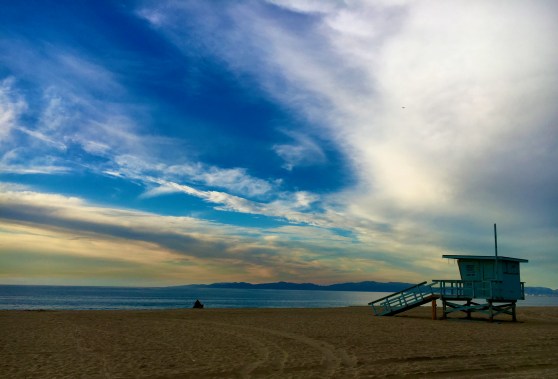
Unable to capture a Strawberry Moon, but did capture a Redondo Red Sunset

This past weekend was a Strawberry Moon and a penumbral lunar eclipse, which when this occurs the Sun, Earth, and the Moon are imperfectly aligned. The June full moon also happens to be the last full moon of Spring.

I’m embarrassed to say, I never heard of a Strawberry Moon. So being the curious kitty I am, I educated myself. As I dove deeper into the rabbit whole, I learned that every monthly Full Moon has been given a name to reflect the changing seasons and nature, like Harvest Moon, Strawberry Moon, or Snow Moon.

Native American tribes, named the months after features they associated with the seasons in the Northern Hemisphere, and many of these names are very similar or identical.

Full Moon Names

2020Full Moons January  Wolf Moon – Named after howling wolves, which may stem from the Anglo-Saxon lunar calendar. Other names: Moon After Yule, Old Moon, Ice Moon, and Snow Moon.

February  Snow Moon – Named after the snowy conditions. Some North American tribes named it the Hunger Moon due to the scarce food sources during mid-winter, while other names are Storm Moon and Chaste Moon.

March Worm Moon – Named because of the earthworms that come out at the end of winter. It’s also known as the Crow Moon, Crust Moon, Sap Moon, Sugar Moon, and Chaste Moon.

April Pink Moon – Named for the pink phlox flowers which bloom in the early Spring. Other names for this Full Moon include Sprouting Grass Moon, Fish Moon, Hare Moon, and the Egg Moon.

May Flower Moon – This moon signifies the flowers that bloom during this month. Other names for the Full Moon in May are Corn Planting Moon, and Milk Moon.

June Strawberry Moon – Named so for the wild strawberries that start to ripen during this month. Other names are Hot Moon, Mead Moon, and Rose Moon.

July Buck Moon – Is so named because the new antlers emerge on deer buck’s foreheads around this time. This Full Moon is also known as Thunder Moon, Wort Moon, and Hay Moon.

August Sturgeon Moon – Named because of the large number of fish in the lakes where the Algonquin tribes fished. Other names for this Full Moon include Green Corn Moon, Barley Moon, Fruit Moon, and Grain Moon.

September Full Harvest Moon – Technically, the Harvest Moon is the Full Moon closest to the September equinox around September 22. Most years it is in September, but around every three years, it is in October. The Harvest Moon is the only Full Moon name which is determined by the equinox rather than a month.

October Hunter’s Moon – Every three years, the Hunter’s Moon is also the Harvest Moon. Traditionally, people in the Northern Hemisphere spent the month of October preparing for the coming winter by hunting, slaughtering and preserving meats for use as food.

November Beaver Moon – According to folklore, the Full Moon in November is named after beavers who become active while preparing for the winter. It is also known as Frosty Moon, and along with the December Full Moon some called it Oak Moon. Traditionally, if the Beaver Moon is the last Full Moon before the winter solstice, it is also called the Mourning Moon.

December Cold Moon – Is the Full Moon when winter begins for most of the Northern Hemisphere.

Some years have 13 Full Moons, which makes at least one of them a Blue Moon, as it doesn’t quite fit in with the traditional Full Moon naming system. However, this is not the only definition of a Blue Moon.

About every 19 years, there is no Full Moon in February. This is one of several definitions of the term Black Moon. The other definitions refer to a New Moon which does not fit in with the equinoxes or solstices, similar to a Blue Moon.

Colonial Americans adopted many of the Native American names and have since incorporated them into the modern calendar.

Sorry for the long post today fellow Blogaholics, but I like to try and learn something new daily.

Shine On

The Beach After Quarantine


“We have been endowed with just enough intelligence
to be able to see clearly just how utterly inadequate
that intelligence is when confronted with what exists.
If this humility could be imparted to everybody,
the world of human endeavors
would become more appealing.”
Albert Einstein

RB After Quarantine Lifted

Shine On

Lip Service

“May we think of freedom,
not as the right to do as we please,
but as the opportunity
to do what is right.”

Peter Marshall


Lip Service


Today is Memorial Day. Celebrated to honor the men and women who died while serving in the U.S. military. First known as Decoration Day, it originated in the years following the Civil War and became an official federal holiday in 1971.

Did you know, that as of today, only 13,289 veterans have been tested for the Coronavirus and out of those tested, there are 1,129 known deaths? That’s almost a 9% mortality rate. A rate which is most likely higher due to the fact that currently, the VA has no exact number of how many veterans have died from the Coronavirus. Some 25 or more states are not even counting veteran deaths from the Coronavirus.

These veteran deaths are only deaths reported in VA hospitals not veterans who died at home, on our streets from homelessness or in civilian hospitals. To put this into perspective, just one State run veteran facility in Holyoke, Massachusetts, a 247-bed facility, 88 veterans have died. The majority of veterans dying are over the age of 65. Their living conditions are poor and many veterans have preexisting conditions such as respiratory diseases as well as conditions caused by exposure to Agent Orange during the Vietnam War.

With the lack of accuracy about the veteran deaths from Coronavirus, and the amount of deaths happening, my question is, where is the Secretary of Veterans Affairs, Robert Wilke and President Trump? Why are they not addressing this problem?

It breaks my heart to hear once again, we are letting down the people who are supposed to matter most. There’s just no excuse for us treating them the worst, when they have given us the most.

As our politicians and White House officials show their celebration for this national holiday and tell all our veterans, “thank you for your service “, in my opinion, they’re just offering nothing more than lip service.

Shine  On

Worldwide Messenger

“If you want somebody to change their mind,
it’s no good in arguing,
you have to reach the heart.“
Jane Goodall


Jane Goodall

I first learned about Jane Goodall back in the 1970s through a National Geographic television show. At the time, the 26-year young woman was making a name for herself with what would become a 60-year study of social and family interactions of wild chimpanzees.

Valerie Jane Morris-Goodall was born in Hampstead, London, on April 3, 1934 and grew up as a very shy child. At a year old, her father gave her a stuffed chimpanzee named Jubilee. She has said her fondness for Jubilee started her early love of animals. Then on her seventh birthday, she received a book that would forever change her life, the book was Doctor Doolittle. The drawings in the book of chimpanzees inspired her to pursue a life as a primatologist and anthropologist. If not for this book and its drawings, her fascination with chimpanzees might never have inspired her to travel to Africa at age 26 and study the life and habits of these primates.

At one point in Jane’s life she had considered studying fossils and becoming a paleontologist. But that career had to do with dead animals. She wanted to work with living animals. Her childhood dream was as strong as ever: “Somehow I must find a way to watch free, wild animals living their own, undisturbed lives. I wanted to learn things that no one else knew, uncover secrets through patient observation. I wanted to come as close to talking to animals as I could, to be like Doctor Doolittle. I wanted to move among them without fear, like Tarzan.”

When Goodall first went to Gombe Stream National Park in Tanzania, Africa in 1960, she was the first woman in the study of primatology, a male-dominated field at the time. She is quoted as saying, “. . . women were not accepted in the field when I started my research in the late 1950s.” She was also the first female scientist to record and understand the communication and life of the chimpanzee.

Through her lifelong dedication and knowledge, she has educated and enlightened the world about chimpanzees. On numerous occasions she has saved the lives of young and old chimpanzees. She has reached out politically through her organizations to raise awareness and funding for further research of chimpanzees.

By 1977, thanks to Goodall’s hard work and renowned research she established the Jane Goodall Institute, which supports her Gombe research. She is a global leader in the effort to protect chimpanzees and their habitats. “Chimpanzees, gorillas, orangutans have been living for hundreds of thousands of years in their forest, living fantastic lives, never overpopulating, never destroying the forest. I would say that they have been in a way more successful than us as far as being in harmony with the environment.”

Goodall’s tenacity, love and respect for not only chimpanzees but the environment has made a huge impact on the killing of chimpanzees in the 1970s and 1980s. She has always believed that everything on Earth is interconnected. Goodall has advocated that every day on this earth we make choices that not only impact ourselves but our planet. By making daily small changes to our lifestyle, we stop destroying not only wildlife but our future. “I think my message to the politicians who have within their power the ability to make change is, ‘Do you really, really not care about the future of your great-grandchildren? Because if we let the world continue to be destroyed the way we are now, what’s the world going to be like for your great-grandchildren?’

During the last six decades, her groundbreaking work, has evolved into a personal quest. To empower others to make the world a better place for all living things. She travels the world tirelessly lecturing and spreading her knowledge of our closest relative, the chimpanzee. “You cannot share your life with a dog, or a cat, and not know perfectly well that animals have personalities and minds and feelings.”

Goodall has become synonymous as the leader in researching primates as well as conservation issues throughout the world. If you ask me, Jane Goodall is the Mother Theresa of all creatures big and small. If you ask her, she humbly replies that she feels like she’s been chosen as a worldwide messenger.

Shine On