“We cling to our own point of view, as though everything depended on it. Yet our opinions have no permanence. Like autumn and winter, They gradually pass away.” Chuang Tzu
Welcome fall, my favorite season of the year. Although I’m a fan of evergreen trees, deciduous trees with their spectacular burst of color is always a welcome site.
The autumnal equinox, also called the September equinox or the fall equinox will arrive on Tuesday, September 22, 2026. Not only do temperatures drop, but plant life slows down, and so do we. The autumnalequinox is an astronomical event that marks the start of autumn or fall. In the Northern Hemisphere, the autumnal equinox occurs every September whereas in the Southern Hemisphere, it occurs every March.
During an equinox, the Suncrosses what we call the “celestial equator”, an imaginary extension of Earth’s equator line into space. The equinox occurs precisely when the Sun’s center passes through this line.
Surrounding the autumnal equinox is the relationship with the full Moon. Curiously, the full Moon that occurs nearest to the autumnal equinox is always called the HarvestMoon. Why is that?
Well, surprise, surprise the name has to do with farming. Around the fall equinox, the full Moon rises around sunset for several nights in a row, traditionally providing farmers with just enough light to finish their harvests during the arrival of the Harvest Moon.
“Happiness is letting go of what you think your life is supposed to look like and celebrating it for everything that it is.” Mandy Hall
In Buddhist philosophy, there are four key states of mind that anybody needs to occupy to be happy and to reach enlightenment, and of these four mudită is generally considered to be the hardest, but also the most important.
To show joy is to celebrate happiness and achievement in others even when we are facing tragedy ourselves. Mudită is when you bask in the reflected joy of somebody else’s happiness. It’s the parent who smiles when they hear their children laughing in the next room. It’s when you jump with joy at a friends promotion. It’s when you smile and are grateful when your friend tells you that they are cancer free.
Mudită is a kind of joyous empathy that delights in the vicarious happiness of another person.
Buddhism says that we should bring more mudită to our interactions with all other people — in fact, all living things more broadly. And the philosopher Buddhaghosa laid out a method to do so.
Buddhaghosa says that we shouldn’t start with somebody that we love, because that is too easy. Nor should we start with somebody that we resent, because that is too hard. Instead, find somebody who is cheerful. Find the person who is a half full, optimistic kind of sort, and be around them a lot more. Let their cheerfulness wash over you, because it is contagious. Let their easy laugh and happy gratitude in, and so too will you become that way. From here, you should find a neutral person, and then the person you resent, until finally you are finding happiness in the joy of somebody you don’t even like.
Mudită is a blessing, because it allows us to experience more joy than ever before. We can experience the joy in our own individual lives, but we can also experience everywhere and in everyone’s lives more Mudită.
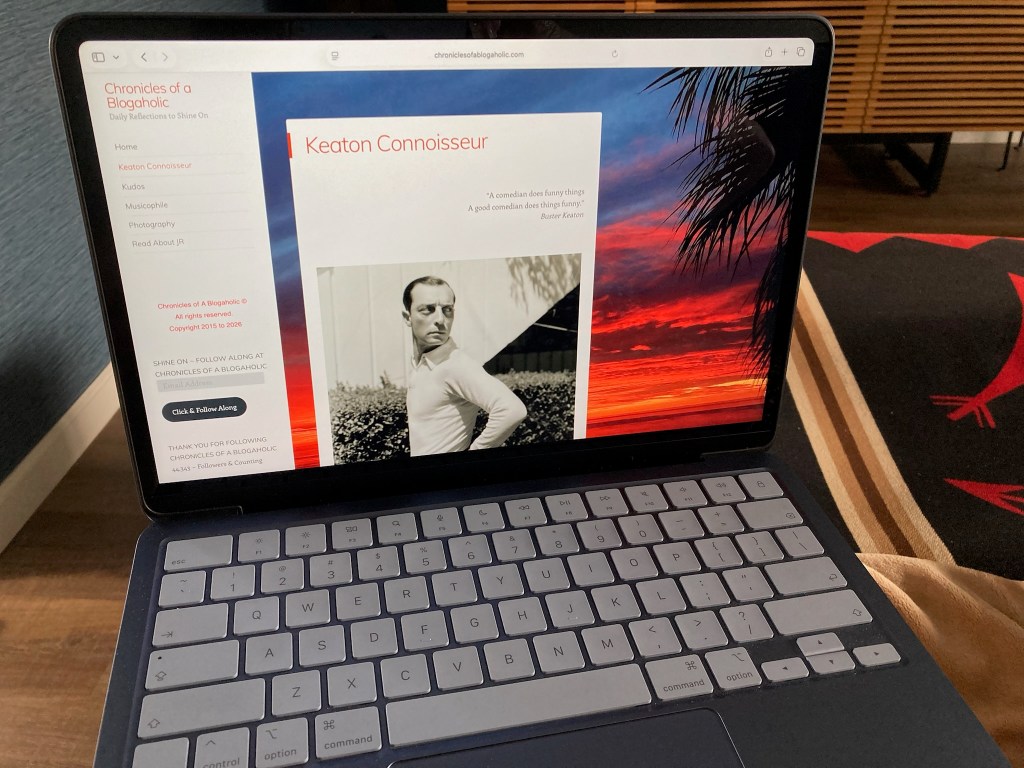
“If computers were cars the Apple would be a Lexus for its reliability and elegance The PC? An AMC Gremlin.” John Frances Dodge
My MacBook Pro is getting up in age and the charging cable was looking like it might be headed south. Its magnetic connection was not seeding tightly. So, to be on the safe side, I attempted to order a replacement charging cable. I spent several days searching online on my unsuccessful quest. Being the tenacious woman I am, I ended up visiting my local Apple Store.
The young man at the Genius Bar was younger than my laptop but very knowledgeable. I explained to him my years of owning different Apple products especially their computers starting with the 1983 Apple Lisa. Through the decades, I always found Apple computers workhorses, but their cables never lasted more than a few years. The young Genius was very sympathetic and attempted to find a replacement for my cable but told me Apple no longer makes that particular cable. I was not happy nor surprised to hear this news. He was very helpful and took the time to go online and found that Best Buys sells my particular charging cable.
While I was talking with this young man, we talked about the Neo. He showed me all the features and he was shocked when I told him I wanted the Indigo Neo. I was surprised myself to walk out of the Apple Store with another Apple product.
I first heard about the Neo from my friend the rocket scientist and computer genius. Yes, he is really a rocket scientist. I researched about this new product last year and had wanted to test drive it, but I never thought I would actually buy one.
This sleek little piece of hardware is extrordinary. The first thing I noticed is how weightless, smooth, fast and cool it runs. You read that correctly, it runs cool as in the temperature is cool. My old laptop always runs hot, but this little laptop is always cool to the touch. Which might explain why it collects less dust and dirt than my MacBook. This might sound weird to some, but maybe that’s why the Neo battery stays charged three times longer than my old laptop.
To be on the safe side, I did end up ordering a new magnetic charging cable from Best Buys. The new cable works great and seems to charge faster than the original cable, so that was a plus.
The real plus was buying my new little laptop. It’s compact, weighs no more than my Apple iPad, has tons of storage, boots up quick and is my new muscle for my hustle to write and create content using my Indigo MacBook Neo.
“It only takes one clever fox to best a thousand men.” Nina Varela
While driving home the other day, I saw this Dynamic Message Sign (DMS), “FOXES IN AREA”. I pulled over to take a photo. That’s my blue car in the bottom right. It’s hard to read my license plate but it reads: IBLUFOX. Yes, I’m a big fan of the fox, so much so I nicknamed my car, “Blue Fox”.
Over ten years ago, I saw a red fox on my daily evening walks. When I got home and told my husband, his response was: “We live at the beach. The only foxes I’ve ever seen are the bikini-clad ones.”
I wish my husband was alive today to witness the City of Redondo Beach announcing foxes in the area.
In California there are two populations of Red Fox – the native Sierra Nevada Red Fox, a threatened species found only in the Sierra Nevada and Cascade mountain ranges, and the more common, non-native Red Fox. Non-native Red Foxes were introduced decades ago for fox hunting and fur farming.
In my neighboring area of Palos Verdes, back in the 1920s they had fox hunting. Obviously, the foxes they released “outfoxed” the riders and headed to Redondo Beach to be closer to the ocean. Their populations have grown and gradually spread.
The fox, the smallest member of the dog family, is a highly adaptable species that inhabits mostly forest, chaparral, and desert regions, but can be found in nearly all habitats. There are three types of fox common to Southern California, including the Gray Fox, Red Fox, and Island Fox. The Southern California Kit Fox, a subspecies of Kit Fox, died out in Southern California in 1903.
Two Red Foxes living at the beach under a lifeguard stand
Foxes are more solitary in their habits than are others in the dog family. They are territorial and can be aggressive, especially during the breeding season. Their once-a-year breeding season corresponds with the availability of food.
Despite the fact that urban foxes use human buildings for shelter and human refuse for food, their contact with humans is quite limited. Most people who live in an urban area have never seen a fox in the city. Foxes keep a nocturnal schedule, and in the nighttime are often mistaken for dogs when they are seen.
Red Foxes, the most commonly recognized fox, are known for their cleverness and have the largest range in North America. Although they are close relatives of the Gray Fox, they are considerably larger, normally ranging in size from ten to fifteen pounds. Their coats may be reddish or gray or even black, but their legs and feet are always black. The tail is tipped with white.
Socially, the fox communicates with body language and a variety of vocalizations. Its vocal range is quite large and its noises vary from a distinctive three-yip “lost call” to a shriek reminiscent of a human scream. It also communicates with scent, marking food and territorial boundary lines with urine and feces.
With all our fires and oil spills the last few years, our wild life has had to relocate and adapt. The bright side is some of our wild life thought to be outsourced by fires, and over building in rural areas have actually been thriving.
It’s exciting to witness one of my favorite animals in my own backyard, the Redondo Beach foxes.
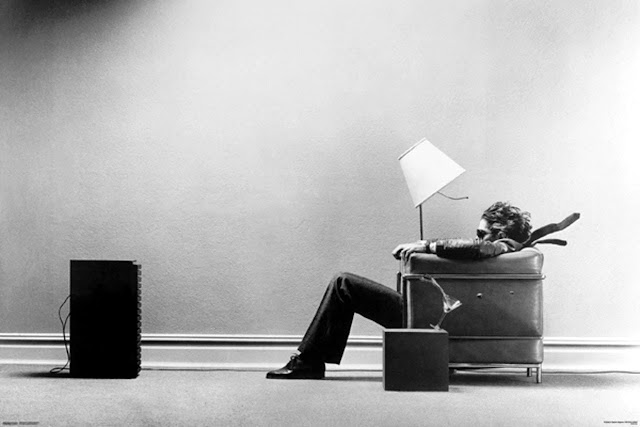
“Music is the soundtrack of your life.” Dick Clark
The definition of a musicophile is an avid lover and enthusiast of music. Point of fact, a musicophile’s passion is deeply rooted in the artistry, history, and emotional experience of the music itself. If this definition is true, I believe most people would call themselves a musicophile.
My love of all styles and types of music began as a child. There was music always playing in our home. My parents had a large collection of albums, 45s and even large reel tapes. I learned how to use the record player long before I could read.
Recently I read Oliver Sacks 2007 book, Musicophilia: Tales of Music and the Brain. In this book, Dr. Sacks explores a range of psychological and physiological ailments and their connections to music. He wrote the book in an attempt to widen the general populace’s understanding of music and its effects on the brain. Sacks states at the outset of the book’s preface, music is omnipresent, influencing human’s everyday lives in how we think and act.
For those of you not familiar with Dr. Sacks work, he wrote the book, Awakenings, which the 1990 feature film by the same name is based. In the book and movie he describes his medical experiences using a drug levodopa on Parkinson’s and post-encephalitic patients at the Beth Abraham Hospital, later Beth Abraham Center for Rehabilitation and Nursing, in New York.
Since the 1970s, there have been multiple studies on the benefits of music therapy for people with medical conditions, trauma, learning disabilities, and handicaps. Most of the documented studies for children have shown a positive effect in promoting self-actualization and developing receptive, cognitive, and expressive capabilities.
For me, music can evoke a time in my life. Can evoke emotions and even the memory of pleasant scents from decades past. All this from listening to a single song.
During 2023 I published my first poetry book, Heartstrings, An Anthology From A to Z. All the poems in my book I always imagined as lyrics to songs. Then in 2026, I wrote, produced and put together a 13 track album, Dragonfly. I’ve uploaded the album to SoundCloud and will soon add the album to Spotify and Apple Music.
My life long love of music has come full circle, for this full-blown musicophile.