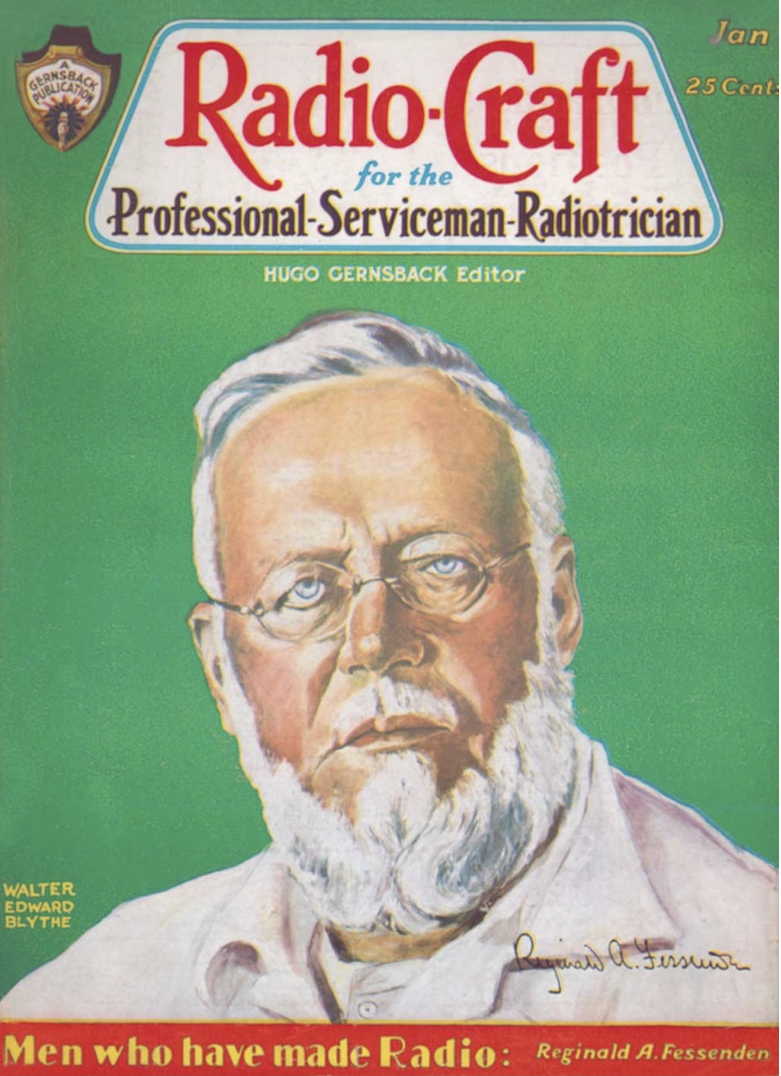
Bicycles Beginning

“Every time I see an adult on a bicycle,
I no longer despair for the future of the human race.”
H. G. Wells
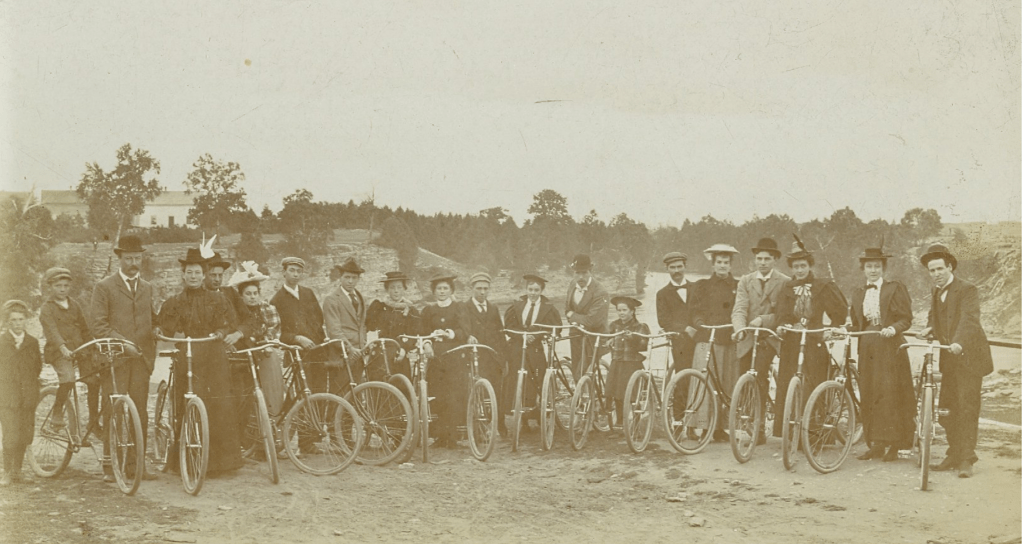

It was the early-18th century in Western Europe when man first began experimenting with human-powered vehicles. In the beginning, these vehicles consisted of four or more wheels and could accommodate up to seven passengers. Much different from carts or carriages, they had handles or ropes for men on foot to push or pull. They were attempts at replacing horses with humans.

Even back in the 1800’s, the purchase of a horse was expensive for the working man. No fit and wealthy gentleman would be without a horse for pleasure riding. They usually had horses for drawing carriages, but most affluent European men owned horses for leisure riding.

That all changed in 1815 when the world was thrown into turmoil. A turmoil not from a war or an economic crises, but because of a small island over six thousand miles from Europe in the South Pacific.

On April 10, 1815, halfway between Asia and Australia, Mount Tambora erupted in Indonesia. It was to become the largest volcanic explosion in recorded history as well as claiming the most fatalities. Mount Tambora’s eruption killed well over 71,000 of its people. This once silent volcano erupted with the power equivalent to 1,000 atomic explosions, blasting about 38 cubic miles of ash, pumice and other matter into the atmosphere.

Ashes reflected the sun’s light and cooled the earth’s surface. Temperatures dropped below freezing in July from Mexico to Vienna. Unexpected snowstorms and rainstorms brought travel to a stop. Farms and grain stores were washed away. Crops failed. Livestock died by the tens of thousands. The world was gripped by the worst famine in a century, and infectious diseases such as typhus was rampant. The year 1816 would become known as “the year without a summer”.
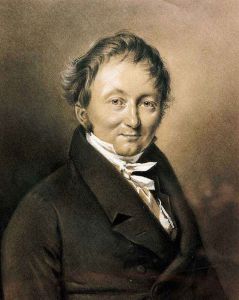
karl-wilhelm-friedrich-christian-ludwig-drais
Karl Wilhelm Friedrich Christian Ludwig Drais

With all the soot and ash engulfing Europe, there was one ray of hope to this gloomy disaster. He was a 31 year-old aristocrat, an expert in forestry, an enthusiastic and passionate horseman as well as an avid inventor from Baden, Germany. His name was Karl Wilhelm Friedrich Christian Ludwig Drais, otherwise known as Baron Drais von Sauerbronn. Baron Drais’ beloved horses died from environmental causes from the volcano eruption, and set the Baron on a journey to invent the bicycle.

It’s not known what the impetus was for the Baron to think about the problems confronting the horses, and how those factors affected gentlemen who rode for pleasure. But somehow, this led him to thinking about the basic form of the horse and its accommodations for a rider in a wooden and wrought iron frame with a pair of carriage wheels in tandem. The result would be recognized by anyone today as the ancestor of all bicycles.

Baron Bike
Baron Drais on his original Laufmaschine, the earliest two-wheeler, Circa 1819

Early in 1817 the Baron built out of cherry tree wood and softwood a “running machine”, which he called a Draisine or a Laufmaschine. The machine was more pony-sized than horse-sized so that the riders feet reached the ground for propulsion.

This early bicycle consisted of a saddle seat, handlebars and a steerable front wheel. Testing and improving it throughout the next few years, the Baron finished his invention and patented the running machine in January of 1818.

Almost overnight the Baron’s Laufmaschine became a sensation. News of the running machine spread westward across Europe. Enthusiasm grew among a small circle of young aristocratic men known as “dandies”. Demonstrating one’s manly abilities was key for “dandies”, and the Laufmaschine was a novelty too challenging and exciting for any dandy to pass up.

First Bike
The Baron’s Laufmaschine displayed at the Kurpfälzisches Museum in Heidelberg, Germany

The Laufmaschine name was a bit foreign to British, so they renamed it the “dandy horse”. Before long, every young gentleman who aspired to the dandy ideal owned a dandy horse. A basic dandy horse in 1818 cost the equivalent of about $900 in today’s money, which made it a rather expensive plaything. The best of these were constructed by carriage builders; the more crude ones were cobbled together by blacksmiths.
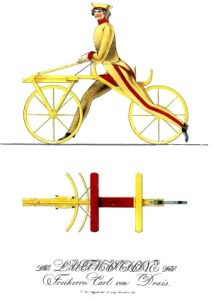
image28
Original Draisine Circa 1817 Made to Order

As quickly as it appeared, the dandy horse disappeared. By 1820, the price of oats was back down to pre-1815 levels, and horses were readily available to those who could afford them. It wouldn’t be until the mid-1860s that someone had the idea to put pedals on the front wheel of a dandy horse, giving it an improved means of locomotion, as well as a scrub brake for the rear wheel; an improvement for stopping over crashing it into a hedge.

So what happened to the Baron Drais? He had the misfortune to belong to the losing political party when the Prussians took over Baden, and he had his title and property stripped; he died penniless and forgotten two years later. But without the Baron and the aristocratic plaything he invented, life might have been very different, and certainly less colorful as the bicycles beginning.

Shine On
More Mudită


“Happiness is letting go of what you think
your life is supposed to look like and
celebrating it for everything that it is.”
Mandy Hall


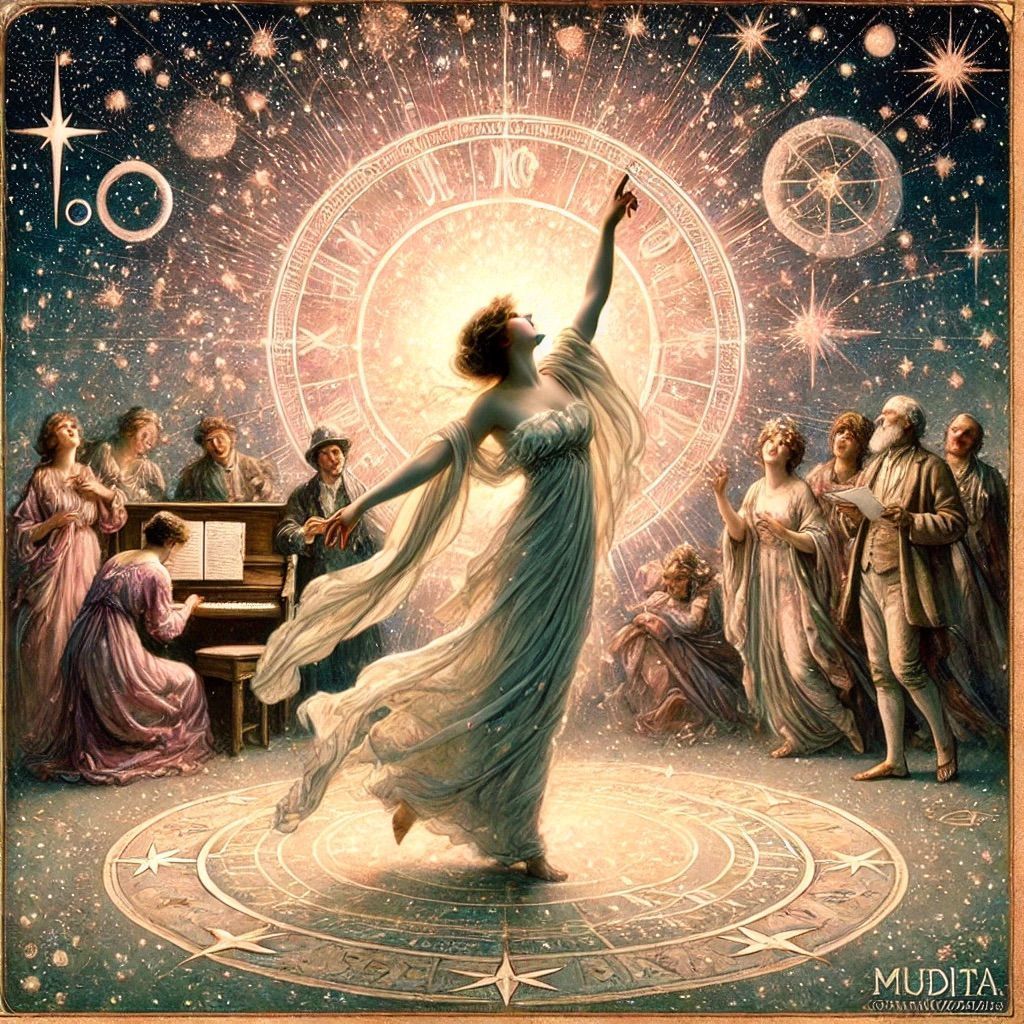
In Buddhist philosophy, there are four key states of mind that anybody needs to occupy to be happy and to reach enlightenment, and of these four mudită is generally considered to be the hardest, but also the most important.

To show joy is to celebrate happiness and achievement in others even when we are facing tragedy ourselves. Mudită is when you bask in the reflected joy of somebody else’s happiness. It’s the parent who smiles when they hear their children laughing in the next room. It’s when you jump with joy at a friends promotion. It’s when you smile and are grateful when your friend tells you that they are cancer free.

Mudită is a kind of joyous empathy that delights in the vicarious happiness of another person.

Buddhism says that we should bring more mudită to our interactions with all other people — in fact, all living things more broadly. And the philosopher Buddhaghosa laid out a method to do so.

Buddhaghosa says that we shouldn’t start with somebody that we love, because that is too easy. Nor should we start with somebody that we resent, because that is too hard. Instead, find somebody who is cheerful. Find the person who is a half full, optimistic kind of sort, and be around them a lot more. Let their cheerfulness wash over you, because it is contagious. Let their easy laugh and happy gratitude in, and so too will you become that way. From here, you should find a neutral person, and then the person you resent, until finally you are finding happiness in the joy of somebody you don’t even like.

Mudită is a blessing, because it allows us to experience more joy than ever before. We can experience the joy in our own individual lives, but we can also experience everywhere and in everyone’s lives more Mudită.

Shine One

Indigo MacBook Neo


“If computers were cars
the Apple would be a Lexus
for its reliability and elegance
The PC? An AMC Gremlin.”
John Frances Dodge


My MacBook Pro is getting up in age and the charging cable was looking like it might be headed south. Its magnetic connection was not seeding tightly. So, to be on the safe side, I attempted to order a replacement charging cable. I spent several days searching online on my unsuccessful quest. Being the tenacious woman I am, I ended up visiting my local Apple Store.

The young man at the Genius Bar was younger than my laptop but very knowledgeable. I explained to him my years of owning different Apple products especially their computers starting with the 1983 Apple Lisa. Through the decades, I always found Apple computers workhorses, but their cables never lasted more than a few years. The young Genius was very sympathetic and attempted to find a replacement for my cable but told me Apple no longer makes that particular cable. I was not happy nor surprised to hear this news. He was very helpful and took the time to go online and found that Best Buys sells my particular charging cable.

While I was talking with this young man, we talked about the Neo. He showed me all the features and he was shocked when I told him I wanted the Indigo Neo. I was surprised myself to walk out of the Apple Store with another Apple product.

I first heard about the Neo from my friend the rocket scientist and computer genius. Yes, he is really a rocket scientist. I researched about this new product last year and had wanted to test drive it, but I never thought I would actually buy one.

This sleek little piece of hardware is extrordinary. The first thing I noticed is how weightless, smooth, fast and cool it runs. You read that correctly, it runs cool as in the temperature is cool. My old laptop always runs hot, but this little laptop is always cool to the touch. Which might explain why it collects less dust and dirt than my MacBook. This might sound weird to some, but maybe that’s why the Neo battery stays charged three times longer than my old laptop.

To be on the safe side, I did end up ordering a new magnetic charging cable from Best Buys. The new cable works great and seems to charge faster than the original cable, so that was a plus.

The real plus was buying my new little laptop. It’s compact, weighs no more than my Apple iPad, has tons of storage, boots up quick and is my new muscle for my hustle to write and create content using my Indigo MacBook Neo.

Shine One

Father of the Cell Phone

“An inventor is one who can see the applicability
of means to supply demand five years before it is
obvious to those skilled in the art.”
Reginald Fessenden

Our cell phones have the capability of a supercomputer. They can perform as a cell phone and instantly they are a computer, television, music playing device, camera, video camera, library, GPS, and a gaming system.

What I find interesting is that I use it less and less as a phone. My monthly cell phone bill shows zero actual phone minutes used and thousands of kilobytes used for data.

For example, at the DMV the other day, the line was hours long. So I pulled out my cell phone, and began reading a book from my OverDrive account.

When I looked around the long line of people, I noticed they too were engaged in cell phone activity. I began to wonder, how did cell phones first get started? So, I pulled up Google on my trusted cell phone.

The cell phone dates back to its early inception of the shore-to-ship radio telephony during the Second World War. The inventor, Reginald Fessenden probably never anticipated the huge impact he would have on society. An inveterate tinkerer, Fessenden eventually became the holder of more than 500 patents. His rendition of ‘O Holy Night‘ from a 1906 broadcast was the first coherent audio transmission to be received.

The telephony developed into mobile phones that were first used for automobiles in the 1940’s. The early mobile phones of the 1970’s to the 1990’s were bulky, consumed high power and the telephone network supported only a few simultaneous conversations. The first cell phone I used in 1993 could only be used in the car and was the size of a man’s size 12 shoe.

I wonder how Reginald Fessenden would react to the huge success of his invention? No doubt he would be proud. But, I bet he would of had no idea how far his inventions would take us and that he would become the father of the cell phone.

Shine On

Persistent Illusion


“People like us, who believe in physics, know that the distinction
between past, present and future is only
a stubbornly persistent illusion.”
Albert Einstein

Shine On