Musketeer Mania


“One for all and all for one.”
Musketeer Motto
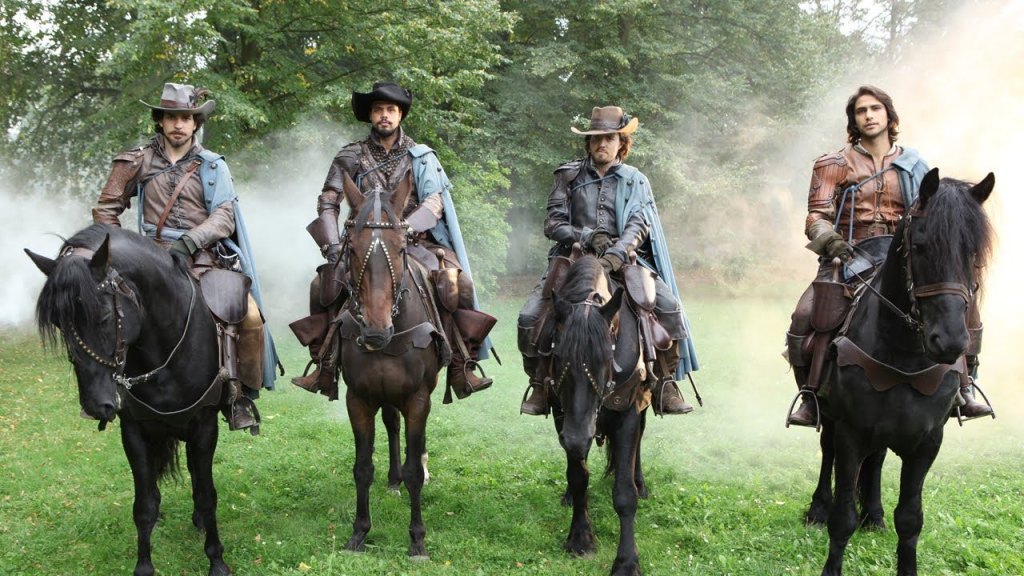

As a child I was captivated by the French writer Alexandre Dumas 1844 novel, The Three Musketeers. Dumas was the Stan Lee of his time, creating the first youthful super heroes, Aramis, Porthos, Athos, and their protege D’Artagnan. The only difference is, Musketeers actually did exist and Dumas based his characters on some of the most famous of Musketeers.

Anything I could find to read or watch about the Musketeers was on my radar. Mostly because they were excellent equestrians and fencers, two of my favorite combinations, and all Musketeer entertainment had plenty of those two activities. 

My late great uncle was an Olympic fencer. I never had the honor of meeting him, but I like to imagine his passion and talent for fencing was passed on to me. I was fortunate to attend a high school that offered beginning fencing, and this was my first hands-on introduction to this 14th century sport. It’s amazing how much fencing requires a great deal of  mental and physical stamina, balance and fast reflexes. I took to this sport quickly, learning all the common moves and French words for them such as, Advance Lunge, Assault, Extension, Flick, Touché and the most famous En-garde.

Most are introduced to fencing through Hollywood movies. There have been numerous movies about the Musketeers dating as far back as the 1921 silent film adaptation starring Douglas Fairbanks. The first movie I remember watching about the Musketeers was on TV in the 1960s, and was the 1948 movie with Gene Kelly. It’s still one of my favorites because it not only had fencing and horses, but as an extra bonus it had Gene Kelly performing ballet type moves while fencing.

In the 1970s the studios came out with a Raquel Welch and Michael York Musketeer version, which wasn’t one of my favorites. As a little trivia note, this movie was originally proposed in the 1960s as a vehicle for The Beatles. 

Disney released their Musketeer movie adaptation in 1993 starring Charlie Sheen, Kiefer Sutherland, Oliver Platt and Chris O’Donnell. This became my favorite version of all time, until now.

A few weeks back, I discovered on Amazon Prime a 2014 BBC Musketeer series. This exceptional rendition of the swashbuckling Musketeers is now one of my top go to TV series. The acting, costumes, romantic locations, storylines and cinematography is awe inspiring. If you’re looking for some great entertainment to fill your evenings, I highly recommend this series. It certainly is fulfilling my Musketeer mania.

Shine On 
Funny at Any Age

“Keeping an active mind
has been vital to my survival,
as has been maintaining
a sense of humor.”
Stephen Hawking

I’ve always been a sucker for anyone with a sense of humor.

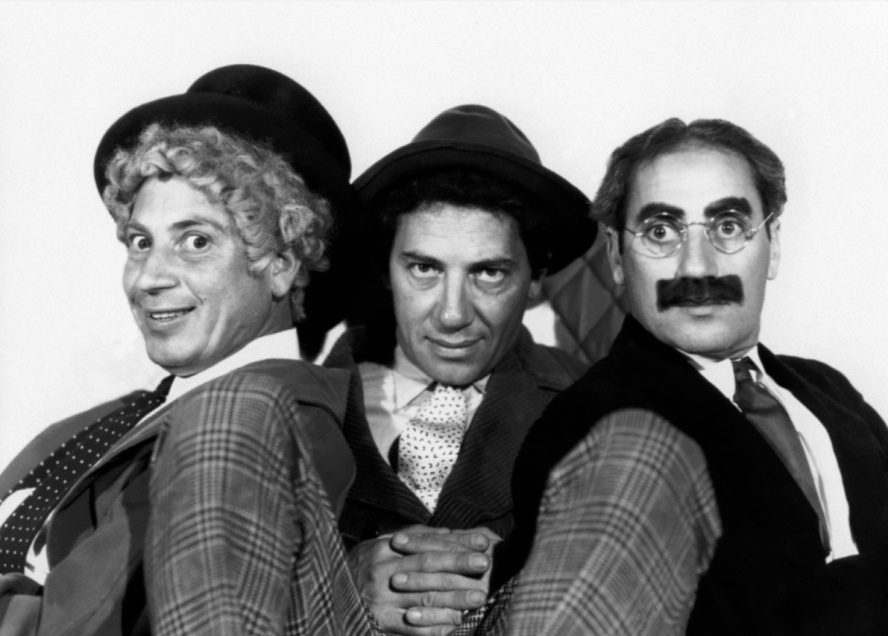
I grew up watching the Three Stooges, Marx Brothers, Laurel and Hardy, W. C. Fields, Judy Holiday, Abbott and Costello, Danny Kaye, Red Skelton, I Love Lucy, Looney Tunes, Rocky and Bullwinkle, Burns and Allen, Jack Benny, and Martin and Lewis.

In my teens I was a huge fan of sitcoms, musical comedies, and comedians such as Steve Martin, David Steinberg, Jonathan Winters, Robin Williams, The Smothers Brothers, Carol Burnett, Flip Wilson, Dick Cavett, Don Rickles, Robert Klein, Albert Brooks, Dudley Moore, Soupy Sales, Steve Allen, Rich Little, Johnny Carson, and Woody Allan just to mention a few.

In my 20’s through my 50’s the comedians and the type of humor I’m drawn to are not much different from the one’s I enjoyed in my youth. Some of my favorites are thankfully still alive today.

I still enjoy a good joke, a great sitcom and a romantic comedy. There are a lot of great comedians around today. My taste in humor hasn’t changed much over the years. Funny is funny at any age.

Shine On

Good Writings to Read


“I find television very educating.
Every time somebody turns on the set,
I go into the other room and read a book.”
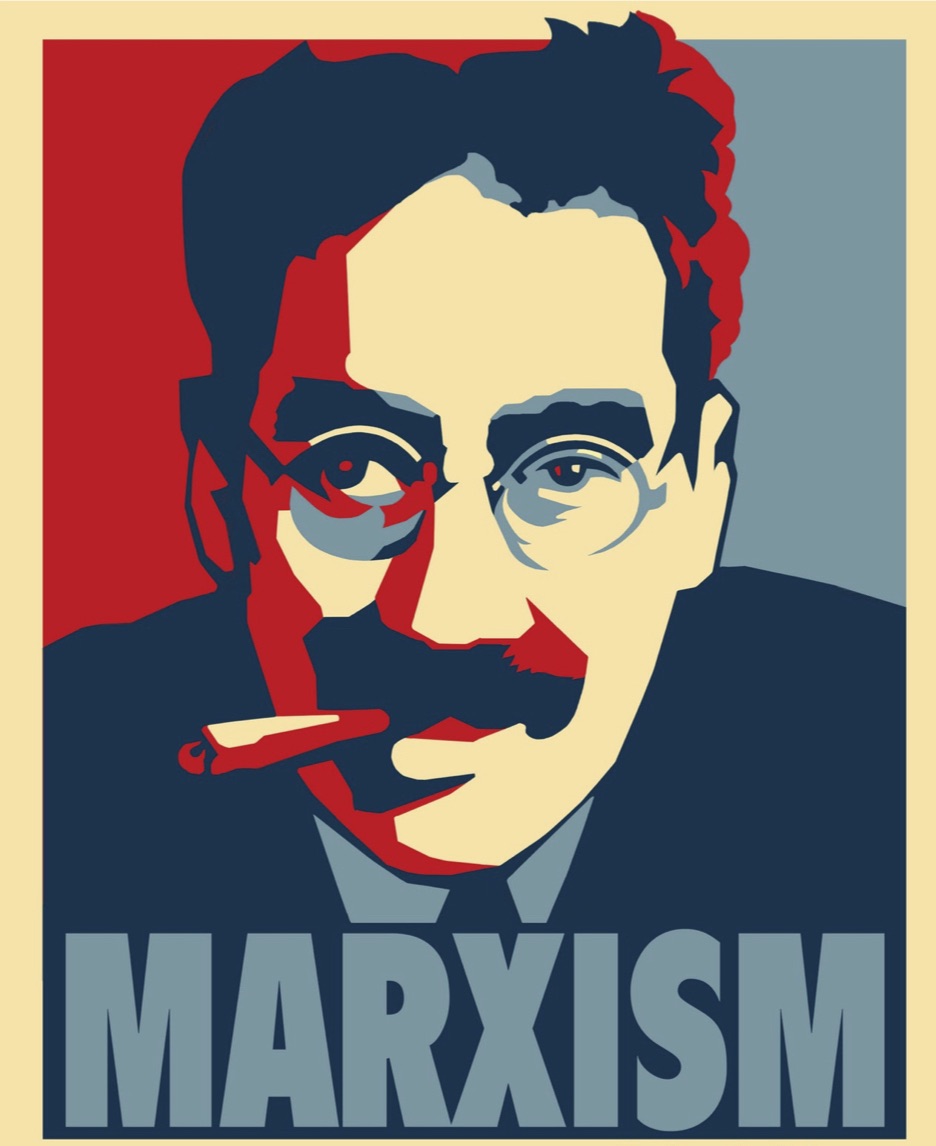
 Groucho Marx


This year I decided that I spend too much time in front of the television, so I finally cut the cord. Not that I don’t enjoy watching all my favorite shows, but most of these shows I can watch on other noncable outlets. For example, my library has watching apps such as Hoopla, Kanopy and Pluto TV, all free if you have a library card.

Last year I promised myself that I would read a book a week. I came very close to that goal and missed it by only three books. Actually, I would have exceeded my goal if I had not watched so much television.

Most of the books I read last year were from my public library. This library is a beautiful old Spanish style building from the 1920s, situated on exquisite grounds with peacocks wandering throughout the property. I love visiting this library because of its picturesque setting and because it is rarely busy. I’m always able to get whatever books I want to read without having to wait weeks or days, even during a pandemic.

My favorite way to read is using my iPad for its ease of reading. If I want to read a magazine, my library has them for free using the app, Flipster. However, most of the books I read are downloaded to my iPad from the library using the app, OverDrive.

Whichever means of reading magazines and books I choose this coming year, I will have my plate full of good writings to read.

Shine On

In Jeopardy of Cancellation


“Everything that happened to me
happened by mistake.
I don’t believe in fate.
It’s luck, timing and accident.”
Merv Griffin


In Jeopardy of Cancellation

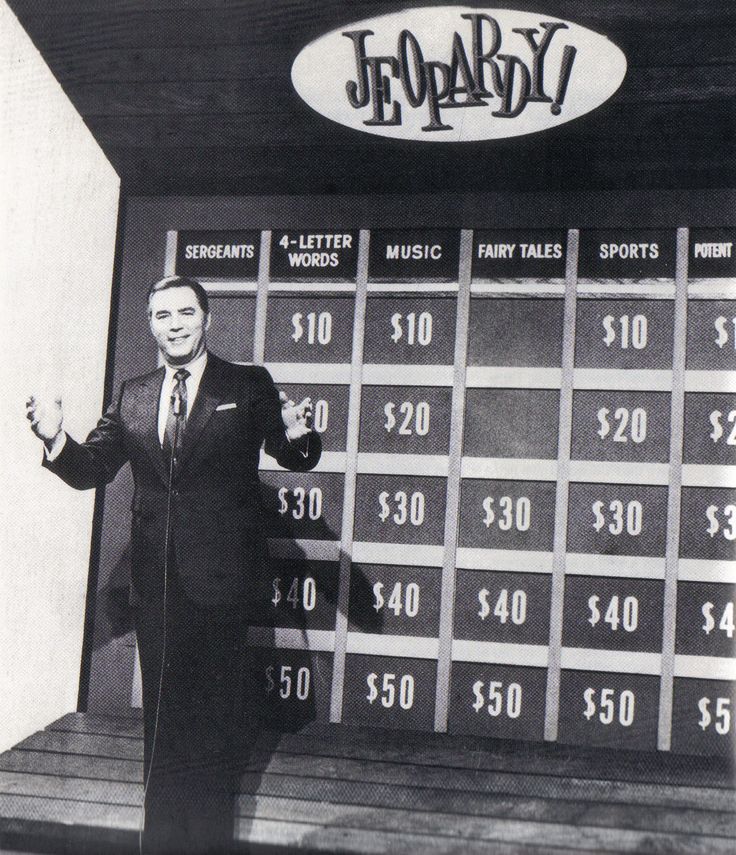
Art Fleming host of Jeopardy! circa 1964


For the past week, the game show Jeopardy! has been airing old historic episodes. As I watch these episodes, I came to realize I’ve been watching one of the oldest game shows on television. Since it first aired March 20, 1964, this show was so popular in my home, my parents bought us the first Jeopardy! board game which quickly became a family favorite.

Over five decades, Jeopardy! remains popular even as game shows come in and out of fashion. This show is largely responsible for re-energizing the quiz show format following a series of quiz show scandals in the 1950s. The rife scandals broke viewing audience’s trust and so began federal law that prohibited the fixing of game shows and their genre across the networks began to disappear.

In the early 1960s, Merv Griffin, a young genius in designing game shows for NBC, was not happy about all the negativity happening to his livelihood. As a television host, producer, and game show developer for NBC, he began to craft a game show that would change the format forever.

On a flight from Duluth to New York City, Griffin and his wife Julann were discussing game show ideas, when she noted that there had not been a successful “question and answer” game on the air since the quiz show scandals. Griffin recalls his wife asking, “Why not do a switch, and give the answers to the contestant and let them come up with the question?” She then fired a couple of answers to her husband and that’s where the show was born. After landing in NYC, he went straight to executives at NBC with the idea.

The shows name, What’s The Question? which Griffin first pitched to NBC executive Ed Vane was very skeptical about the show. Vane claimed the game format didn’t have enough, “jeopardies”. Griffin went back to the drawing board and came up with a new format as well as the fitting new name, Jeopardy!. NBC bought and green lit Griffin’s show without even looking at a pilot show.

Merv was searching for his game host star, when Art Fleming caught his attention after seeing Fleming in a few tv commercials and shows. Although Art was a game show novice, Merv selected him to host. The show needed background music, so the multitalented Griffin composed the current and rather suspenseful tune.

Within weeks of Jeopardy! first airing, it grabbed 40% of viewers in its daytime slot. People were playing along on college campuses and during lunch breaks. Despite its success, NBC felt fewer demanding clues would reap greater rewards. They wanted 13-year-olds to be able to keep up. Griffin refused. He wanted the program to stay smart. This was a competition between adults, and he saw little sense in diluting a game meant to highlight intellect.

Despite solid ratings, in 1975 NBC abruptly pulled the plug on the show. Executives at the network wanted to appeal to a younger, female demographic. The show was reinstated in 1978, then just six months later the show was canceled once again.

Merv Griffin never gave up on his show and in 1983 he met with executives at King World Productions about doing a syndicated version. Luckily, King World executives agreed, and they had reason for their optimism. The board game Trivial Pursuit, which had debuted in 1981, had grown into a sensation, proving consumers had a healthy appetite for trivia.

Trebek 1984

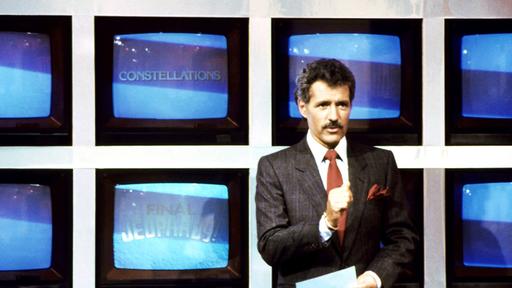
Alex Trebek circa 1984

Griffin updated his show in the 1980s with a high-tech game board made up of video monitors instead of paper cards and rerecorded his theme music with synthesizers. But,  the biggest update was in 1984 when Art Fleming was replaced with the younger, more polished Alex Trebek and the show started airing in the early evening. Ratings immediately improved in this new time slot.

In 2004 the show removed its five-game limit for returning champions. With that rule removed, contestant Ken Jennings was able to win an unprecedented 74-show winning streak making headlines across the country. The $2,520,700 he won from 2004 to 2005 during this winning streak, still holds the record for the most money an individual has ever won on an American game show making Jennings a minor celebrity.

Trebek continues to host Jeopardy!, despite his recent diagnosis of stage 4 pancreatic cancer. However, during the coronavirus quarantine the show has not been taping any new shows since March, the longest hiatus in the history of the show.

There’s no denying this game show is a staple in America. It’s won 16 daytime Emmy awards for Outstanding Game Show, the most ever by one program. It will be a sad day when Trebek retires from his hosting job, but it will be a sadder day if the show ever becomes in jeopardy of cancellation.

Shine On

Funny Girl


“People
People who
need people
Are the luckiest
people in the world.”
Bob Merrill 


funny-girl1

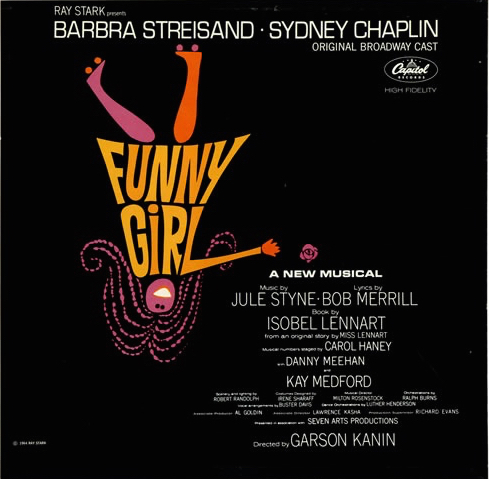
My favorite Barbra Streisand musical Funny Girl was on television the other night. I was just a kid when my parents brought this Broadway hit album home in 1964. It didn’t take me long before I had every lyric of every song memorized, belting out each song like any other normal 8-year old.

Funny Girl became a huge hit, not only as a Broadway Musical but also as a movie. I was too young to see the Broadway version, but I was the first in line at the movie matinee theater with my elementary school friends when it was released in 1968.

I can remember sitting in the movie theater quietly singing along with each and every song. My friends were surprised that I knew all the lyrics, especially since I hadn’t told them. I just thought every kid knew the lyrics. Guess I was wrong.

To my surprise, when I watched the movie the other day, all the lyrics came back to me. How is it I can’t remember what I made for dinner two days ago, but start playing the music from Funny Girl and I start singing along without forgetting a single note or lyric. Guess I’m just a funny girl.

Shine On