Yellow Submarine

“The sea, the great unifier, is man’s only hope.
Now, as never before, the old phrase
has a literal meaning:
We are all in the same boat.”
Jacques Cousteau
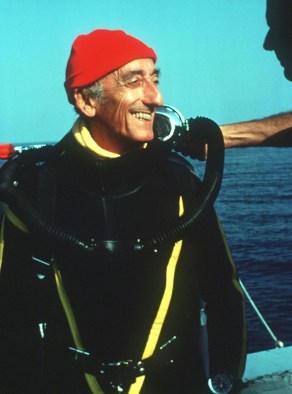
Jacques Cousteau on-board the Calypso.

One of my passions that began as a child is my love for the sea and all its forms of life. Growing up in the midwestern United States, the largest area of water I knew were the great lakes.

Having never seen an ocean in person, I was first introduced to the sea by watching the 1950s TV show, Sea Hunt starring Lloyd Bridges.

When my family relocated to California in the mid 1960s, I remember the first day we drove to Zuma Beach. I couldn’t wait to jump into the water. Unfortunately, it was during a riptide and I nearly drown.

My respect for the sea and it’s power grew more towards what was in the ocean and not actually being in the water. So, during the late 1960s to the 1980s I whet my appetite for the sea by watching The Undersea World of Jacques Cousteau. I was hooked on this exciting new documentary style show. I fell in love with the interesting Frenchman in the red bonnet with his charming personality and beautiful ship the Calypso.
Yellow Submarine

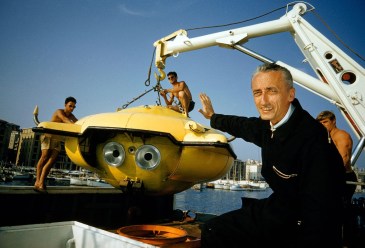
Jacques Cousteau with his Yellow Submarine.

Every week Jacques Cousteau this french ex-naval officer, explorer, conservationist, scientist and researcher with his mesmerizing voice would take me on an incredible journey exploring the depths of oceans around the world.

Jacques Cousteau died 25 June 1997, but he left us with a plethora of films, books and research that paved the way for current oceanographers and scientist.

I miss you Jacques Cousteau and all that you gave us, including that wonderful yellow submarine.

Shine On

Jog Your Memory

Memory… is the diary that we all carry about with us.”
Oscar Wilde

Jog Your Memory

Anyone who has gone without exercising for a while knows how it can fog up your brain. You may not even realize that your memory loss is due to lack of exercise. Most people chalk it up to senility.

A memory is made up of millions of neurons which your brain builds to make a connection so that you can have memories. As you age, your brain continues to develop neurons and build new connections. Research has proven that any type of cardiovascular activity when done for 20 minutes or more, three times per week will improve your memory.

You may ask yourself, how is this possible? Well, when you are exercising you are obviously raising your heart rate. The raised heart rate gets blood flowing to your brain. This blood flow enlarges the part of the brain which is responsible for brain memory. It also increases the secretion of a brain protein necessary for your long-term memory.

The brain may be an organ, but it works like a muscle and it’s one of the most important organs in your body. You can let it atrophy by sitting around all day. Or you can choose to get up and jog your memory.

Shine On

Slumberland

“Laugh and the world laughs with you,
snore and you sleep alone.”
Anthony Burgess

Slumberland

Recently I’ve been going to bed earlier and earlier. I’m working on not staying up so late, so that I can get an early start on my day. I had been sleeping maybe three to four hours in the night and it was taking a toll on my mind and body.

The benefits of sleep make a big difference in every area of your life. People don’t realize how much sleep they need and why it is so important. Adequate sleep is a key part of a healthy lifestyle, and can benefit your heart, weight, mind, and more.

Inflammation is linked to heart disease, stroke, diabetes, arthritis, and premature aging. Research shows that people who get less sleep—six or fewer hours a night—have higher blood levels of inflammatory proteins than those who get more.

Harvard Medical School Division of Sleep Medicine has done a great deal of research to find out how your body manages sleep. According to their findings, your body manages and requires sleep in much the same way that it regulates the need for eating, drinking, and breathing. Throughout the years, extensive research has been done on the effects of sleep. These studies show that sleep plays a vital role in promoting physical health, longevity, and emotional well-being.

That explains why after a good night’s sleep, I feel better, my thoughts are clearer, and my emotions are less fragile. Without adequate sleep, judgment, mood, and ability to learn and retain information are weakened.

I sympathize with young mothers who have great difficulty obtaining enough sleep. But, maybe somethings will just have to wait while you get some rest. Maybe even taking a catnap with the kiddies will make a big difference in your entire day.

So, make a commitment to yourself to get at least seven to eight hours sleep each night. You will feel and see a big difference in all aspects of your life when you get that much-needed slumberland.

Shine On

Easy on the Eyes

“No object is mysterious. The mystery is your eye.”
Elizabeth Bowen
Easy on the Eyes

If you own a cell phone or a tablet such as an iPad, you now have the capability to download a simple application that will allow you to check your eye sight.

A London University has developed The Portable Eye Examination Kit, or Peek. What’s so amazing about Peek is that it is just as accurate as the traditional sight charts.

How cool is this. The next phase in this technology breakthrough is if you own a 3D printer, you will be able to design and print out your own eye wear.

This sounds like fun to me. I would love to be able to examine my eyes, design a pair of stylish eye glasses and never leave my home. This new technology is definitely easy on the eyes.

Shine On

The Beginning of the End

“Every major player is working on this
technology of artificial intelligence.
As of now, it’s benign… but I would say
that the day is not far off when
artificial intelligence as applied to
cyber warfare becomes
a threat to everybody.”
Ted Bell

The Beginning of the End

Today it was announced that scientist at UC Berkeley have successfully programmed a robot to learn simple tasks through trial and error just like humans learn. This robot BRETT, (Berkeley Robot for the Elimination of Tedious Tasks) can use visual and sensory information about itself, its environment and the objects before it.

To the average person this may not seem like a big deal, but this is a major breakthrough in the area of artificial intelligence (AI). In the summer of 1956 the field of AI was just getting started. The founders of AI became the leaders in the research for decades. Many of these men predicted that a machine as intelligent as a human being would some day exist by the 1970s. Eventually it became obvious that they had grossly underestimated the difficulty of the project.

Here we are almost sixty years later and the technology these men worked on has arrived. The technology itself is fascinating but what is more interesting to me is how humans will use this information. Will AI be used for the betterment of man, or will it be the beginning of the end?

Shine On