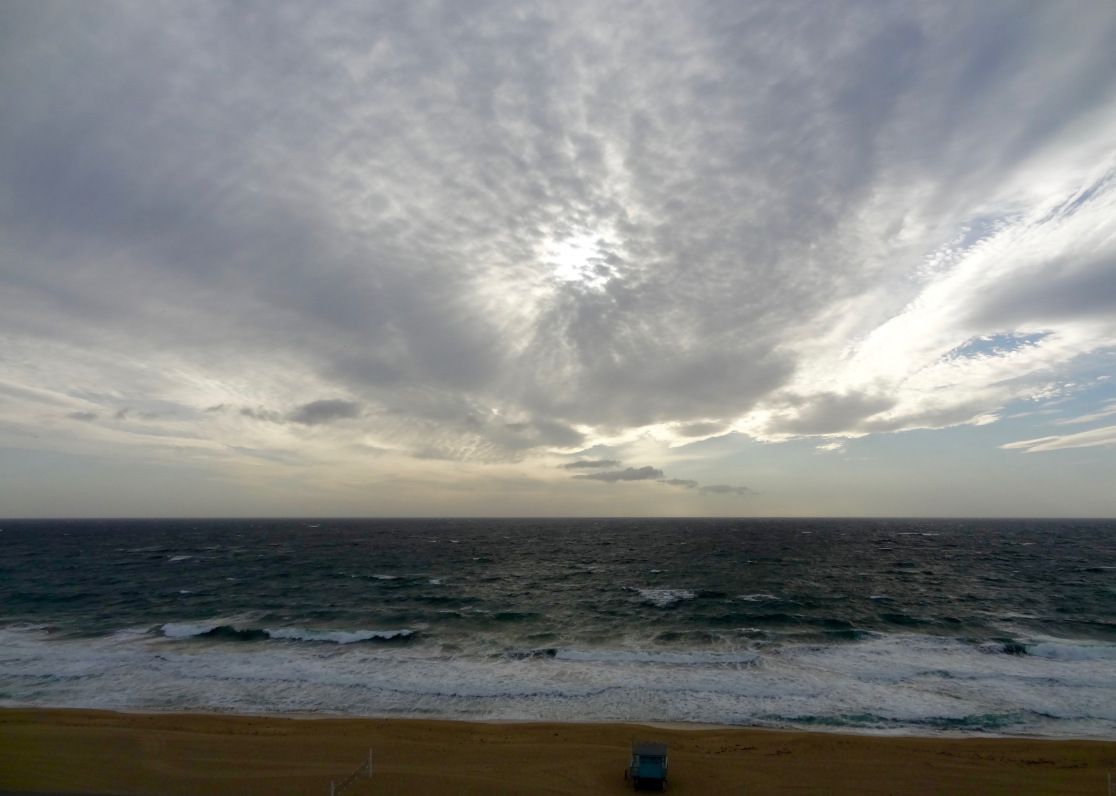
“The pessimist complains about the wind.
The optimist expects it to change.
The realist adjusts the sails.”
William Arthur Ward

Shine On
“The pessimist complains about the wind.
The optimist expects it to change.
The realist adjusts the sails.”
William Arthur Ward

Shine On
“If you laugh with somebody,
then you share something.”
Trevor Noah

When the Coronavirus pandemic began, all the late-night shows such as The Tonight Show, The Late, Late Show and even Stephen Colbert began broadcasting their shows from home, usually their significant other filming their host husbands.
There was one show I had not watched before and that was The Daily Show with host Trevor Noah. However, that changed when I began watching Trevor along with the other daily YouTube late night shows.
If you’re not familiar with Trevor Noah, he’s a 36-year old South African comedian, political commentator, writer and television host of The Daily Show. Born in Johannesburg, he began his career in 2002 as a comedian, presenter, and actor in South Africa. After coming to America in 2011, he became the first South African comedian to appear on The Tonight Show in the summer of 2013. As his popularity grew and Trevor became a recurring contributor on The Daily Show, he replaced Jon Stewart as host of The Daily Show September 28, 2015.
I was a fan of Jon Stewart’s The Daily Show but I must admit I stopped watching after he retired. I didn’t even give Trevor Noah a chance to show his talent. I now regret I did that, after becoming a diehard fan of Trevor.
After a few months of watching him on the Daily Show, I read his 2016 book, Born A Crime. He writes about growing up in South Africa, a child of interracial parents and apartheid South Africa. Trevor was kept mostly indoors in his youth by his mother, for fear that at any moment the government could take him away from her because of his interracial status. In South Africa before 1985, it was a crime to have interracial marriages as well as have an interracial child, hence the title of the book, Born a Crime. Against all odds, this smart, handsome, talented young comedian has made his way to the top. In my opinion, Born a Crime should be required reading for all young people.
If you don’t have cable, you can watch him on YouTube. Here’s a recent segment of The Daily Social Distancing Show from July 22, 2020 he calls, The Pandumbic:
Shine On
“We may have all come on different ships,
but we’re in the same boat now.”
Martin Luther King, Jr.

Shine On
“The Carrion Crow and Turkey-Buzzard
possess great power of recollection,
so as to recognize at a great distance
a person who has shot at them, and
even the horse on which he rides.”
John James Audubon

Roadrunner catch of the day by Christopher Smith
I’ve taken photographs of birds through the years and I find it one of the most difficult subjects to capture. My feathered friends can be ever elusive to observe in their natural habitat, but more difficult to capture clearly on my camera.
To bring awareness to climate change and how two-thirds of North American birds are at risk of extinction, the National Audubon Society gives yearly recognition to masterful bird photographers.
Quite a few of my fellow Blogaholics are talented bird photographers. If they don’t already know about this yearly contest, maybe they should look into submitting one of their own spectacular shots.
With that being said, here are just five of the top ten winners from the 6,000 submissions received from the 2020 Audubon photo contest.
Shine On

Warbler by Natalie Robertson

Hummingbird by Bibek Gosh

Frigatebird by Sue Dougherty

Bare-throated Tiger Heron by Gail Bisson
“What we do during out working hours
determines what we have;
what we do in our leisure hours
determines what we are.”
George Eastman

Earliest known photograph taken 1825, by Joseph Nicéphore Niépce,
Our photos today look very different from the ones that were taken just two centuries ago. It was even more rare to have a photograph of one’s self. In just 200 years, the camera advanced from a small black box that took blurry photos to our high-tech mini computers found in our smartphones.
The concept of photography has been around since the 5th century. By the 11th century, an Iraqi scientist developed something called the camera obscura and voilà, the art of photography was born.
This early camera did not actually record images, it simply projected them upside down onto another surface. The images could then be traced to create accurate drawings of real objects such as animals, people and buildings.

Daguerreotype Photo by Joseph Nicéphore Niépce, 1837
Around 1830, French inventor Joseph Nicéphore Niépce took the first permanent type photograph. He created heliography, a technique used for the world’s oldest photographic process. Shortly after inventing this technique, he formed an alliance with French artist, Louis Daguerre. Together they developed a new photo processing technique known as, Daguerreotypes. To make these images was not only laborious but also dangerous. For them to shoot and process just one photo, they would polish a sheet of silver-plated copper to a mirror finish, treat it with fumes that made its surface light sensitive, expose it in a camera for as little as a few seconds; make the resulting latent image on it visible by fuming it with mercury vapor; remove its sensitivity to light by liquid chemical treatment, rinse and dry it, then seal the easily marred result behind glass in a protective enclosure.

1856 Tintype Photo
By 1856, a process known as, Tintype photos were made and became more affordable for the average person to obtain photos of family and places. The materials to make these tintype photos were inexpensive, durable and faster to process. Still, the process for capturing a tintype photo was not that easy. First, the subjects had to remain perfectly still and moving was a no-no. Often the photographer would use body stands for people to remain still for up to six to thirty seconds. The image was not captured on a piece of tin, but rather a thin piece of iron with a black enamel coating. One of the chemicals used in the tintype process was cyanide. Tintype photography became easier but the processing was still very dangerous.
Tintype photography saw the Civil War come and go, documenting the individual soldier and horrific battle scenes. It captured scenes from the Wild West, as it was easy to produce by photographers working out of covered wagons.
Photography was only used by professionals and the very rich until 1888 when George Eastman started a little company called Kodak.
Thanks to Kodak, anyone could take pictures. They just had to send the camera back to the factory for the film to be developed and prints made, much like modern disposable cameras. This was the first camera inexpensive enough for the average person to afford.
Professional photographers began to use small 35mm cameras to capture images of life as it occurred rather than staged portraits. When World War II started in 1939, many photojournalists adopted this style.
The film was still large in comparison to today’s 35mm film. It was not until the late 1940s that 35mm film became cheap enough for the majority of consumers to use.
At the same time that 35mm cameras were becoming popular, Polaroid introduced the Model 95. Model 95 used a secret chemical process to develop film inside the camera in less than a minute.
The Polaroid camera was fairly expensive but the novelty of instant images caught the public’s attention. By the mid-1960s, Polaroid had many models on the market and the price had dropped so that more people could afford it. Unfortunately, in 2008, Polaroid stopped making their famous instant film and took their secrets with them.
Although the French introduced the permanent image, the Japanese brought easier image control to the photographer. By the 1950s, Asahi (which later became Pentax) introduced the Asahiflex and Nikon introduced its Nikon F camera. These were SLR-type cameras and the Nikon F allowed for interchangeable lenses and other accessories.
By the late 1970s and early 1980s, compact cameras capable of making image control decisions on their own were introduced. These “point and shoot” cameras calculated shutter speed, aperture, and focus, leaving photographers free to concentrate on composition.
By the mid 1980s, numerous manufacturers worked on cameras that stored images electronically. The first of these were point-and-shoot cameras that used digital media instead of film.
Kodak developed the first digital camera in 1975, but dropped the product for fear it would threaten Kodak’s main income, its photographic film business. However, they decided in 1999 to produce the first digital camera that was advanced enough to be used successfully by professionals. Other manufacturers quickly followed and today Canon, Nikon, Pentax, and other manufacturers offer advanced digital SLR (DSLR) cameras.
Mr. Niépce would be proud to see his hard work in the invention of a technique used to create the photographic process was the pathway to modern photos.
Shine On