Paradise and Joyfulness

“I’d rather have roses on my table
then diamonds on my neck.”
Emma Goldman


Paradise and Joyfulness

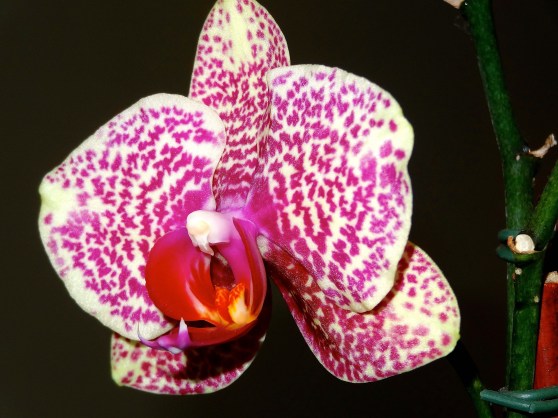
Today on my walk, I came across some birds of paradise that were in full bloom. I couldn’t resist taking some photos of this exotic looking flower which happens to be the official flower of Los Angeles.

How did this South African flower become LAs official flower? Well, back in 1952, Mayor Fletcher Bowron decided to name the bird of paradise the official flower of LA, after heavy lobbying by seed company president and civic booster Manfred Meyberg. Soon after, the plant and seeds from this orange and blue flower became a hot item in nurseries throughout California.

The bird of paradise flower is so named because its magnificently colorful petals resemble a colorful bird in flight. The flower is a symbol of paradise as well as a symbol of joyfulness.

How apropos for Angeleno’s official City flower to be a symbol of paradise and joyfulness.

Shine On

Super Moon of 2020

“With freedom, books, flowers,
and the moon who could not be happy?”
Oscar Wilde


Super Moon 2020

After the sunset yesterday around 8:00, I noticed a beautiful bright full moon. I grabbed my camera and shot quite a few images including this zoomed in shot.

This morning I downloading the images to my laptop, grabbed a cup of coffee and read the daily news. I was surprised to read that last nights full moon was the final of the super moon type.

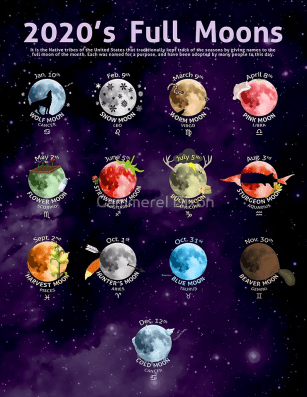
Super moons occur when the moon is on its closest approach to Earth in orbit. The moon will appear brighter and bigger in the night sky. This full moon was only visible from the evening of May 6 until the morning of May 8, and comes on the heels of the biggest and brightest super moon of the year in April, but it’s still more spectacular than a typical full moon.

The past few years I’ve attempted to get a clear crisp image of a full moon but this is the first time I was happy with my image of the final super moon of 2020.

Shine On

My Little Piece of Heaven

“My soul can find no staircase to Heaven
unless it be through Earth’s loveliness.”
Michelangelo


PBRC Areial View

Aerial view of Portuguese Bend looking out on the Pacific Ocean.

JimmyPBRC GardensPBRCJimmys Favorite Past TimeBlue Grooming Bay

There’s a very special place that is not well-known among Angelenos. I always felt extremely fortunate to have been part of this very special place. The beautiful flowers, trees and vegetation encompassing this place made it my secret garden.

The aromas from fresh hay, flora and fauna were always intoxicating. The 1920s Spanish architecture of the home and stables so breathtakingly dreamlike, that it was often used as a film location.

For over eight wonderful years I would visit this place daily, rain or shine. The reason for my visits was because my best friend Jimmy lived there. He and I would explore the surrounding hills and valleys. Every spring we hiked and then we relaxed on the rich green grassy knolls.

It was my church, my sanctuary, my favorite place to be. It made me feel needed, wanted, and safe. It gave me purpose. It kept me happy and sane.

I miss this place more than I ever thought possible.

Now, it is forever in my daily thoughts as well as my nightly dreams. I would like to return someday, but it is much too painful to return. For to return to this place, where Jimmy once lived, would not be the same without him.

So, for now, I look at old photos and videos and reminisce about a time when I was the happiest I’ve been in my life. Those years seem as if they were all a glorious and magical dream. A time when I was the closest to heaven as I’ll ever know.

This wondrous place was and always will be, my little piece of heaven.

Shine On

From the Heart

“The best and most beautiful things in the world
cannot be seen or even touched
– they must be felt with the heart.”
Helen Keller

From the Heart

Daisy 1985 to 2005

There’ve been dozens of dogs that I have known throughout my life. All of these dogs were not merely pets, but all were considered family members. All these dogs had unique personalities as unique as their breeds. But, there was one dog of mine that stood out from all the rest. She was a Golden Retriever from the pound and her name was Daisy.

Daisy arrived unexpectedly one day. A friend had obtained Daisy from the pound and because of this friends recent hip surgery she was finding it difficult to care for Daisy.

I was hesitant to adopt a dog. Mostly because I worked at a demanding full-time job, had a young son, and my boyfriend and husband to be was recovering from a massive heart attack. Also, Daisy had a bad reputation for getting into the trash, digging her way out of yards and running away, and was extremely unruly. But, there was something I saw in this dog’s eyes. Something that showed me we were kindred spirits.

One of Daisy’s worst habits was jumping on anyone that entered our home. To my surprise, Daisy was a quick learn. After her first week with us, she stopped getting into the trash, never jumped on anyone ever again, and never ever dug one hole in the yard. In fact, you could leave every door open in the house and she wouldn’t step one paw over the threshold.

I had lots of experience over the year’s training difficult dogs, but Daisy wasn’t difficult by any means. On the contrary, she was the smartest dog I had ever encountered. She was so well-mannered, that one night my husband left a half-eaten roast beef sandwich on the coffee table and Daisy didn’t eat or even lay a paw on the sandwich.

Why was Daisy such a good dog?  It was simple. She had the best food, the best care, was taken for daily walks, and she was loved and groomed like a princess. She was always made to feel secure. Basically, Daisy knew how much we loved her.  A love that we both felt, from the heart.

Shine On

Bird Man of America

“A true conservationist is a man who knows
that the world is not given by his fathers,
but borrowed from his children.”
John James Audubon

Audobon

I recently read, This Strange Wilderness: The Life and Art of John James Audubon. It’s a short book of just 171 pages about Audubon and what he accomplished in his life.

Jean Jacques Audubon was born in Les Cayes in the French colony of Saint-Domingue now known as Haiti on April 26, 1785. He was raised in Couëron, near Nantes, France until 1803 when at the age of 18 his father obtained a false passport for his son to go to America to avoid being drafted in the Napoleonic Wars. Upon arriving in America, his father changed his son’s name to, John James Audubon.

As a young man, Audubon had a kinship for birds. “I felt an intimacy with them…bordering on frenzy that must accompany my steps through life.” Studying American birds, he was determined to illustrate his findings in a more realistic manner than most artists. Along with drawing and painting birds, he also recorded their behavior. He conducted the first known bird-banding on the continent: he tied yarn to the legs of eastern phoebes and discovered that they returned to the same nesting spots every year.

Audubon developed his own methods for drawing birds. First, he killed them, then used wires to prop them into a natural position, unlike the common method of many ornithologists, who prepared and stuffed the specimens into a rigid pose. He became proficient at specimen preparation and taxidermy.

Often when working on a large bird such as an eagle, he would spend up to four 15-hour days, preparing, studying, and drawing it. Each paintings are set true-to-life in their natural habitat, portraying the birds as if caught in motion, especially feeding or hunting.

Although he did paint the birds in his drawings, it was his assistant Joseph Mason who painted the plant life and backgrounds of many of Audubon’s bird studies. Unfortunately, Mason was never credited in any of Audubon’s drawings.

By 1824 Audubon began to seek a publisher for his bird drawings. He met Thomas Sully, one of the most famous portrait painters of the time and a valuable ally, however Audubon was rejected for publication. He took oil painting lessons from Sully and met Charles Bonaparte, who admired his work and recommended he go to Europe to have his bird drawings engraved.

Two years later at age 41, Audubon took his growing collection of work to England. He sailed from New Orleans to Liverpool with his portfolio of over 300 drawings. Audubon quickly gained notoriety in England where he raised enough money to begin publishing his major work, a color-plate book entitled The Birds of America. It was printed on sheets measuring about 39 by 26 inches and contains more than 700 North American bird species, including 25 new species identified by Audubon. The cost of printing the entire work was $115,640 (over $2,000,000 today) and is considered one of the finest ornithological works ever completed.

John_James_Audubon_1826.jpg

John James Audubon

Today most copies of The Birds of America can only be found in museums. However, a complete copy of the first edition was sold in January 2012 at Christie’s auction house in Manhattan for $7.9 million.

Audubon died at his family home in northern Manhattan on January 27, 1851. Fifty-four years after his death, George Bird Grinnell, who was appalled by the negligent and mass slaughter of birds that he saw taking place created the National Audubon Society. As a boy, Grinnell was inspired by Audubon’s work. So much so, that when Grinnell decided to create an organization devoted to the protection of wild birds and their eggs, he didn’t hesitate in using Audubon’s name.

Because of market hunting and the fashion industry many of the birds Audubon painted became extinct. Thanks to the work of the National Audubon Society there are thousands of birds that have been saved. John James Audubon’s work and research inspired many. He left a body of work for generations to enjoy which makes him truly, the bird man of America.

Shine On