“Every time I see an adult on a bicycle,
I no longer despair for the future of the human race.”
H. G. Wells
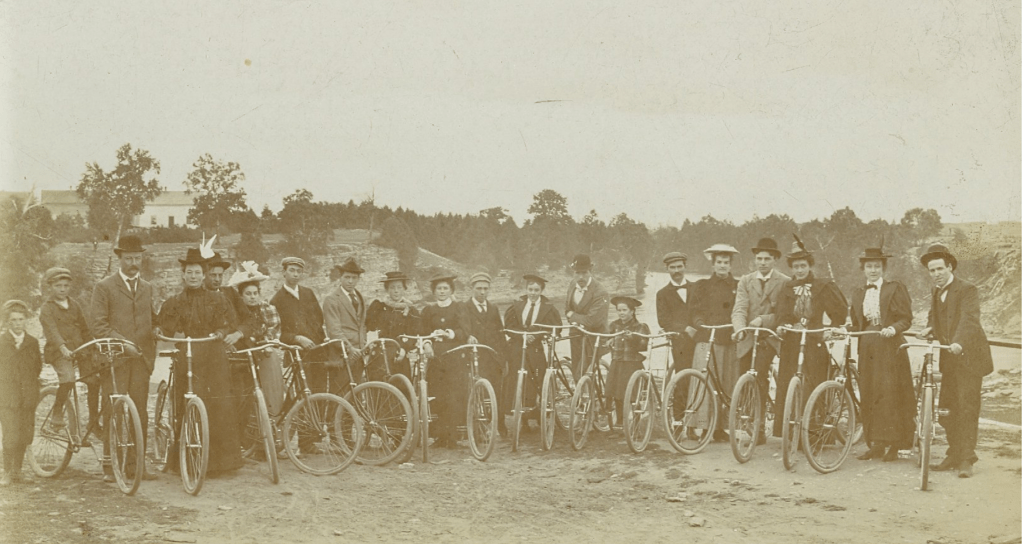
It was the early-18th century in Western Europe when man first began experimenting with human-powered vehicles. In the beginning, these vehicles consisted of four or more wheels and could accommodate up to seven passengers. Much different from carts or carriages, they had handles or ropes for men on foot to push or pull. They were attempts at replacing horses with humans.
Even back in the 1800’s, the purchase of a horse was expensive for the working man. No fit and wealthy gentleman would be without a horse for pleasure riding. They usually had horses for drawing carriages, but most affluent European men owned horses for leisure riding.
That all changed in 1815 when the world was thrown into turmoil. A turmoil not from a war or an economic crises, but because of a small island over six thousand miles from Europe in the South Pacific.
On April 10, 1815, halfway between Asia and Australia, Mount Tambora erupted in Indonesia. It was to become the largest volcanic explosion in recorded history as well as claiming the most fatalities. Mount Tambora’s eruption killed well over 71,000 of its people. This once silent volcano erupted with the power equivalent to 1,000 atomic explosions, blasting about 38 cubic miles of ash, pumice and other matter into the atmosphere.
Ashes reflected the sun’s light and cooled the earth’s surface. Temperatures dropped below freezing in July from Mexico to Vienna. Unexpected snowstorms and rainstorms brought travel to a stop. Farms and grain stores were washed away. Crops failed. Livestock died by the tens of thousands. The world was gripped by the worst famine in a century, and infectious diseases such as typhus was rampant. The year 1816 would become known as “the year without a summer”.
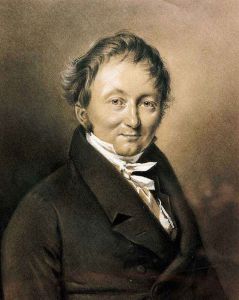
With all the soot and ash engulfing Europe, there was one ray of hope to this gloomy disaster. He was a 31 year-old aristocrat, an expert in forestry, an enthusiastic and passionate horseman as well as an avid inventor from Baden, Germany. His name was Karl Wilhelm Friedrich Christian Ludwig Drais, otherwise known as Baron Drais von Sauerbronn. Baron Drais’ beloved horses died from environmental causes from the volcano eruption, and set the Baron on a journey to invent the bicycle.
It’s not known what the impetus was for the Baron to think about the problems confronting the horses, and how those factors affected gentlemen who rode for pleasure. But somehow, this led him to thinking about the basic form of the horse and its accommodations for a rider in a wooden and wrought iron frame with a pair of carriage wheels in tandem. The result would be recognized by anyone today as the ancestor of all bicycles.

Early in 1817 the Baron built out of cherry tree wood and softwood a “running machine”, which he called a Draisine or a Laufmaschine. The machine was more pony-sized than horse-sized so that the riders feet reached the ground for propulsion.
This early bicycle consisted of a saddle seat, handlebars and a steerable front wheel. Testing and improving it throughout the next few years, the Baron finished his invention and patented the running machine in January of 1818.
Almost overnight the Baron’s Laufmaschine became a sensation. News of the running machine spread westward across Europe. Enthusiasm grew among a small circle of young aristocratic men known as “dandies”. Demonstrating one’s manly abilities was key for “dandies”, and the Laufmaschine was a novelty too challenging and exciting for any dandy to pass up.

The Laufmaschine name was a bit foreign to British, so they renamed it the “dandy horse”. Before long, every young gentleman who aspired to the dandy ideal owned a dandy horse. A basic dandy horse in 1818 cost the equivalent of about $900 in today’s money, which made it a rather expensive plaything. The best of these were constructed by carriage builders; the more crude ones were cobbled together by blacksmiths.
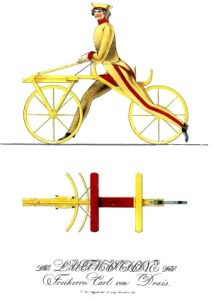
As quickly as it appeared, the dandy horse disappeared. By 1820, the price of oats was back down to pre-1815 levels, and horses were readily available to those who could afford them. It wouldn’t be until the mid-1860s that someone had the idea to put pedals on the front wheel of a dandy horse, giving it an improved means of locomotion, as well as a scrub brake for the rear wheel; an improvement for stopping over crashing it into a hedge.
So what happened to the Baron Drais? He had the misfortune to belong to the losing political party when the Prussians took over Baden, and he had his title and property stripped; he died penniless and forgotten two years later. But without the Baron and the aristocratic plaything he invented, life might have been very different, and certainly less colorful as the bicycles beginning.
Shine On
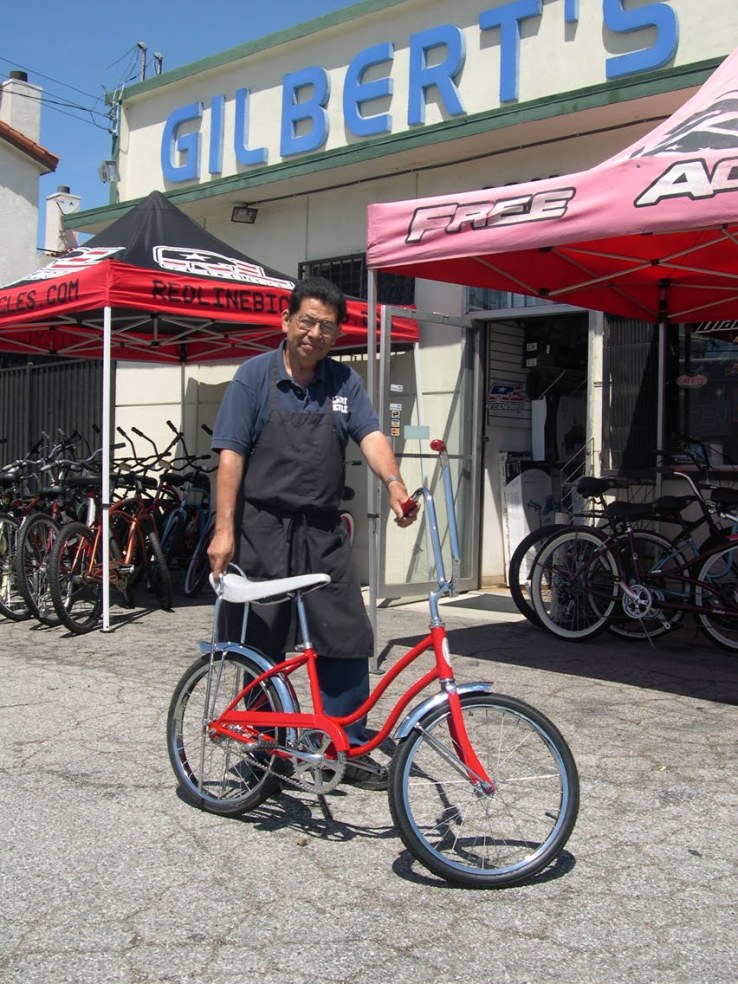
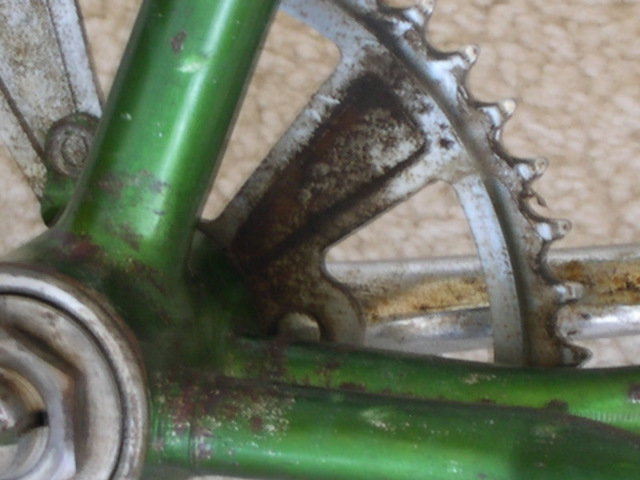
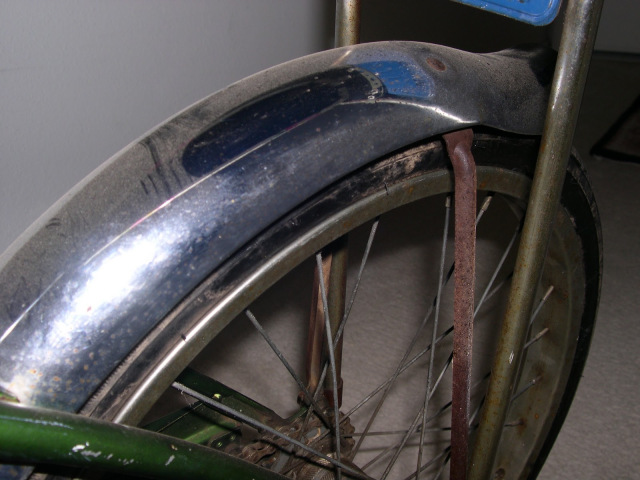
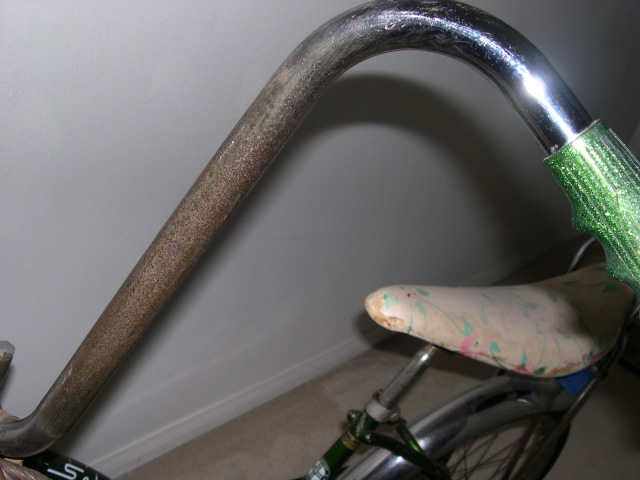
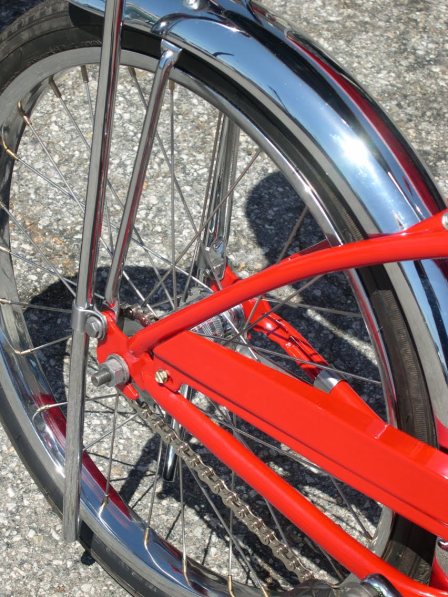
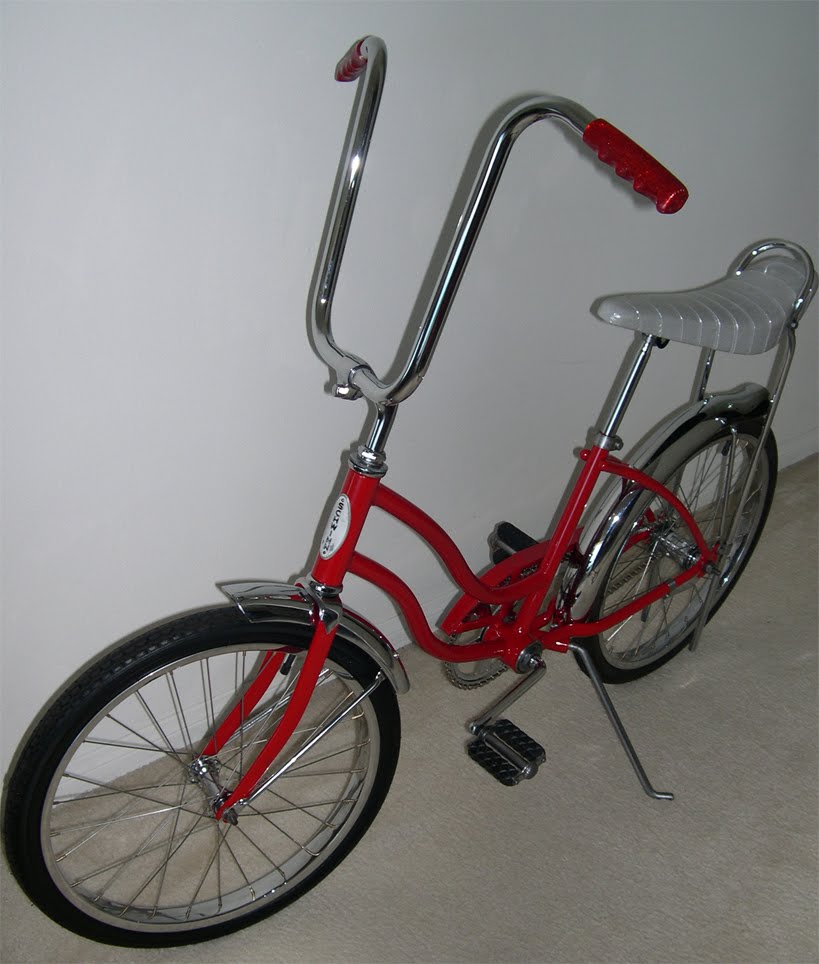
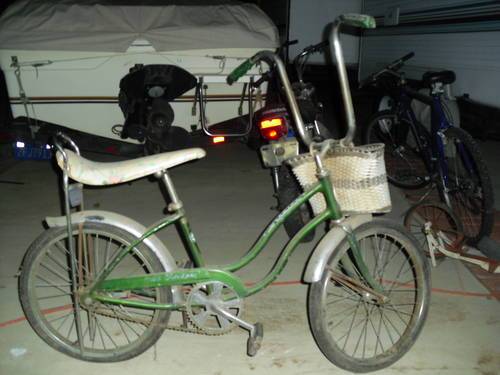 When I first saw the photo of the bike, I knew instantly the bike was vintage. The funny thing was, it was the spitting image of my bike from the 1960s. After speaking with the owner I found out she had purchased it used in the 1990’s for her daughter and she didn’t know how old it was. It had been in her garage for the past fifteen years. After a long telephone conversation with this nice woman, I decided to make the long drive out to Acton to check out the bike.