Awesome

“He who can no longer pause
to wonder and stand rapt in awe,
is as good as dead; his eyes are closed.”
Albert Einstein

For the past two decades, scientists have been studying the emotion called, awe. Growing research suggests that experiencing awe may lead to a wide range of long-term benefits, from happiness and health to perhaps more unexpected benefits such as generosity, humility, and critical thinking.

The research also suggests that taking the time to experience awe, whether through appreciating nature, enjoying art or music, or even watching YouTube videos, could be a way to improving your life and relationships.

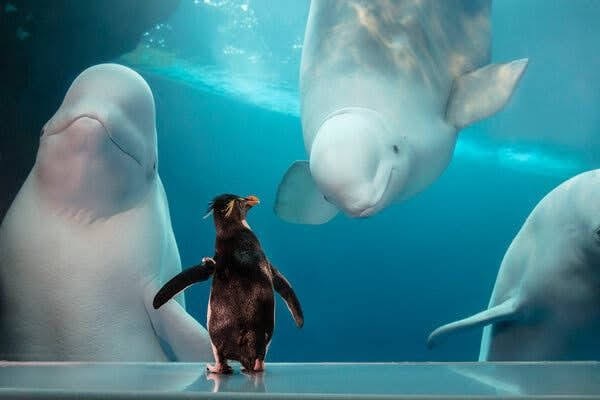
Did you know that experiencing awe can improve your mood and make you more satisfied with your life? You don’t even need to take a trip to Tahiti to get the job done. You can experience awe by watching slideshows or videos of Tahiti to induce awe. It’s also possible that awe can even bring people together. Research tells us that awe helps us feel more connected to the people in our lives and to humanity as a whole.

What I found interesting about these recent studies is that people who experience awe more often, had a better understanding of nature and science and were more likely to reject creationism and other scientifically questionable explanations about the world. Importantly, these people didn’t have greater “faith” in science; they just understood better how science works.

In 2020, seeking awe should be a high priority. The power of awe may be a simple remedy to improve our outlook and have transformative effects. With increasing interest among psychologists and the public in the study of awe, the future looks bright. Maybe even awesome.

 Shine On

In Jeopardy of Cancellation


“Everything that happened to me
happened by mistake.
I don’t believe in fate.
It’s luck, timing and accident.”
Merv Griffin


In Jeopardy of Cancellation

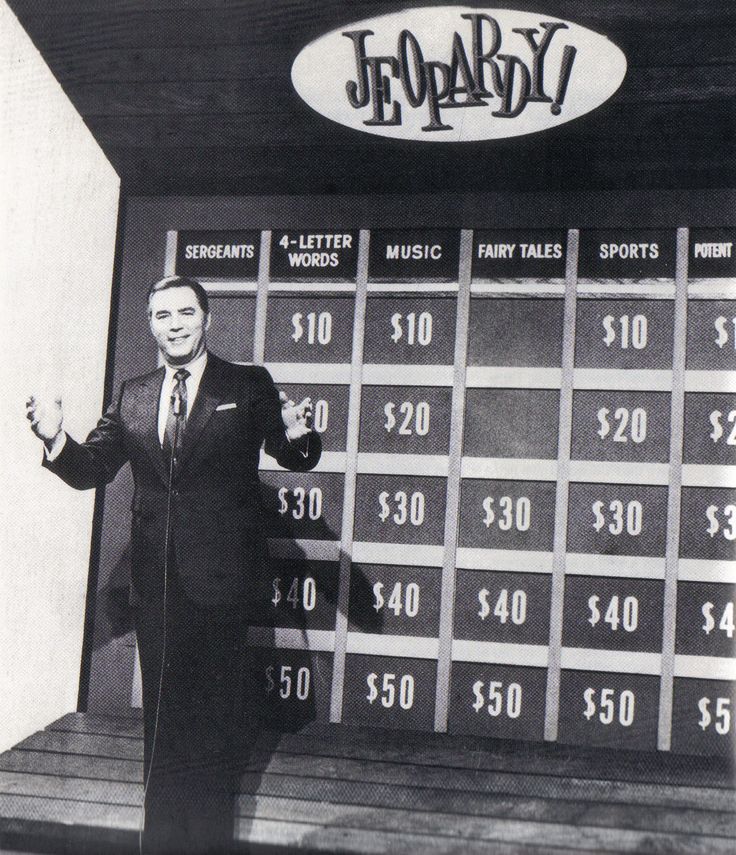
Art Fleming host of Jeopardy! circa 1964


For the past week, the game show Jeopardy! has been airing old historic episodes. As I watch these episodes, I came to realize I’ve been watching one of the oldest game shows on television. Since it first aired March 20, 1964, this show was so popular in my home, my parents bought us the first Jeopardy! board game which quickly became a family favorite.

Over five decades, Jeopardy! remains popular even as game shows come in and out of fashion. This show is largely responsible for re-energizing the quiz show format following a series of quiz show scandals in the 1950s. The rife scandals broke viewing audience’s trust and so began federal law that prohibited the fixing of game shows and their genre across the networks began to disappear.

In the early 1960s, Merv Griffin, a young genius in designing game shows for NBC, was not happy about all the negativity happening to his livelihood. As a television host, producer, and game show developer for NBC, he began to craft a game show that would change the format forever.

On a flight from Duluth to New York City, Griffin and his wife Julann were discussing game show ideas, when she noted that there had not been a successful “question and answer” game on the air since the quiz show scandals. Griffin recalls his wife asking, “Why not do a switch, and give the answers to the contestant and let them come up with the question?” She then fired a couple of answers to her husband and that’s where the show was born. After landing in NYC, he went straight to executives at NBC with the idea.

The shows name, What’s The Question? which Griffin first pitched to NBC executive Ed Vane was very skeptical about the show. Vane claimed the game format didn’t have enough, “jeopardies”. Griffin went back to the drawing board and came up with a new format as well as the fitting new name, Jeopardy!. NBC bought and green lit Griffin’s show without even looking at a pilot show.

Merv was searching for his game host star, when Art Fleming caught his attention after seeing Fleming in a few tv commercials and shows. Although Art was a game show novice, Merv selected him to host. The show needed background music, so the multitalented Griffin composed the current and rather suspenseful tune.

Within weeks of Jeopardy! first airing, it grabbed 40% of viewers in its daytime slot. People were playing along on college campuses and during lunch breaks. Despite its success, NBC felt fewer demanding clues would reap greater rewards. They wanted 13-year-olds to be able to keep up. Griffin refused. He wanted the program to stay smart. This was a competition between adults, and he saw little sense in diluting a game meant to highlight intellect.

Despite solid ratings, in 1975 NBC abruptly pulled the plug on the show. Executives at the network wanted to appeal to a younger, female demographic. The show was reinstated in 1978, then just six months later the show was canceled once again.

Merv Griffin never gave up on his show and in 1983 he met with executives at King World Productions about doing a syndicated version. Luckily, King World executives agreed, and they had reason for their optimism. The board game Trivial Pursuit, which had debuted in 1981, had grown into a sensation, proving consumers had a healthy appetite for trivia.

Trebek 1984

Alex Trebek circa 1984

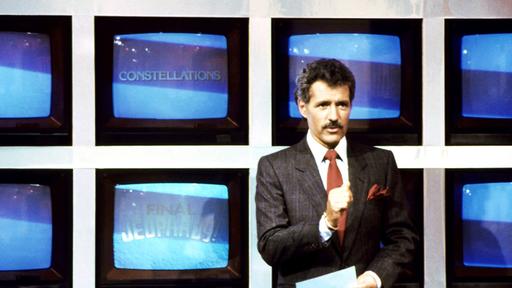
Griffin updated his show in the 1980s with a high-tech game board made up of video monitors instead of paper cards and rerecorded his theme music with synthesizers. But,  the biggest update was in 1984 when Art Fleming was replaced with the younger, more polished Alex Trebek and the show started airing in the early evening. Ratings immediately improved in this new time slot.

In 2004 the show removed its five-game limit for returning champions. With that rule removed, contestant Ken Jennings was able to win an unprecedented 74-show winning streak making headlines across the country. The $2,520,700 he won from 2004 to 2005 during this winning streak, still holds the record for the most money an individual has ever won on an American game show making Jennings a minor celebrity.

Trebek continues to host Jeopardy!, despite his recent diagnosis of stage 4 pancreatic cancer. However, during the coronavirus quarantine the show has not been taping any new shows since March, the longest hiatus in the history of the show.

There’s no denying this game show is a staple in America. It’s won 16 daytime Emmy awards for Outstanding Game Show, the most ever by one program. It will be a sad day when Trebek retires from his hosting job, but it will be a sadder day if the show ever becomes in jeopardy of cancellation.

Shine On

Pathway to Photography

“What we do during out working hours
determines what we have;
what we do in our leisure hours
determines what we are.”
George Eastman


Nicéphore_Niépce_Oldest_Photograph_1825

Earliest known photograph taken 1825, by Joseph Nicéphore Niépce,

Our photos today look very different from the ones that were taken just two centuries ago. It was even more rare to have a photograph of one’s self. In just 200 years, the camera advanced from a small black box that took blurry photos to our high-tech mini computers found in our smartphones.

The concept of photography has been around since the 5th century. By the 11th century, an Iraqi scientist developed something called the camera obscura and voilà, the art of photography was born.

This early camera did not actually record images, it simply projected them upside down onto another surface. The images could then be traced to create accurate drawings of real objects such as animals, people and buildings.

1920px-Daguerreotype_Daguerre_Atelier_1837

Daguerreotype Photo by Joseph Nicéphore Niépce, 1837

Around 1830, French inventor Joseph Nicéphore Niépce took the first permanent type photograph. He created heliography, a technique used for the world’s oldest photographic process. Shortly after inventing this technique, he formed an alliance with French artist, Louis Daguerre. Together they developed a new photo processing technique known as, Daguerreotypes. To make these images was not only laborious but also dangerous. For them to shoot and process just one photo, they would polish a sheet of silver-plated copper to a mirror finish, treat it with fumes that made its surface light sensitive, expose it in a camera for as little as a few seconds; make the resulting latent image on it visible by fuming it with mercury vapor; remove its sensitivity to light by liquid chemical treatment, rinse and dry it, then seal the easily marred result behind glass in a protective enclosure.

Tintype Photo

1856 Tintype Photo

By 1856, a process known as, Tintype photos were made and became more affordable for the average person to obtain photos of family and places. The materials to make these tintype photos were inexpensive, durable and faster to process. Still, the process for capturing a tintype photo was not that easy. First, the subjects had to remain perfectly still and moving was a no-no. Often the photographer would use body stands for people to remain still for up to six to thirty seconds. The image was not captured on a piece of tin, but rather a thin piece of iron with a black enamel coating. One of the chemicals used in the tintype process was cyanide. Tintype photography became easier but the processing was still very dangerous.

Tintype photography saw the Civil War come and go, documenting the individual soldier and horrific battle scenes. It captured scenes from the Wild West, as it was easy to produce by photographers working out of covered wagons.

Photography was only used by professionals and the very rich until 1888 when George Eastman started a little company called Kodak.

Thanks to Kodak, anyone could take pictures. They just had to send the camera back to the factory for the film to be developed and prints made, much like modern disposable cameras. This was the first camera inexpensive enough for the average person to afford.

Professional photographers began to use small 35mm cameras to capture images of life as it occurred rather than staged portraits. When World War II started in 1939, many photojournalists adopted this style.

The film was still large in comparison to today’s 35mm film. It was not until the late 1940s that 35mm film became cheap enough for the majority of consumers to use.

At the same time that 35mm cameras were becoming popular, Polaroid introduced the Model 95. Model 95 used a secret chemical process to develop film inside the camera in less than a minute.

The Polaroid camera was fairly expensive but the novelty of instant images caught the public’s attention. By the mid-1960s, Polaroid had many models on the market and the price had dropped so that more people could afford it. Unfortunately, in 2008, Polaroid stopped making their famous instant film and took their secrets with them.

Although the French introduced the permanent image, the Japanese brought easier image control to the photographer. By the 1950s, Asahi (which later became Pentax) introduced the Asahiflex and Nikon introduced its Nikon F camera. These were SLR-type cameras and the Nikon F allowed for interchangeable lenses and other accessories.

By the late 1970s and early 1980s, compact cameras capable of making image control decisions on their own were introduced. These “point and shoot” cameras calculated shutter speed, aperture, and focus, leaving photographers free to concentrate on composition.

By the mid 1980s, numerous manufacturers worked on cameras that stored images electronically. The first of these were point-and-shoot cameras that used digital media instead of film.

Kodak developed the first digital camera in 1975, but dropped the product for fear it would threaten Kodak’s main income, its photographic film business. However, they decided in 1999 to produce the first digital camera that was advanced enough to be used successfully by professionals. Other manufacturers quickly followed and today Canon, Nikon, Pentax, and other manufacturers offer advanced digital SLR (DSLR) cameras.

Mr. Niépce would be proud to see his hard work in the invention of a technique used to create the photographic process was the pathway to modern photos.

Shine On

Back to the Future

“Roads?
Where we’re going,
we don’t need roads.”
Dr. Emmett Brown

Back to the Future

On July 3, 1985, the movie Back to the Future opened nationwide. Little did any of us know this movie would become one of the most iconic movies of our generation. It’s one of those movies that you can just sit back, eat your popcorn and forget about everything and literally go for the ride of your life.

As a diehard Back to the Future fan, it’s safe to say I have watched this movie half a dozen times each year for the past 35 years. In my opinion, the story, the characters, the concept of time travel is done with pure perfection. However, this perfect picture almost didn’t get made.

Writer, Bob Gale conceived the idea for the movie in the early 1980s after visiting his elderly parents. While rummaging in his parents basement, he found his father’s high school yearbook. He was surprised to learn his dad was class president of his 1940 senior class. He contemplated if he would have befriended his father if they had attended school together. Deciding it would be a great storyline, Gale shared the idea with his good friend from USC cinematography classes, Robert Zemeckis.

The Two Bobs, as they are now known, collaborated on the idea and presented a script to different studios. After getting rejected more than 40 times by numerous Hollywood studios, the movie was finally green-lit by Universal Studios thanks to the help from their mutual friend, Steven Spielberg.

DeLorean At Pedersen Museum LA

Petersen Automotive Museum, Mother’s Day  2019

In the original script, the DeLorean time machine was a Philco refrigerator, Einstein the dog was Shemp the chimpanzee and the title Back to the Future was originally Space Man from Pluto.

One of the real stars of the Back to the Future franchise is none other than the DeLorean time machine. I for one will never forget the magic moment where the DeLorean rolls off the back of Doc Brown’s sealed truck and is revealed for the first time.

Zemeckis is the genius behind using a DeLorean as the time machine. The car was just introduced to the world in 1981 and sold for around $25,000. The movie played a major role in the continuing popularity of the DeLorean.

Five weeks into filming, actor Eric Stoltz who was portraying Marty McFly, was fired. Zemeckis determined Stoltz had been miscast and realized his original choice of Michael J. Fox was the only actor that could portray Marty. Luckily for Zemeckis, he was able to replace Stultz with Fox. The best career choice of both director and actor in their entire life.

Christopher Lloyd as Doc Brown was brilliantly cast, but was not the first choice by the studio. Initially, John Lithgow as well as Jeff Goldblum were tested and thankfully not selected. In my opinion, no one could portray Doc Brown but Lloyd.

The Bully Biff played by actor, Tom Wilson with many of his signature lines, “what are you looking at butthead? “ were adlibs by Wilson. In a recent interview with Bob Gale, he was asked who if anyone was Biff based on and Bob’s response was, “the character Biff was based on Donald Trump.”

I enjoyed the 1950s music and was a big fan of Huey Lewis and the News music that summer of 1985. So, the fact that the movie had a guest appearance by Lewis and his song, The Power of Love was the opening track song, was an added bonus for me.

DeLeroean Interior BTTF

Petersen Automotive Museum, Mother’s Day  2019

When the movie opened in 1985, it became an immediate number one hit in theaters across the country all the way into early 1986.

Immediately after the success of the movie, the two Bobs were reluctant to do a sequel since sequels were rare in the late 1980s. Zemeckis had said that if he had wanted to do a sequel, he would have never ended the first movie with Jennifer, Marty and Doc in the DeLorean driving off into the sunset. But, through encouragement from the studio, Bob Gale alone wrote a 210-page long script, which the studio ended up splitting into two separate movies.

The 1989 Back to The Future II became as successful as the original, but not my favorite. By the time the sequel opens that November, the studio is filming and finishing up the third sequel.

On May 1990, the third and final movie is released. Commercially, Part III was the least successful in the trilogy. Still, this western set sequel is one of my favorite of the franchise. Not only because of the western theme but because of the Doc Brown romantic story line. Mary Steenburgen as Clara Clayton is absolutely enchanting as Doc’s sweetheart. It’s also the first on-screen kiss in Lloyd’s movie career.

Sadly, the third movie sees the end to the DeLorean time travel device and the end to the Back to the Future franchise. Thankfully, owning the DVD Trilogy Box Collection I’m ready and able to travel any time my heart desires, back to the future.

Shine On

More Science and Less Fiction

“You may not see massive UFO exhibits
at your local science museum, but there’s
no dearth of saucer stories infesting my email.
Every day, I receive several reports of alien sightings,
extraterrestrial plans for Earth, and agitated screeds
about the reluctance of scientists to
take the whole subject seriously.”
Seth Shostak

flying_saucer_poster-02

The news report described the sighting of a shiny saucer like object over a small sleepy town in Idaho. The early dusk sighting witnessed by a barber and his customer.

Why is it my fellow Blogaholics, the majority of flying saucer sightings are by Joe Blow from Idaho? Why are sightings rarely seen in large metropolitan areas of the World? Most importantly, when and where did the terror of flying saucer sightings begin?

Apparently, disc-shaped flying objects have been recorded throughout history since the Middle Ages. The first highly publicized sighting was by Kenneth Arnold on June 24, 1947. On that day, Mr. Arnold was flying his small plane near Mount Rainier in Washington State when he saw something unexplainable at the same altitude he was flying. A chain of nine objects shot across the sky, glinting in the sun as they traveled. By his observation, these objects traveled at a speed of 1,700 miles per hour, or three times faster than any manned aircraft of its time.

kenneth-arnold

Kenneth Arnold with a sketch of a disc-shaped flying object.

Mr. Arnold never specifically used the term flying saucer. At the time, he was quoted saying the shape of the objects he saw was like a saucer, disc, or pie-plate, and several years later added he had also said the objects moved like saucers skipping across the water. Both the terms flying saucer and flying disc were used commonly and interchangeably in the media until the early 1950s. Then in 1952 the United States Air Force used a much broader term, unidentified flying objects or UFOs.

As time soon proved, this was just the tip of the iceberg and the era of UFO sighting had begun. It wasn’t long until everyone was looking for these new aircraft, which according to the papers were saucer-like in shape. In just a few short weeks, hundreds of reports of these flying saucers were made across the nation. While people thought they were seeing the same things that Kenneth Arnold saw, there was a major irony that nobody at the time realized. Kenneth Arnold hadn’t reported seeing flying saucers.

Miss Flying Saucer

Today many of the alleged flying saucer sightings of the era are now believed to be hoaxes. Photographs and movies altered by someone wanting to obtain their fifteen minutes of fame. The flying saucer is now considered largely an icon of the 1950s B-movies and is still a popular subject in science fiction.

This obsession with UFOs may have started several decades ago but it still is an area of science that is unable to be explained. Who knows, maybe in the not too distant future the Miss Universe pageant will be replaced by the Miss Flying Saucer pageant and there will be proof that UFOs are more science and less fiction.

Shine On