“The world has slowed so you can rediscover yourself.”

Shine On
“The world has slowed so you can rediscover yourself.”
Shine On
“A true conservationist is a man who knows
that the world is not given by his fathers,
but borrowed from his children.”
John James Audubon
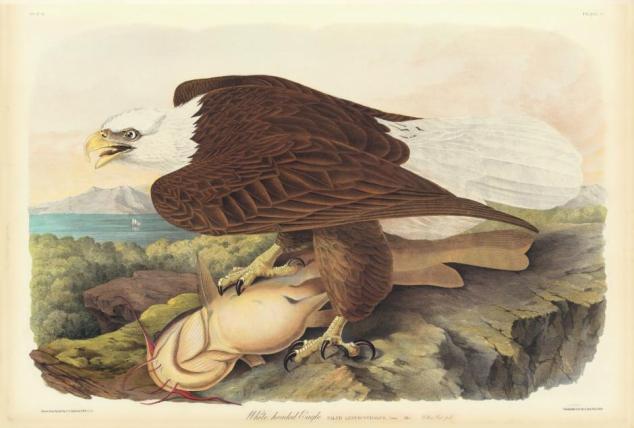
I recently read, This Strange Wilderness: The Life and Art of John James Audubon. It’s a short book of just 171 pages about Audubon and what he accomplished in his life.
Jean Jacques Audubon was born in Les Cayes in the French colony of Saint-Domingue now known as Haiti on April 26, 1785. He was raised in Couëron, near Nantes, France until 1803 when at the age of 18 his father obtained a false passport for his son to go to America to avoid being drafted in the Napoleonic Wars. Upon arriving in America, his father changed his son’s name to, John James Audubon.
As a young man, Audubon had a kinship for birds. “I felt an intimacy with them…bordering on frenzy that must accompany my steps through life.” Studying American birds, he was determined to illustrate his findings in a more realistic manner than most artists. Along with drawing and painting birds, he also recorded their behavior. He conducted the first known bird-banding on the continent: he tied yarn to the legs of eastern phoebes and discovered that they returned to the same nesting spots every year.
Audubon developed his own methods for drawing birds. First, he killed them, then used wires to prop them into a natural position, unlike the common method of many ornithologists, who prepared and stuffed the specimens into a rigid pose. He became proficient at specimen preparation and taxidermy.
Often when working on a large bird such as an eagle, he would spend up to four 15-hour days, preparing, studying, and drawing it. Each paintings are set true-to-life in their natural habitat, portraying the birds as if caught in motion, especially feeding or hunting.
Although he did paint the birds in his drawings, it was his assistant Joseph Mason who painted the plant life and backgrounds of many of Audubon’s bird studies. Unfortunately, Mason was never credited in any of Audubon’s drawings.
By 1824 Audubon began to seek a publisher for his bird drawings. He met Thomas Sully, one of the most famous portrait painters of the time and a valuable ally, however Audubon was rejected for publication. He took oil painting lessons from Sully and met Charles Bonaparte, who admired his work and recommended he go to Europe to have his bird drawings engraved.
Two years later at age 41, Audubon took his growing collection of work to England. He sailed from New Orleans to Liverpool with his portfolio of over 300 drawings. Audubon quickly gained notoriety in England where he raised enough money to begin publishing his major work, a color-plate book entitled The Birds of America. It was printed on sheets measuring about 39 by 26 inches and contains more than 700 North American bird species, including 25 new species identified by Audubon. The cost of printing the entire work was $115,640 (over $2,000,000 today) and is considered one of the finest ornithological works ever completed.
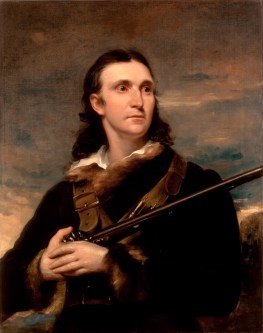
John James Audubon
Today most copies of The Birds of America can only be found in museums. However, a complete copy of the first edition was sold in January 2012 at Christie’s auction house in Manhattan for $7.9 million.
Audubon died at his family home in northern Manhattan on January 27, 1851. Fifty-four years after his death, George Bird Grinnell, who was appalled by the negligent and mass slaughter of birds that he saw taking place created the National Audubon Society. As a boy, Grinnell was inspired by Audubon’s work. So much so, that when Grinnell decided to create an organization devoted to the protection of wild birds and their eggs, he didn’t hesitate in using Audubon’s name.
Because of market hunting and the fashion industry many of the birds Audubon painted became extinct. Thanks to the work of the National Audubon Society there are thousands of birds that have been saved. John James Audubon’s work and research inspired many. He left a body of work for generations to enjoy which makes him truly, the bird man of America.
Shine On
“A thing of beauty
is a joy forever.”
John Keats
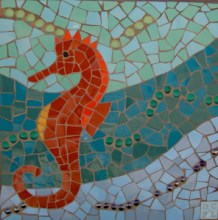
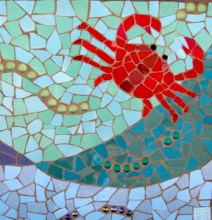
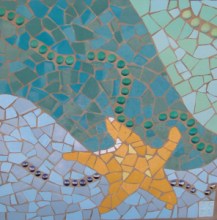
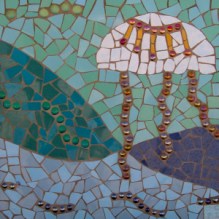
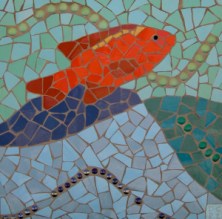
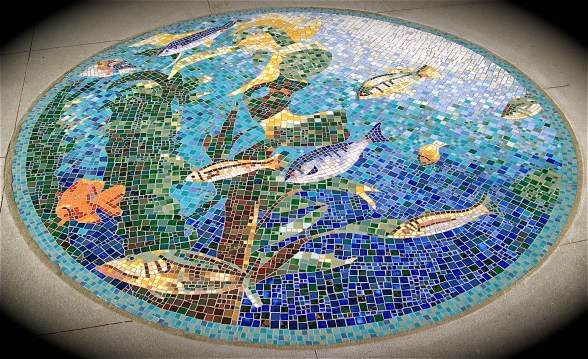
The Esplanade in Redondo Beach runs North and South along the ocean. To get to Esplanade from LAX, travel South on Catalina Avenue and just one block past Torrance Boulevard is Pearl Avenue. Make a right at the light, which is Pearl Avenue and you will be on the beginning of the North end of Esplanade. The Esplanade ends at the Miramar Park at Vista Del Mar.
These colorful mosaics were added to the City of Redondo Beach Esplanade in 2010. Beautifully hand created mosaics decorate the street pillars on Avenue C as well as on the Esplanade walk ways. Simple works of art for all to behold and become a joy forever.
Shine On
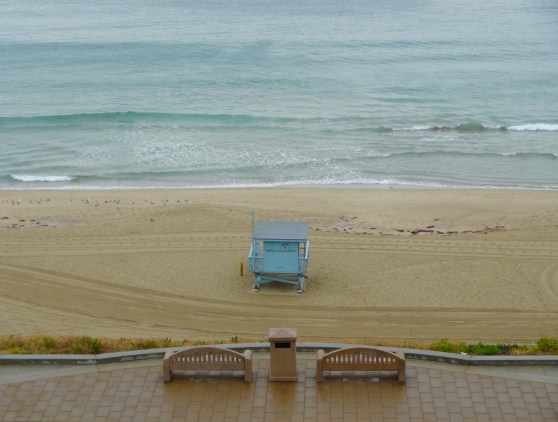
“The three great elemental sounds in nature are
the sound of rain, the sound of wind in a primeval wood,
and the sound of outer ocean on a beach.”
Henry Beston
Shine On
“Don’t grieve.
Anything you lose
comes round in
another form.”
Rumi
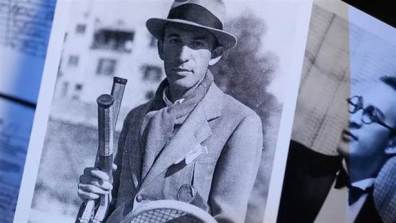
Ryan’s memories hinted, he was a movie extra named Marty Martyn
The nightly national news reporter caught my attention. For a moment, I thought I was watching the “Syfy Channel”. He was reporting about a boy named Ryan who told his mother that he believed he lived as someone else.
Five year old Ryan told his mom, he used to be somebody else — and that somebody was someone who kept company with old Hollywood stars, danced on Broadway, and worked in the movies, according to his dreams and memories.
Everyone is curious about what happens after we die. Some believe in a heaven and hell. Some believe in ghosts. Some believe when we die that’s it, we are gone for good. But, there are some who believe in reincarnation. For me, I need proof to convince me about most subjects, especially on the subject of death. However, the story about Ryan piqued my curiosity.
For more than a decade, Dr. Jim Tucker, associate professor of psychiatry and neurobehavioral sciences at the University of Virginia, studied the cases of children, usually between the ages of 2 and 6 years old, who say they remember a past life. In his book, Return to Life, Tucker details some of the more than 2,500 cases he has studied over the years, including Ryan — who claims he is the reincarnation of a man who died more than 50 years ago. That man, Marty Martyn, was a former movie extra who later became a powerful Hollywood agent.
The following is an excerpt from Tucker’s book and the chapter “He Came From Hollywood.”
We were able to piece together a picture of Marty Martyn’s life, and we could compare it to Ryan’s statements. In most of our cases, people have tried to see if a deceased person could be identified whose life matched the statements the child had made. Here, there was only one guy that Ryan could have been talking about, because he had pointed to him in a picture. We weren’t trying to see if there was anyone whose life matched Ryan’s statements; we were looking to see if Marty Martyn’s did.
What we found was that though Ryan was off on some of the details, a lot of what he said was correct for Marty Martyn. It had seemed unlikely that an extra with no lines would have danced on Broadway, had a big house with a swimming pool, and traveled the world on big boats. But Marty Martyn did.
Marty was born in Philadelphia in 1903. Ryan had talked a lot about a sister and also mentioned another one, and Marty had two sisters. His mother had curly brown hair, as Ryan as said. Ryan was right about dancing in New York, as Marty and one of his sisters went to New York to be dancers. He danced in various reviews on Broadway, and his sister became a well-known dancer there.
Marty then moved to Los Angeles, having a life in Hollywood as Ryan had described. He began as an extra as well as a dance director. He then became a Hollywood agent, not the secret agent kind but a talent agent. He set up the Marty Martyn Agency, where he had notable clients such as Glenn Ford. Ryan had talked about people changing their names with the agency, which would certainly be true for a talent agency. Marty had several connections to Rita Hayworth, and his daughter confirmed he probably did know her. He may well have interacted with Marilyn Monroe as well, as his wife’s family knew her.
Marty was a big sunbather, getting sunburns as Ryan had mentioned. Ryan said he used to take girlfriends to see the ocean, and there are pictures of Marty with girls on the beach. He enjoyed going there and watching surfers, which Ryan had said as well.
Marty was married four times. He became quite wealthy, and he and his last wife enjoyed an upscale lifestyle. Ryan said he had driven around Hollywood in a green car and that his wife drove a nice black car. Well, Marty’s wife didn’t actually do the driving, but they had a custom-made Rolls-Royce that was presumably a nice car. Ryan remembered an African American maid, and Marty and his wife had a number of them. Ryan said he owned a piano, and Marty had pianos in his house. The family lived in a fine house with a large swimming pool, as Ryan had described. Ryan said his address had Rock or Mount in it. And Marty Martyn’s last house, that fine home with the big swimming pool? It was located at 825 N. Roxbury.
So, when I meet someone for the very first time and have a deja vu moment, I always wonder, have we met before?
Shine On
 Chronicles of a Blogaholic