“A comedian does funny things
A good comedian does things funny.”
Buster Keaton
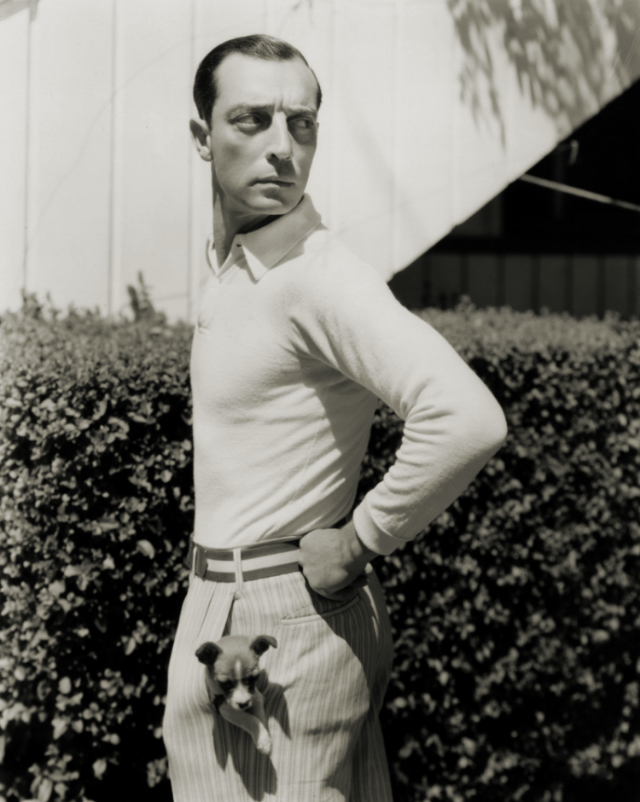
Buster Keaton was one of the most talented writer, director, producer, stunt man and actor of silent films. His acrobatic ability and his films paved the path for future films. Today, there are several writers, comedians and directors who attribute their success by studying and replicating Keaton’s talent for comedy and action movies. From Orson Welles, Mel Brooks, Steven Spielberg to especially Jackie Chan, they all have copied scenes and stunts from Keaton movies.
As a fan of the TCM channel, I enjoy watching their “Sunday Night, Silent Movies”. A few years ago, they showed several Buster Keaton silent movies I had never seen before. Enamored with Buster’s talent, I found myself watching every silent and talking movie Keaton ever starred in or produced. Most of these century old movies can be found on YouTube.
Obsessed with everything Keaton, friends and family began calling me the Keaton Connoisseur. So I created an Instagram handle dedicated to this amazing talented man, which I appropriately named, Keaton Connoisseur.
As a teenager, Keaton was my favorite silent movie star. Point of fact, he lived just a few miles down the street from my house in the San Fernando Valley but unfortunately he died on February 1, 1966 before I could ever get my chance to meet him.
If you are one of the rare people that’s never heard of Buster, please go to YouTube and watch any of his brilliant silent movies. I suggest starting with, The General which he wrote, starred and directed. It is the first movie produced with Buster performing all his own dangerous and exciting stunts. The film is a comic masterpiece. The best stunt in the movie involves him pulling a railroad tie out from being lodged into the track. Then, with the train steadily approaching, he’s sitting on the cow-catcher of the slow-moving train while carrying the tie. He then tosses it at another tie to dislodge it from the tracks. All seamlessly performed with pure Keaton perfection.
When I first saw The General, I couldn’t help but realize this film is one of the first silent action movies. As I watched, it reminded me of the best action movie from 1981, Raiders of the Lost Ark. Coincidently, I recently saw an interview with Steven Spielberg talking about how The General inspired his movie, Raiders of the Lost Ark.
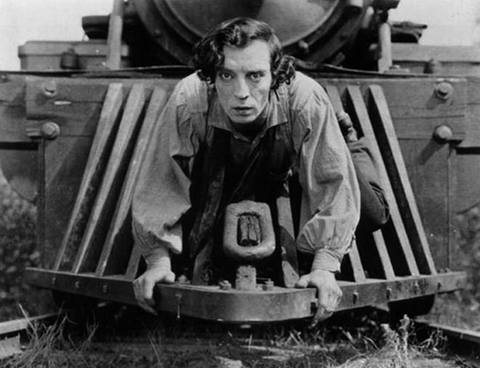
The General was released a century ago in 1926 at the end of the silent era. Buster’s hobby was model trains and the history of trains. He had read the 1889 book, The Great Locomotive Chase by William Pittenger and wanted to make a movie based on this book. At the time of its initial release, The General was billed as an action comedy adventure film and was not well received by critics and audiences.
In a 1963 interview, Keaton said, “I was more proud of that picture than any I ever made. Because I took an actual happening out of the history books, and I told the story in every detail too.”
If you’re interested in learning more about Buster Keaton, I highly recommend starting with watching The General on YouTube. Then I recommend reading James Curtis book, “A Filmmaker’s Life”.
There was no CGI, special effects or even professional stunt men when Keaton made his early movies. He preformed his own stunts; often he sustained major injuries and several times risked his life.
He was the real deal in movies and in life. A rare performer, writer and director and my favorite silent film icon of this Keaton Connoisseur.
Shine On