“It is in the roots, not the branches,
that a tree’s greatest strength lies.”
Matshona Dhliwayo

Shine On
“It is in the roots, not the branches,
that a tree’s greatest strength lies.”
Matshona Dhliwayo
Shine On
“Be less curious about people and
more curious about ideas.”
Marie Curie

Yesterday it was announced that Andrea Ghez, UCLA’s Lauren B. Leichtman and Arthur E. Levine Professor of Astrophysics, along with Roger Penrose, and Reinhard Genzel was awarded the 2020 Nobel Prize in physics.
Ghez is the 53rd women to have been awarded a Nobel Prize out of more than 900 recipients. She is also only the fourth woman to receive the physics prize, following Marie Curie in 1903, Maria Goeppert Mayer in 1963 and Donna Strickland in 2018.
Often when we think of female Nobel Prize winners, Mother Teresa, Marie Curie and Malala Yousafzai probably come to mind. But, women who received Nobel Prizes were involved in all sorts of projects, from physics experiments to masterful novels, and they changed how we think about art, animals and the human body.
For example, American public philosopher Jane Addams set out to better the lives of working-class people, immigrants, women and children in a very direct way, and her success was kind of astonishing. She found an old mansion in Chicago, cleaned it up and turned it into a community center. Not your ordinary community center, though: Hull House, as she called it, provided social services, but it also fostered rich debate and research into designing a better society. The environment was meant to encourage democratic cooperation and collective action, rather than individualism. Her work won her the Nobel Peace Prize in 1931.
Throughout history, the scientific and artistic achievements of men have always been renowned and honored by the experts and the public alike. More often than not, women who work as doctors, engineers, writers, and scientists find themselves fighting a seemingly endless battle to gain recognition within their male-dominated industries, sometimes even losing credit for their work in the process. Many of these women had to contend with extreme sexism in male-dominated professions. Some female Nobel Prize winners even had to overcome physical violence. All their stories are unique and equally inspiring.
As of 2020, Marie Curie is the only woman who has been awarded a Nobel Prize twice, one in 1903 and the other in 1911. Whether we realize it or not, these women greatly impacted the World and hopefully more women throughout the World will continue to become female Nobel Laureates.
Shine On
“Justice is to be found only in the imagination.”
Alfred Nobel
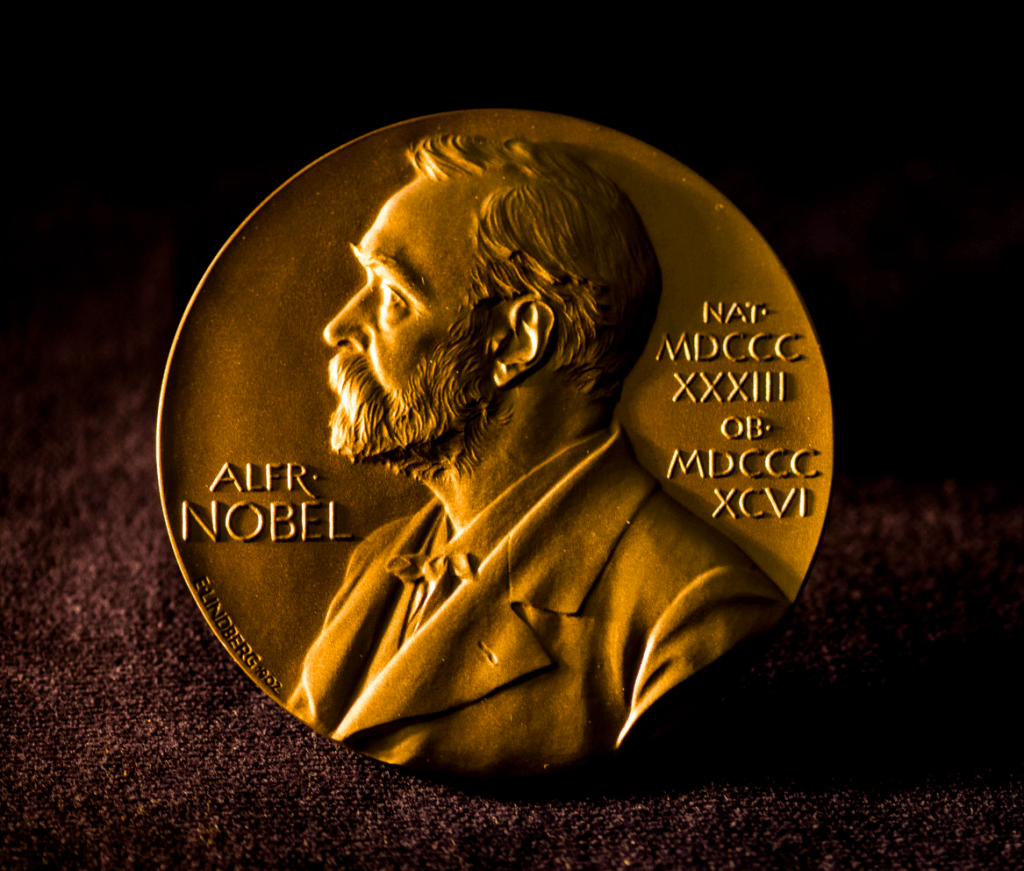
Today, the Nobel Prize Awards will begin announcing the winners for 2020. It will kick off with the awards for Physiology or Medicine on Monday October 5, 11:30 CEST at the earliest. Then they will announce the awards for Physics on Tuesday October 6, Chemistry on Wednesday October 7, Literature on Thursday October 8, The Peace Prize on Friday October 9, and then finally the award for Economic Sciences on Monday October 12.
One of the most prestige’s awards in the World, it was established by the late Alfred Nobel, a Swedish chemist and the inventor of dynamite.
Alfred Nobel was born on October 21, 1833 in Stockholm, Sweden. His father was an engineer and inventor. In 1842, Nobel’s family moved to Russia where his father opened an engineering firm providing equipment for the Tsar’s armies. Around 1850, Nobel’s father sent him abroad to study chemical engineering. During a two-year period, Nobel visited Sweden, Germany, France and the United States. He returned to Sweden in 1863 with his father after the family firm went bankrupt.
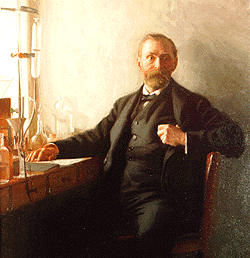
While in Sweden, at the age of 30 years old, Nobel devoted himself to the study of explosives. He was particularly interested in the safe manufacture and use of nitroglycerine, a highly unstable explosive. Nobel’s brother Emil had been killed in a nitroglycerine explosion in 1864. Deeply affected, by the death of his beloved brother, Nobel incorporated nitroglycerine into silica, an inert substance, which made it safer and easier to manipulate. This he patented in 1867 under the name of ‘dynamite’. Nobel’s dynamite was soon used in blasting tunnels, cutting canals and building railways and roads all over the world. Nobel went on to invent a number of other explosives.
In the 1870s and 1880s, Nobel built up a network of factories all over Europe to manufacture explosives. Then, In 1888, Nobel’s brother Ludvig died while in France. A French newspaper erroneously published Alfred’s obituary instead of Ludvig’s and condemned Nobel for his invention of dynamite. Provoked by the event and disappointed with how he felt he might be remembered, Nobel set aside a bulk of his estate to establish the Nobel Prizes to honor men and women for outstanding achievements in physics, chemistry, medicine, literature and for working toward peace.
In 1894, he bought an ironworks at Bofors in Sweden that became the nucleus of the well-known Bofors arms factory. He continued to work in his laboratory, inventing a number of synthetic materials and by the time of his death he had registered 355 patents.
After years of acquiring enormous wealth through his patents and business ventures, in November 1895, Nobel signed his final last will providing for the establishment of the Nobel Prizes. He set aside the bulk of his huge fortune to establish annual prizes in Physics, Chemistry, Physiology or Medicine, Literature and Peace. An Economics Prize was added later.
Nobel died at his home in San Remo, Italy of a stroke on December 10, 1896. After taxes and bequests to individuals, Nobel left 31,225,000 Swedish kronor (equivalent to 250 million U.S. dollars in 2008) to fund the Nobel Prizes.
The first Nobel Prize was awarded in 1901 to Frédéric Passy and Henry Dunant, who shared the Peace Prize award. The official Nobel Prize Award Ceremonies is held every year December 10th.
Each Nobel Laureates receives three things: a Nobel diploma, a Nobel Medal and a document confirming the Nobel Prize amount. The Nobel Prize amount for 2020 is set at Swedish kronor (SEK) 10.0 million per full Nobel Prize. (In US Dollars is approximately, $1,119,278.) Each Nobel diploma is a unique work of art, created by foremost Swedish and Norwegian artists and calligraphers. The Nobel Medals are handmade with careful precision and in 18 carat recycled gold.
In over a century of Nobel Awards, we have seen such people as Marie Skłodowska Curie win for Chemistry and Physics and the youngest to win, 17-year old Malala Yousafzai for Peace. With such a historical year in the World that all of us have been experiencing, I know I’ll be curious to learn who will be the 2020 Nobel Laureates.
Shine On
“Water and air, the two essential fluids
on which all life depends,
have become global garbage cans.”
Jacques Yves Cousteau
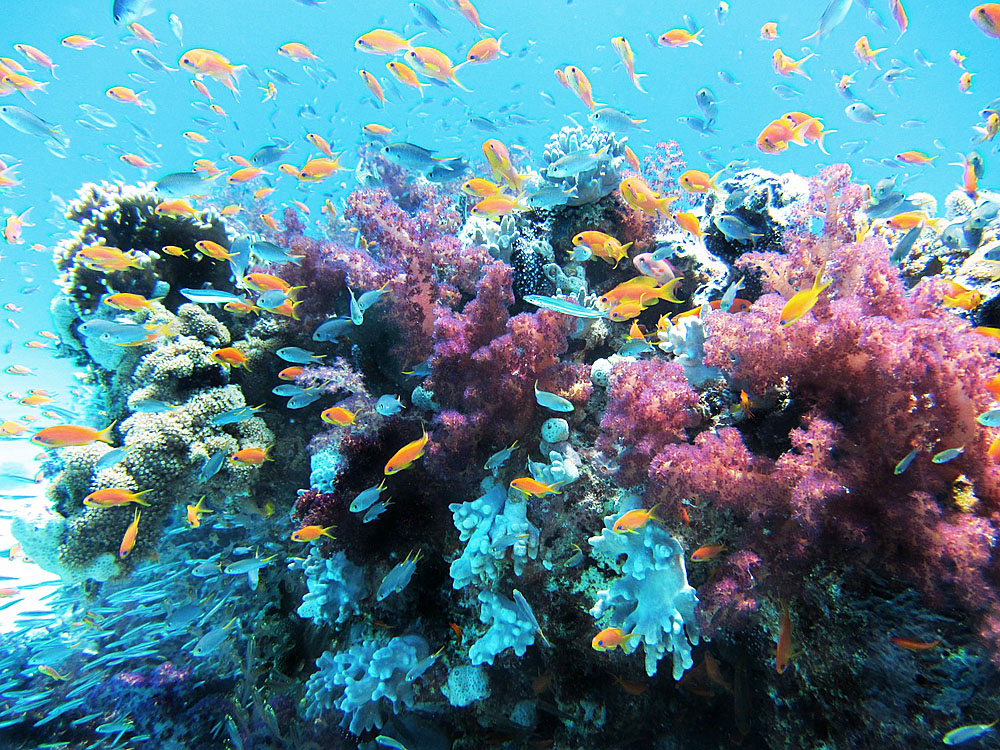
Researchers are creating images of coral reefs along the lush and steep windward coast of the Hawaii island of Oahu.
Why? Because the coral reefs are in danger of dying due to the ever-increasing temperatures of the ocean waters.
These high-definition 360-degree panoramic images of the reefs are being used to monitor and study the health of corals over time. Scientists are concerned about how much coral off the coast of Hawaii already is beginning to bleach, especially because it’s the second such event in two years.
Coral bleaching occurs when ocean water temperatures rise and cause the coral to lose key nutrients, turning the normally colorful organism white. If bleaching recurs or is severe, the coral will eventually die.
The researchers use GPS tags and facial recognition technology to help identify and organize individual reef systems. As part of the project, the survey team has partnered with Google and uploads the images to Google Street View, allowing people to explore the underwater ecosystem via the Internet.
The Hawaii reef mapping is part of a larger project by the XL Catlin Seaview Survey research team to make thousands of images of reef around the world. These researchers are trying to understand why certain species of coral are more susceptible to bleaching than others, and they hope to find organisms that can adapt to warmer waters and remain healthy.
If you want to learn more about what’s happening to our oceans, check out Global Reef Record and explore a whole new world, under the sea.
Shine On
“He who can no longer pause
to wonder and stand rapt in awe,
is as good as dead; his eyes are closed.”
Albert Einstein
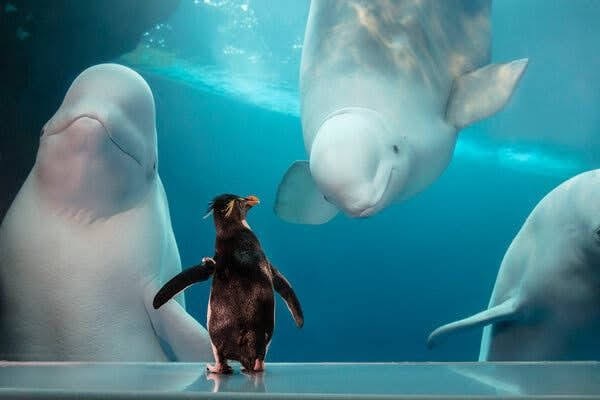
For the past two decades, scientists have been studying the emotion called, awe. Growing research suggests that experiencing awe may lead to a wide range of long-term benefits, from happiness and health to perhaps more unexpected benefits such as generosity, humility, and critical thinking.
The research also suggests that taking the time to experience awe, whether through appreciating nature, enjoying art or music, or even watching YouTube videos, could be a way to improving your life and relationships.
Did you know that experiencing awe can improve your mood and make you more satisfied with your life? You don’t even need to take a trip to Tahiti to get the job done. You can experience awe by watching slideshows or videos of Tahiti to induce awe. It’s also possible that awe can even bring people together. Research tells us that awe helps us feel more connected to the people in our lives and to humanity as a whole.
What I found interesting about these recent studies is that people who experience awe more often, had a better understanding of nature and science and were more likely to reject creationism and other scientifically questionable explanations about the world. Importantly, these people didn’t have greater “faith” in science; they just understood better how science works.
In 2020, seeking awe should be a high priority. The power of awe may be a simple remedy to improve our outlook and have transformative effects. With increasing interest among psychologists and the public in the study of awe, the future looks bright. Maybe even awesome.
Shine On

