Words Cannot Express

“Art is the lie that enables us
to realize the truth.”
Pablo Picasso

Since the death of Sean Connery a few weeks back, I’ve been rewatching all of the James Bond movies in chronological order. I noticed that the majority of the Bond movies were distributed by Metro-Goldwyn-Mayer. I’ve been watching MGM movies my entire life but just now noticed the words, “Ars Gratia Artis” used as a motto by MGM and appears in the circle around the roaring head of Leo the Lion in its logo.

Curious lady that I am, I looked up the meaning of this Latin saying, Ars Gratia Artis which translates to, Art for Art’s Sake.  It is a phrase that dates back to poet Théophile Gautier from the 1800s. The phrase was also used by poet Edgar Allan Poe in his 1850 essay, The Poetic Principle.  These men argued that “. . . art for art’s sake affirmed that art was valuable as art in itself; that artistic pursuits were their own justification; and that art did not need moral justification, and was allowed to be morally neutral or subversive.”

With so many forms of art in our society, I dove even deeper into this subject and discovered writer and philosopher, Alain de Botton who is the founder of  The School of Life, where he examines the many purposes of art.

In Alain’s book, Art as Therapy he points out how art can be a form and a source of therapy and self-help. He explains how art has the ability to resolve our psychological shortcomings and ease our anxieties about our imperfections. Art can be used as a great tool that serves a complex important purpose in our existence. The highest achievement of art might be something that reconciles the two: a channel of empathy into our own psychology that lets us both exorcise and better understand our emotions.

There are many areas in our life that art enriches including how art helps us feel less alone in our suffering. de Botton believes art can also save us time as well as save our lives, through opportune and reminders of balance and goodness that we should never presume we know enough about already. He also says that art is our new religion and our museums are our cathedrals. We all have reasons for our tastes in particular works of art and that can reflect how we are feeling emotionally at particular times in our lives.

Art gives us a language for communicating to others. It can explain why we are so particular about the kinds of art we surround ourselves with publicly.  A sort of self-packaging we all practice as much on the walls of our homes as we do on our social media pages. A cynic might interpret this as mere showing off, but de Botton believes that the art we admire peels away this superficial interpretation to reveal the deeper psychological motive.

The art we admire can show our true desire to communicate to others the subtleties of who we are and what we believe in a way that words cannot express.

Shine On
Awesome

“He who can no longer pause
to wonder and stand rapt in awe,
is as good as dead; his eyes are closed.”
Albert Einstein

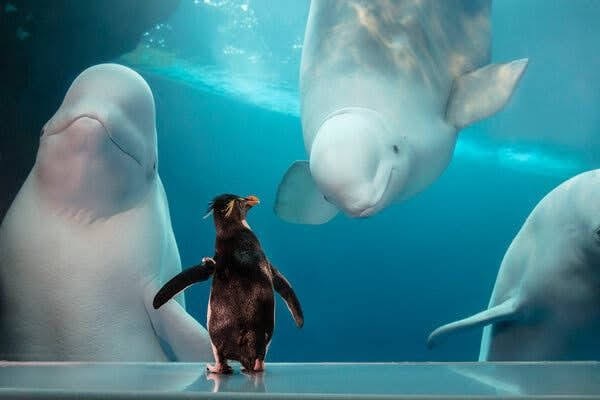
For the past two decades, scientists have been studying the emotion called, awe. Growing research suggests that experiencing awe may lead to a wide range of long-term benefits, from happiness and health to perhaps more unexpected benefits such as generosity, humility, and critical thinking.

The research also suggests that taking the time to experience awe, whether through appreciating nature, enjoying art or music, or even watching YouTube videos, could be a way to improving your life and relationships.

Did you know that experiencing awe can improve your mood and make you more satisfied with your life? You don’t even need to take a trip to Tahiti to get the job done. You can experience awe by watching slideshows or videos of Tahiti to induce awe. It’s also possible that awe can even bring people together. Research tells us that awe helps us feel more connected to the people in our lives and to humanity as a whole.

What I found interesting about these recent studies is that people who experience awe more often, had a better understanding of nature and science and were more likely to reject creationism and other scientifically questionable explanations about the world. Importantly, these people didn’t have greater “faith” in science; they just understood better how science works.

In 2020, seeking awe should be a high priority. The power of awe may be a simple remedy to improve our outlook and have transformative effects. With increasing interest among psychologists and the public in the study of awe, the future looks bright. Maybe even awesome.

 Shine On

Exceptional Eggs

“The key to everything is patience.
You get the chicken by hatching the egg,
not by smashing it.”
Arnold H. Glasow

Exceptional Eggs

Everyone has heard the old famous question; What came first the chicken or the egg? Well, scientists say the egg came first about 340 million years ago while the chicken evolved about 58 thousand years ago.

Scientific records show that fowl were domesticated and laying eggs for human consumption since the 14th century. There is also archaeological evidence dating back to the Neolithic age for egg consumption. In North America, the first domesticated fowl arrived with the second voyage of Columbus in 1493.

Just a little over 100 years ago most people with farmland had chickens and the majority of these chickens were kept in a henhouse. So how did we go from gathering a few eggs on a farm to shipping millions of eggs across the country every day?

Exceptional Eggs

James Ashley’s Egg Case Maker circa 1900

In the late 19th and early 20th century, families leaving the farm for the city couldn’t take the chickens with them, so they had to rely on markets in the city to get their eggs. With the demand for fresh eggs, an innovative Civil War veteran, James Ashley developed a crate for eggs that allowed eggs to be mass marketed.

Ashley first patented his egg case maker in 1896 and received additional patents for improvements to the machine in 1902 and 1925. Farmers could then put their logo stamp on the outside of the crate and ship them off on the rails to major cities. Today, egg farmers are still using Ashley crates to get their eggs to grocery stores.

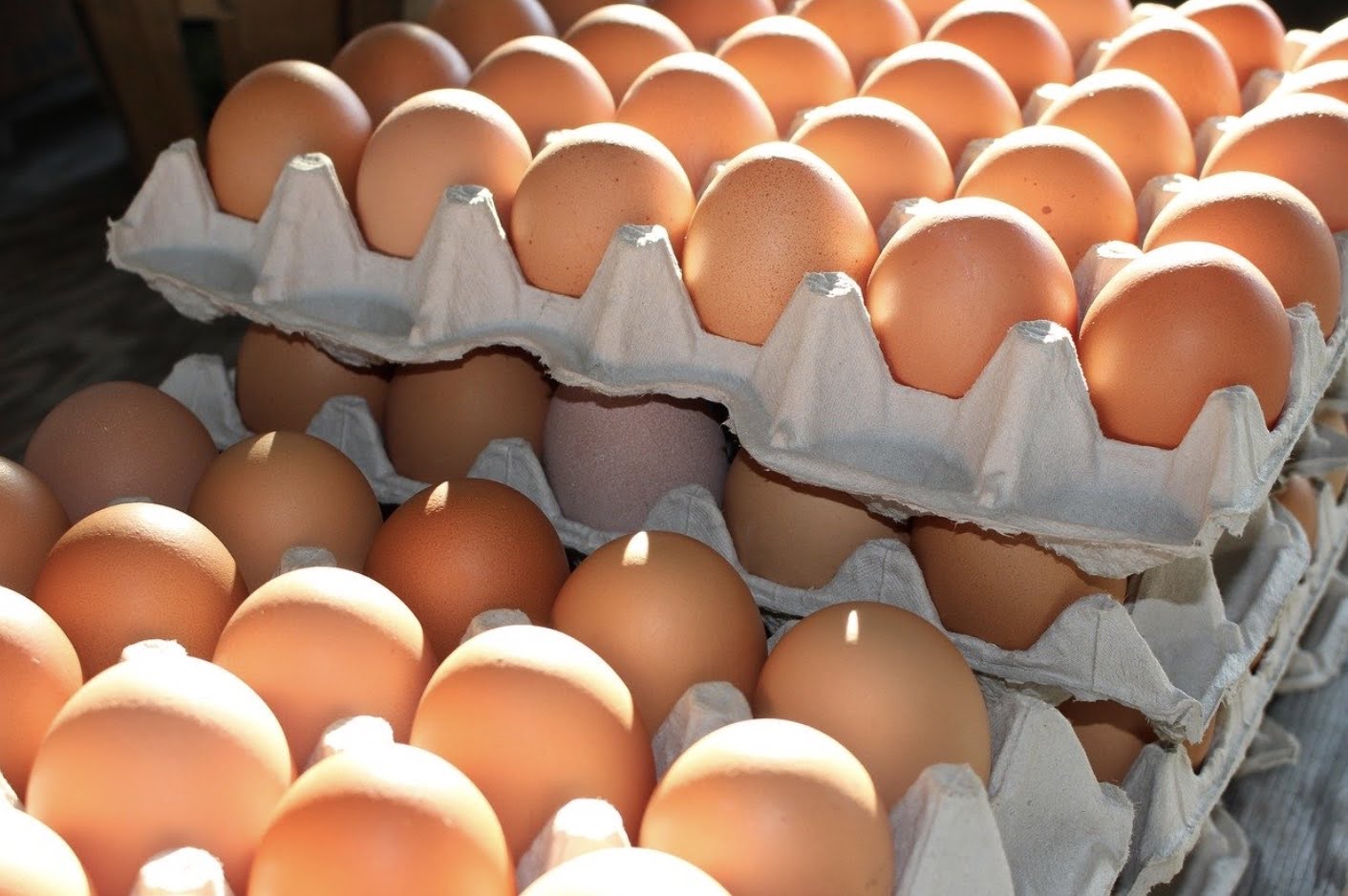
There are different types of eggs available at your local grocery stores, such as pasteurized, farm fresh free range, and organic type eggs. Pasteurized eggs means they have been treated to destroy any bacteria on the egg so it has a longer shelf life but they must be refrigerated. Farm fresh eggs come from chickens that are free range and eat non-GMO feed, mostly small bugs. Organic means these eggs aren’t from free range chickens but may have been fed non-GMO feed.  You do not have to refrigerate your farm fresh organic eggs because they have a shelf life of over a month.

Eggs have about 7 grams of protein per egg. An individual needs about 40 grams of protein a day. So, eggs are an excellent source and inexpensive way to get your daily protein.

I’m a fan of farm fresh eggs and it is one of my main source of protein. I’ve noticed if I buy grocery store eggs, they’re just not as agreeable with my digestive system. That’s why I buy farm fresh organic eggs that I get at the local farmers market, which in my opinion are exceptional eggs.

Shine On